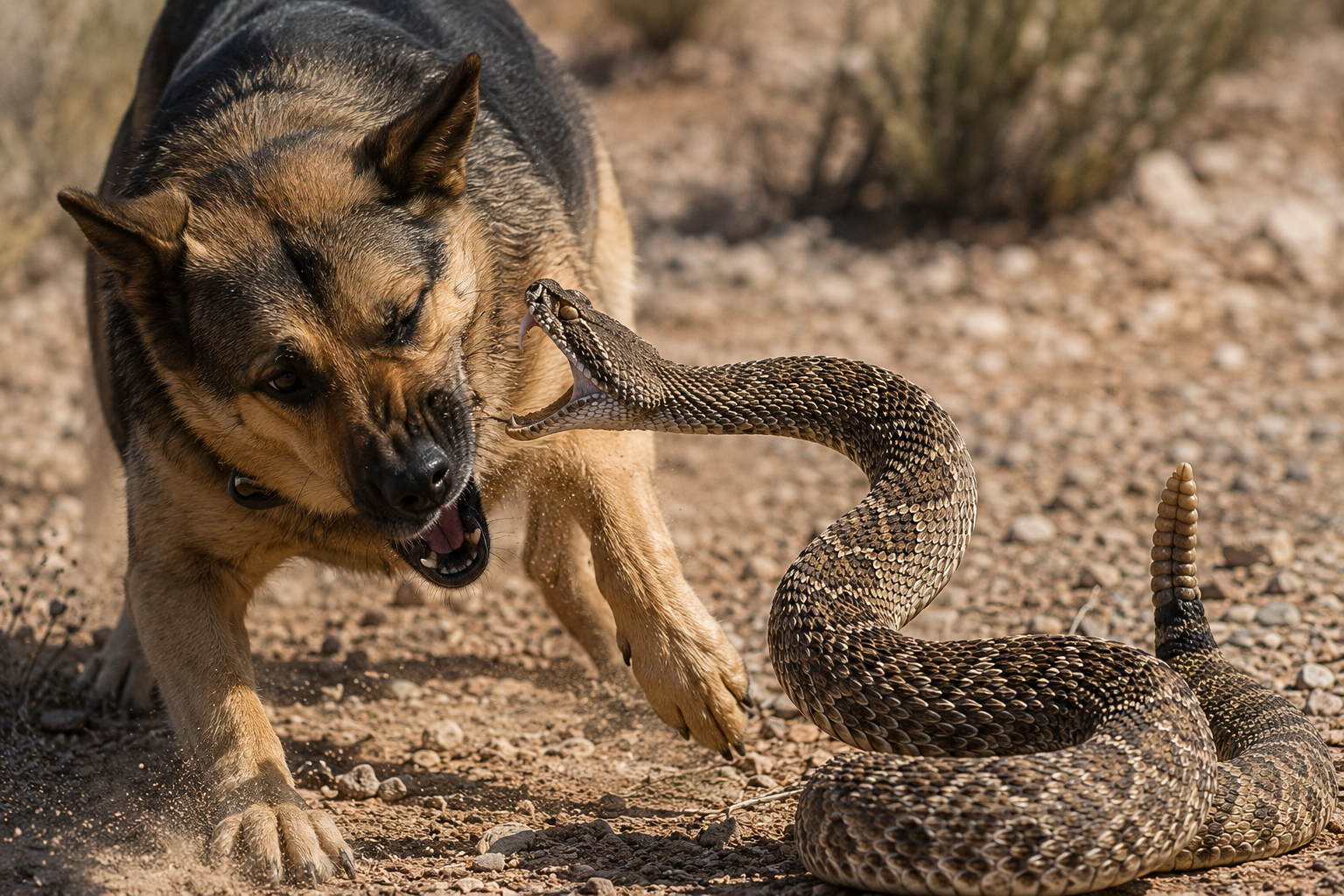
Benadryl And Rattlesnake Bites In Dogs:
The Dangerous Myth That Could Cost Your Dog Its Life
By George Walker, Walker’s K9 Services – Tucson, AZ
Every rattlesnake season in Arizona, the same advice starts spreading across social media and neighborhood groups:
“Give your dog Benadryl if they get bit.”
The problem is that many dog owners misunderstand what Benadryl actually does — and more importantly, what it does not do.
In some cases, relying on Benadryl instead of seeking emergency veterinary treatment can waste critical time that could mean the difference between life and death.
Here in southern Arizona, where encounters with Western Diamondbacks and Mojave rattlesnakes are common, dog owners need accurate information, not myths passed around online.
What Happens During A Rattlesnake Bite?
When a rattlesnake bites a dog, venom is injected deep into tissue. That venom immediately begins attacking the body.
Depending on the species of snake, venom can cause:
Massive swelling
Severe pain
Tissue destruction
Internal bleeding
Blood clotting disorders
Shock
Nerve damage
Organ failure
Difficulty breathing
The face and front legs are the most common bite locations because dogs naturally investigate snakes with their nose.
In Arizona, bites to the face can become catastrophic very quickly. Severe swelling can spread across the muzzle, eyes, throat, and neck within a short period of time.
Some dogs survive with prompt treatment.
Some do not.
So Why Do People Recommend Benadryl?
Benadryl (diphenhydramine) is an antihistamine. It is designed to reduce allergic reactions caused by histamine release.
The problem is this:
A rattlesnake bite is not primarily an allergic reaction.
It is venom toxicity.
That venom is damaging tissue, blood vessels, nerves, and organs. Benadryl does not stop venom. It does not neutralize toxins. It does not reverse tissue destruction.
In other words:
Benadryl does not “fix” a rattlesnake bite.
Can Benadryl Help At All?
In some situations, veterinarians may use Benadryl for secondary reasons, such as:
Helping reduce mild allergic-type reactions
Managing reactions to antivenom treatment
Providing mild sedation
But this is very different from treating the venom itself.
The important thing dog owners need to understand is this:
Benadryl is not a replacement for emergency veterinary care.
Giving a dog Benadryl and then “waiting to see what happens” can be extremely dangerous.
The Most Dangerous Part Of The Myth
One of the biggest problems with the “just give Benadryl” myth is that it can create a false sense of security.
A dog owner may think:
“The swelling doesn’t look too bad yet.”
“The dog seems okay.”
“The Benadryl is helping.”
Meanwhile, venom may still be spreading through the body.
Some venom effects can worsen dramatically over several hours. Dogs may initially appear stable before rapidly declining.
This is especially concerning with Mojave rattlesnakes, which can have highly dangerous neurotoxic venom.
What Actually Helps A Dog After A Rattlesnake Bite?
The gold standard treatment is:
Immediate veterinary care
IV fluids
Pain management
Monitoring blood clotting
Monitoring blood pressure
Wound management
And when appropriate, antivenom
Antivenom is the only treatment that directly targets and neutralizes venom.
The faster treatment begins, the better the chances of survival and reduced tissue damage.
What You SHOULD Do If Your Dog Gets Bitten
If your dog is bitten by a rattlesnake:
1. Stay Calm
Dogs feed off your panic. Keeping the dog calm may help slow venom circulation.
2. Restrict Movement
Carry the dog if possible. Excess movement may increase venom spread.
3. Get To A Veterinarian Immediately
Do not waste time trying home remedies.
4. Call Ahead
Notify the emergency clinic you are coming so they can prepare antivenom and emergency equipment.
5. Remove Tight Collars Or Harnesses
Swelling around the neck and head can become severe.
What You SHOULD NOT Do
Do NOT:
Cut the wound
Try to suck out venom
Apply ice
Use a tourniquet
Attempt electric shock treatment
Delay treatment because the dog “looks okay”
Rely solely on Benadryl
Many old snakebite remedies are outdated and potentially dangerous.
Prevention Is Always Better Than Treatment
In Arizona, snake avoidance training can dramatically reduce the chances of a dog investigating or approaching a rattlesnake.
A properly trained dog learns:
Snake scent recognition
Avoidance behavior
Distance respect
Immediate disengagement
No training is 100% guaranteed, but prevention is far safer — and far less traumatic — than emergency treatment after a bite.
Final Thoughts
Benadryl has become one of the most repeated myths surrounding rattlesnake bites in dogs.
The truth is:
It does not neutralize venom.
It does not stop tissue damage.
It does not replace emergency veterinary care.
If your dog is bitten by a rattlesnake, minutes matter.
The safest thing you can do is seek veterinary treatment immediately.
Because when it comes to rattlesnake bites, hoping a Benadryl tablet will solve the problem is a gamble most dogs cannot afford to lose.
Walkers K9 Services — Building Better Dogs, One Lesson at a Time
Please support our mission by sharing our training articles with other dog owners.
Written by: George Walker
Walkers K9 Services | Tucson, AZ
www.WalkersK9Services.org
📞 520-500-7202