The Walkers Way
A 6-Week At-Home Dog Training Program
BEST VIEWED ON COMPUTER OR LAPTOP
Welcome to the Walkers K9 Services 6-Week At-Home Training Program. Whether you have a new puppy, a recently adopted dog, or an older dog that has never received any training, this program is designed to help you build a strong foundation of obedience, trust, and communication. By dedicating just 15 minutes a day, you can begin teaching your dog the skills needed to become a well-mannered member of the family. Remember that successful dog training is not about long training sessions or finding the perfect technique—it is about consistency. Short, daily training sessions combined with clear expectations and fair leadership will produce far better results than occasional marathon training sessions. Take your time, be patient, celebrate small successes, and most importantly, enjoy the journey. The relationship you build with your dog during these six weeks will be just as valuable as the commands they learn.
Rules for Success
✅ Keep sessions short and positive.
✅ Train before meals when possible.
✅ Use a marker word such as “YES” the instant the dog does something correctly.
✅ Do not repeat commands over and over.
✅ Consistency is more important than perfection.
✅ Every family member should use the same commands.

This program is designed for dogs & puppies that have had little to no previous training. If your dog already understands a particular skill or command, feel free to move ahead to the next lesson. Every dog learns at a different pace, so don't be afraid to adjust the program to fit your dog's current skill level. The goal is steady progress, not following a rigid schedule.
Week 1 – Engagement & Foundation:
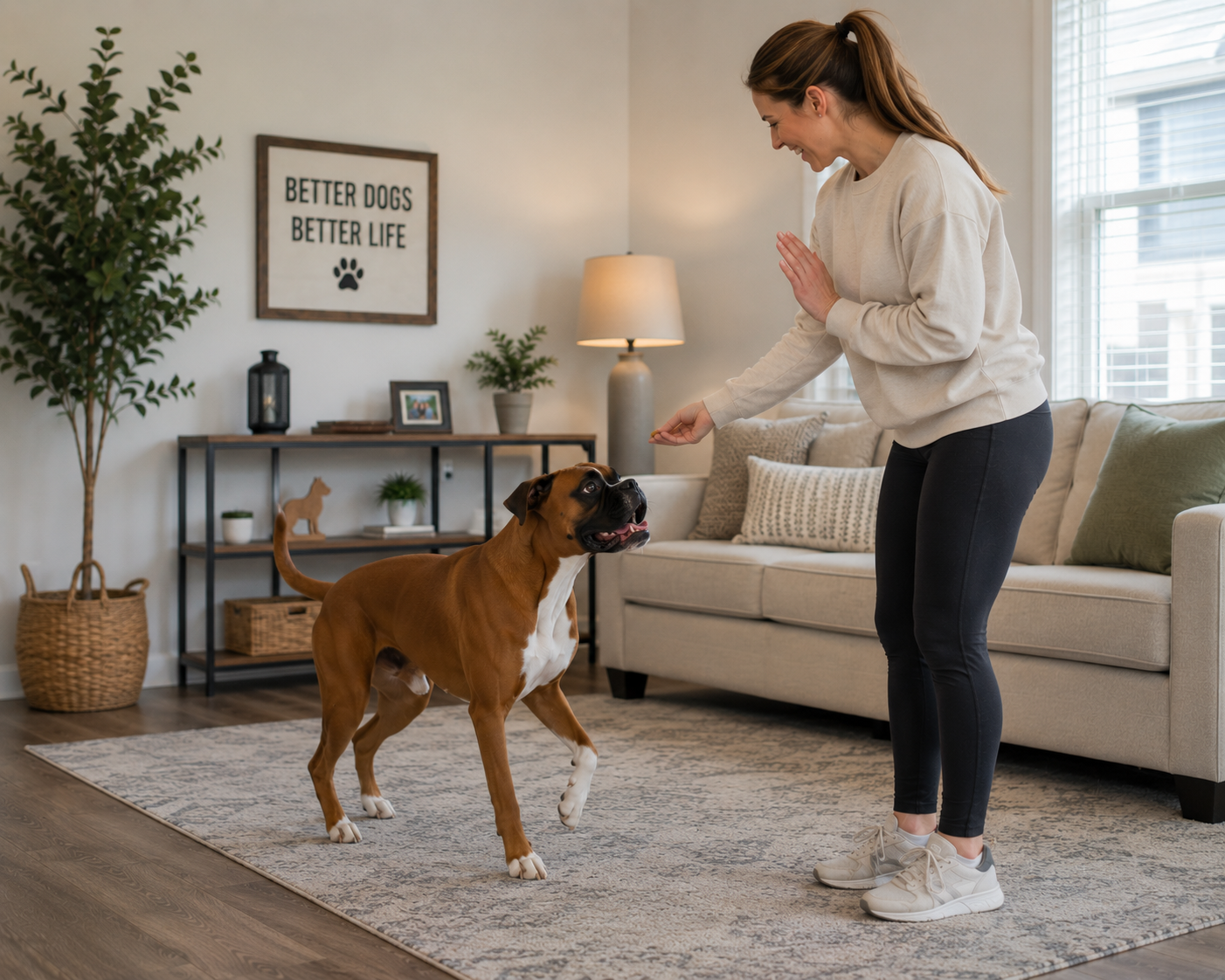
Name Recognition:
Say the dog’s name once.
When the dog looks at you, say “YES” and reward.
Repeat 15-20 times.
Sit:
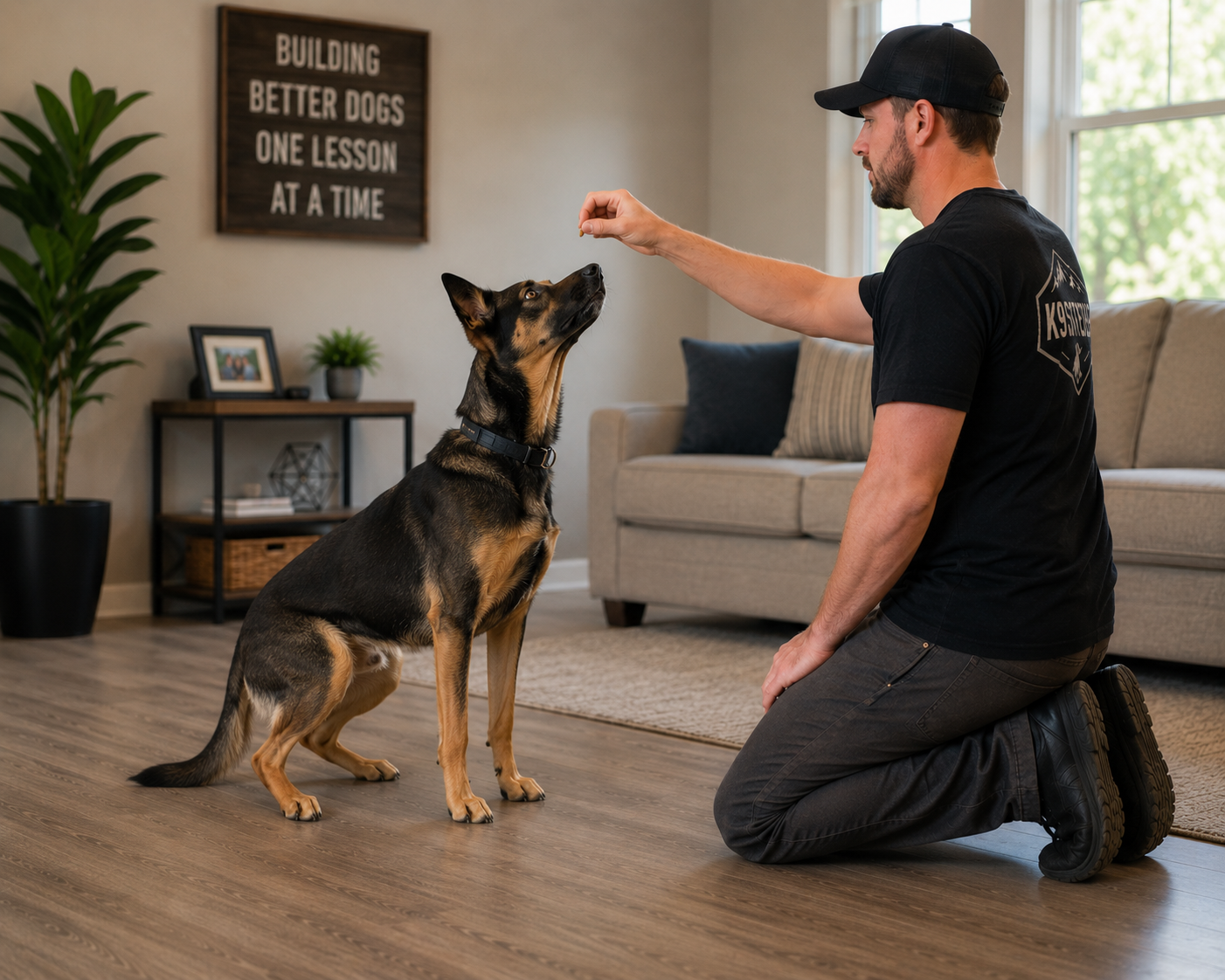
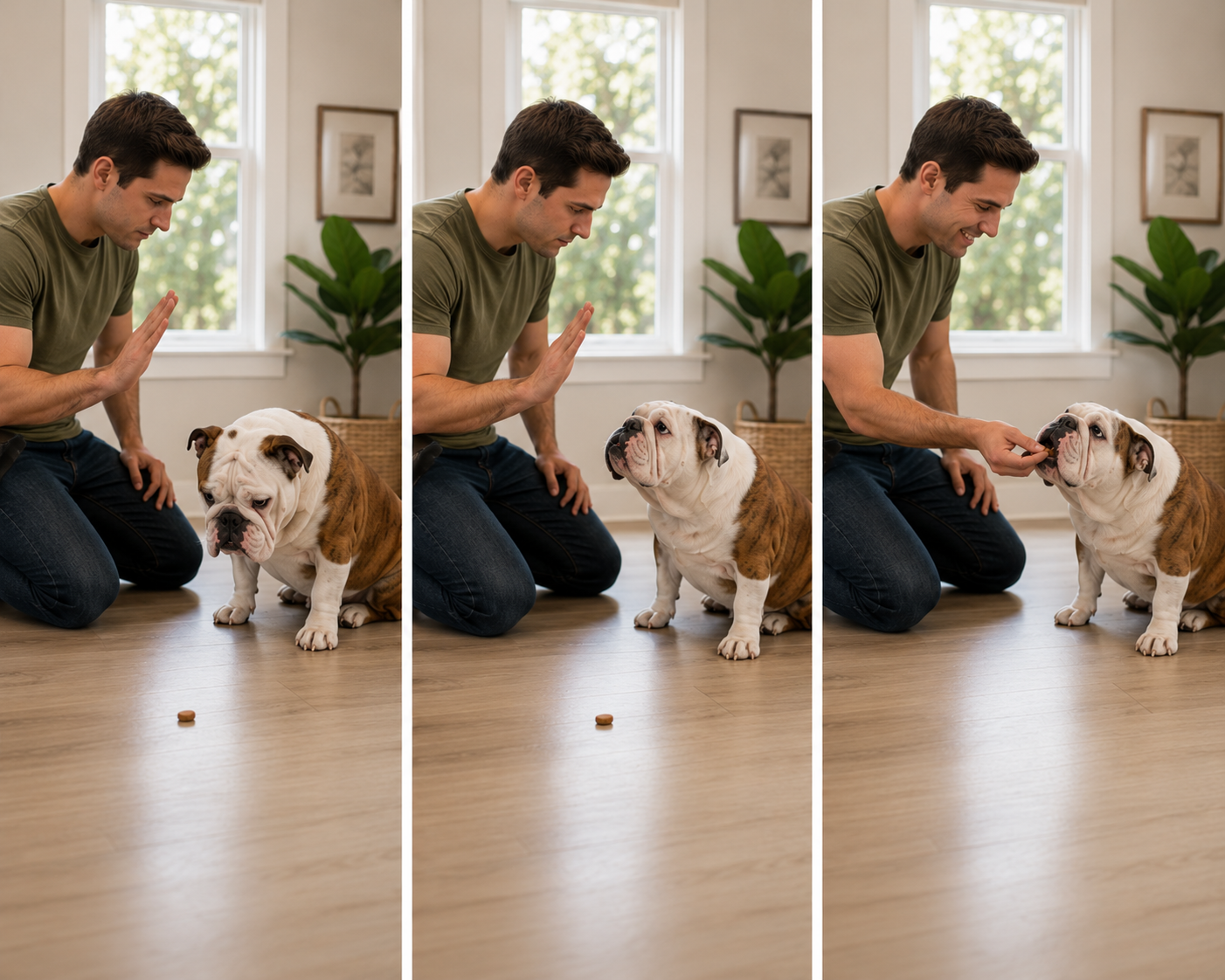
Hold a treat above the dog’s nose and slowly move it backward.
As the dog’s rear touches the floor, say “SIT.”
Mark with “YES” and reward.
Down:
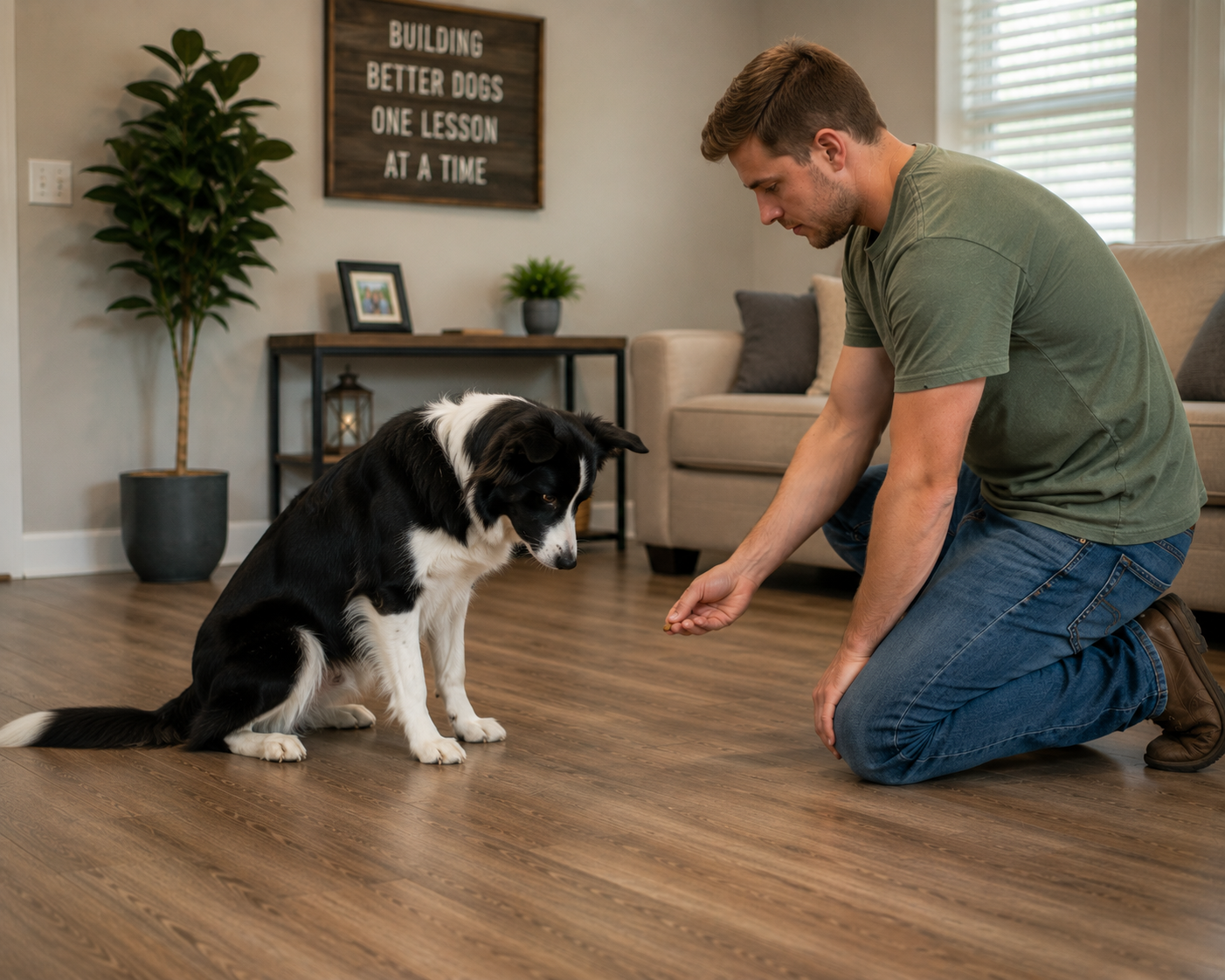
From a sit, move a treat from the dog’s nose straight down to the floor.
Slowly pull it forward.
When the dog lies down, say “DOWN.”
Mark with “YES” and reward.
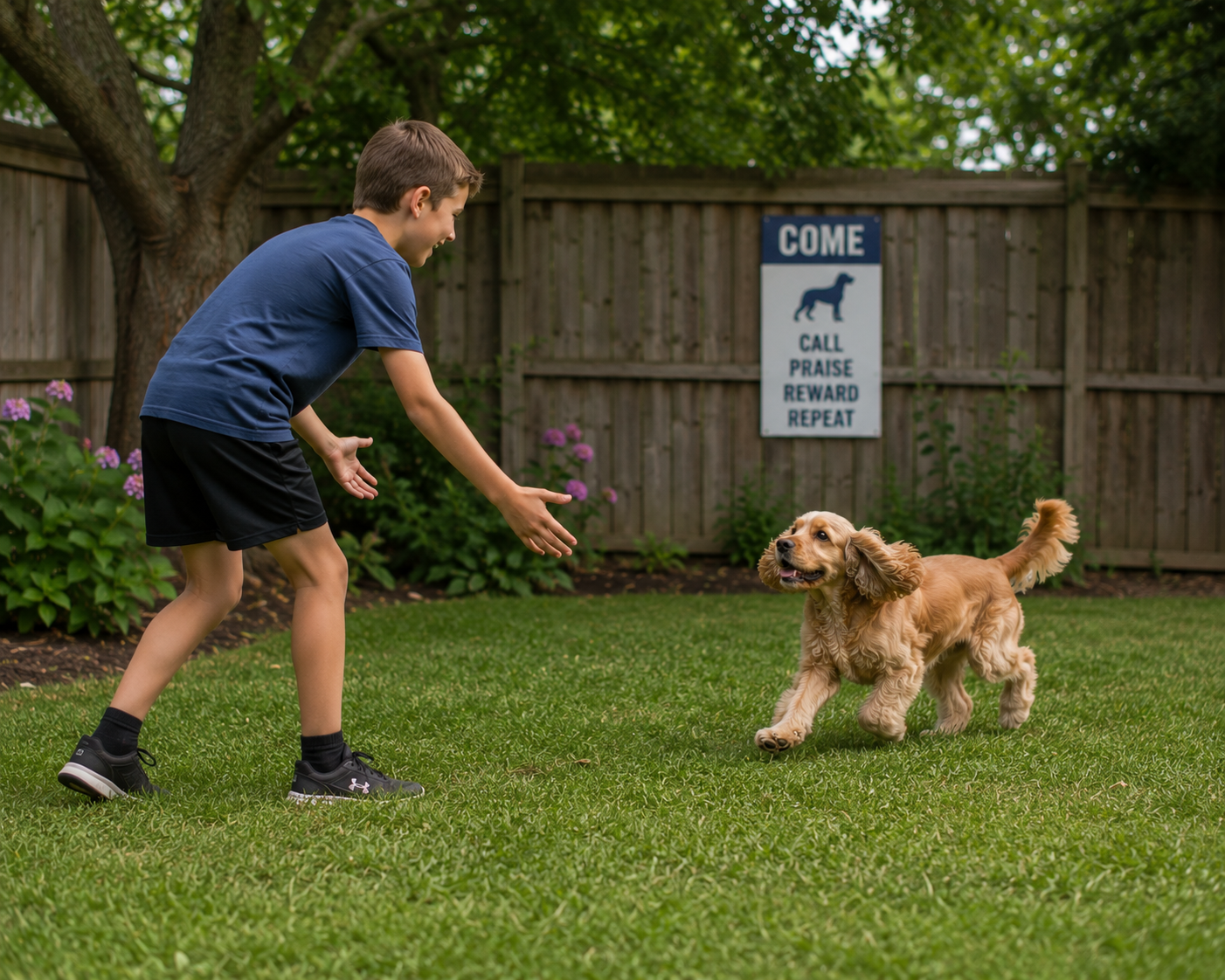
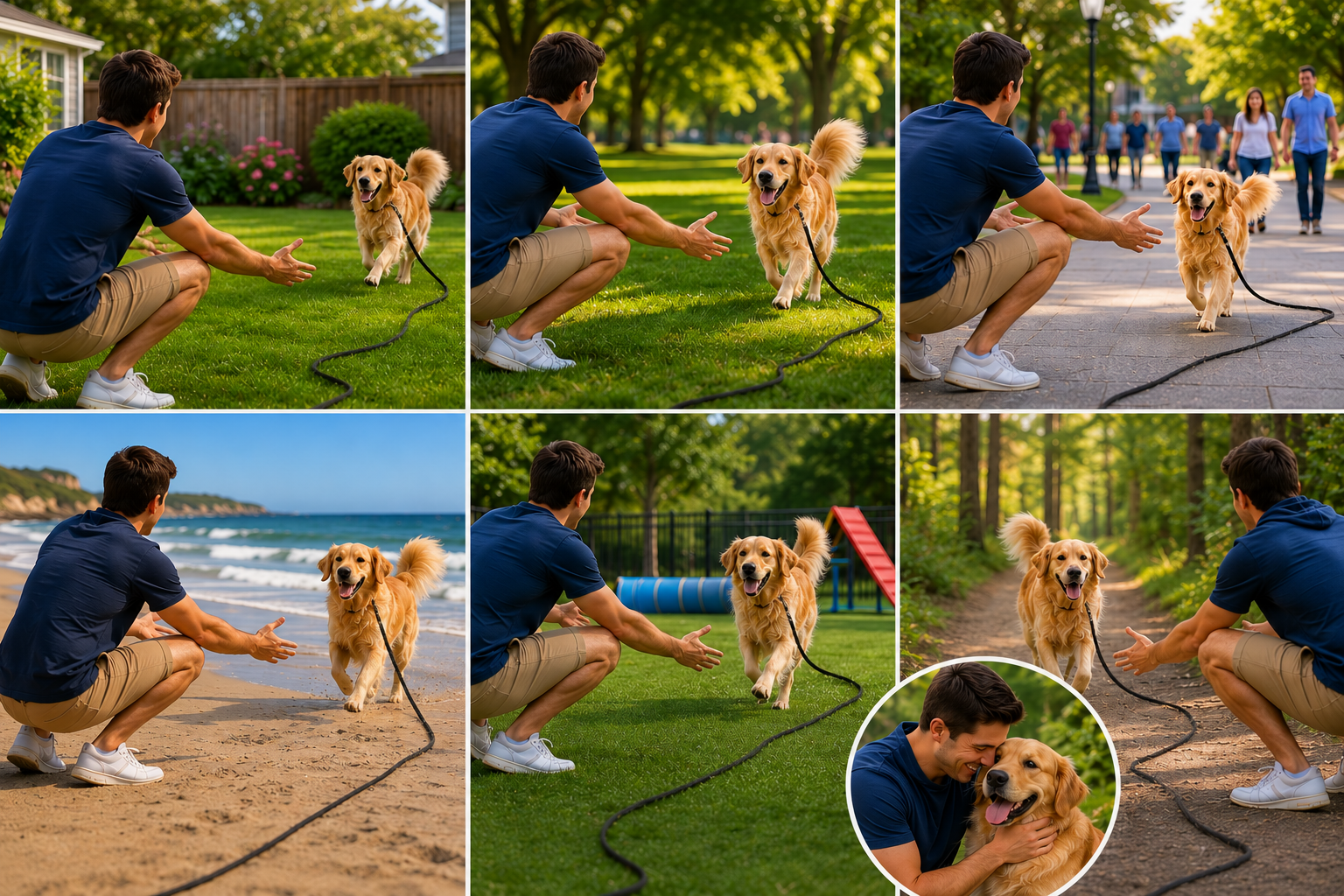
Come:
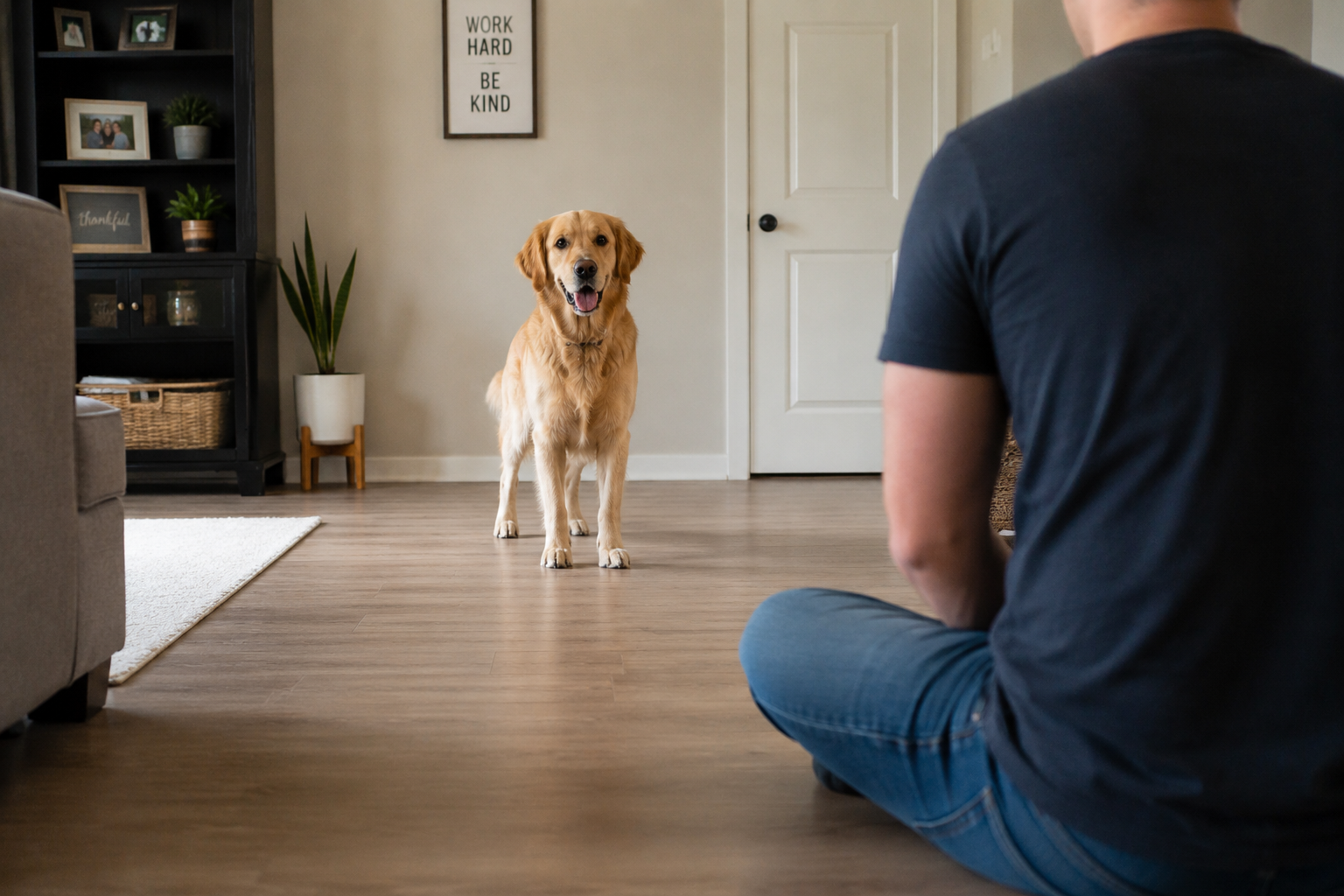
Back away from the dog.
Cheerfully say “COME.”
When the dog reaches you, mark “YES,” praise and reward.
Daily Routine (15 Minutes)
3 Minutes: Name Recognition
4 Minutes: Sit
4 Minutes: Down
4 Minutes: Come
Goal By End Of Week:
Your dog willingly responds to their name, can Sit and Down with guidance, and happily comes when called.
NOTE: Never call your dog for something unpleasant.
Week 2 - Leash Skills & Household Manners Loose Leash Walking
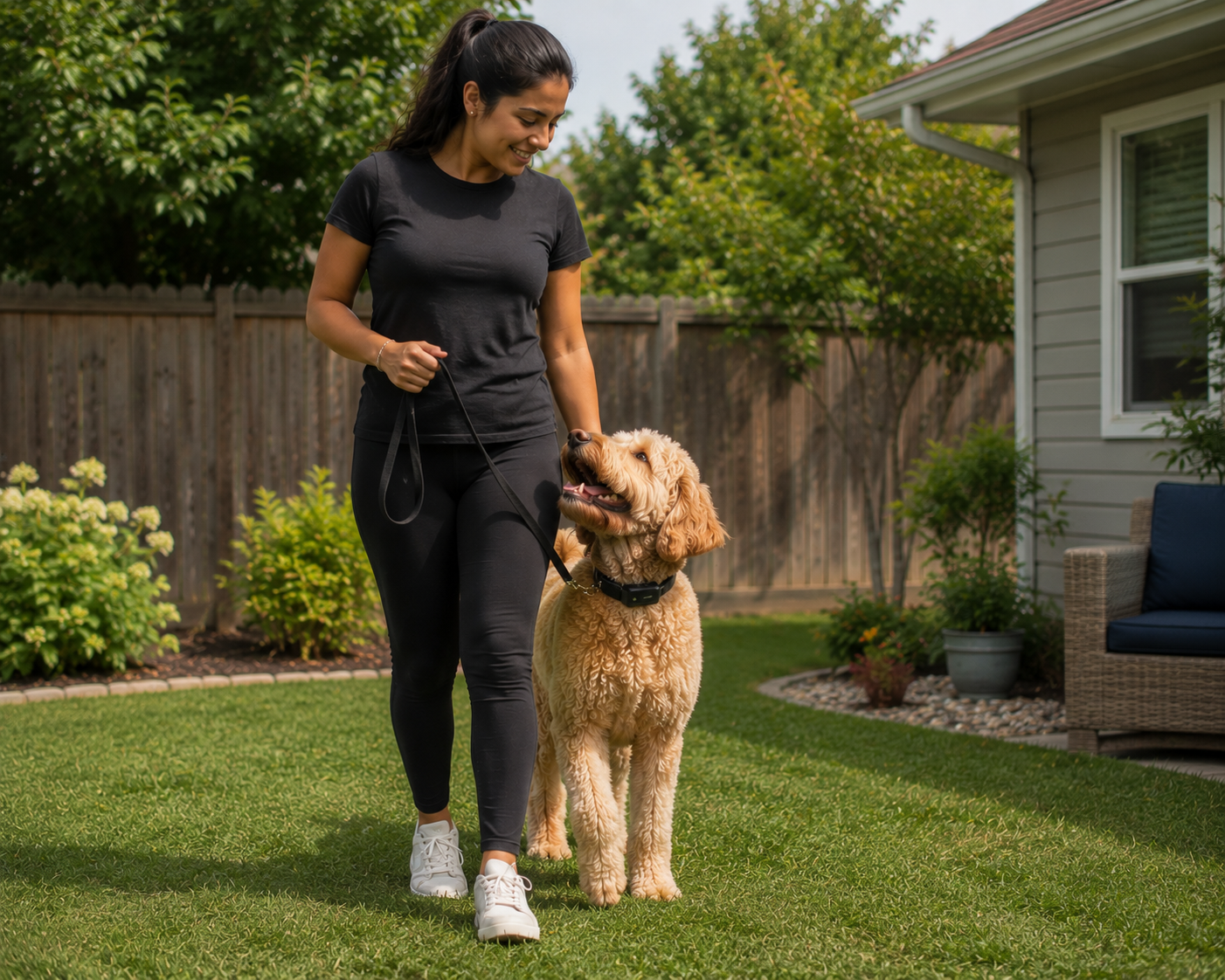
Loose Leash Walking:
Walk around the house or backyard on leash using a training collar.
If the dog pulls, pop the leash and say NO.
When the leash relaxes, say YES.
Reward the dog for staying beside you.
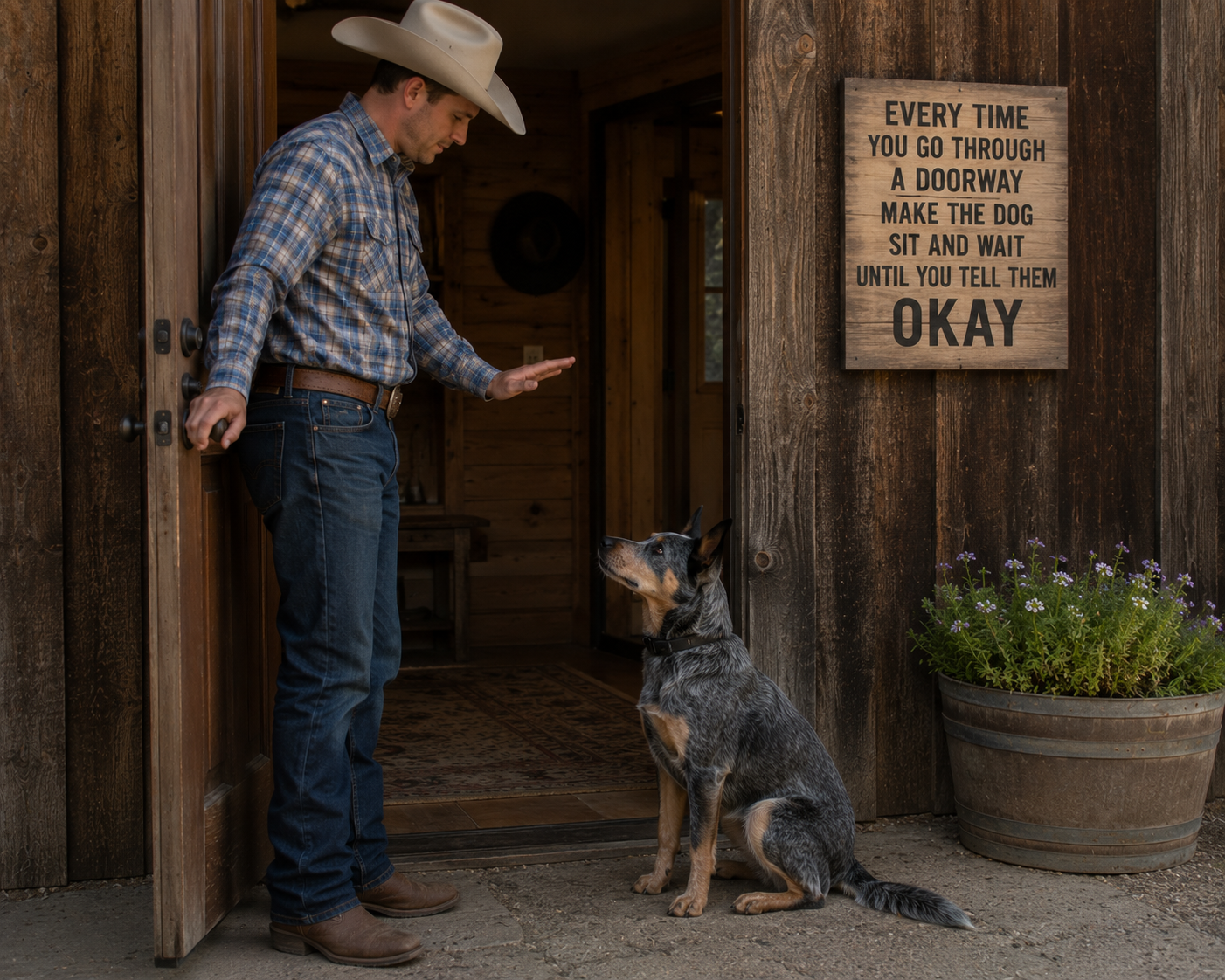
Sit At Doors:
Every time you approach a doorway, ask your dog to sit and wait. Open the door, and
do not allow your dog to move until you give the release command, "OKAY." Once
released, your dog may calmly walk through the doorway. Consistently practicing
this exercise teaches patience, impulse control, and reinforces that you make the
decisions about when and where your dog moves. You should do the same thing
when exiting their crate.
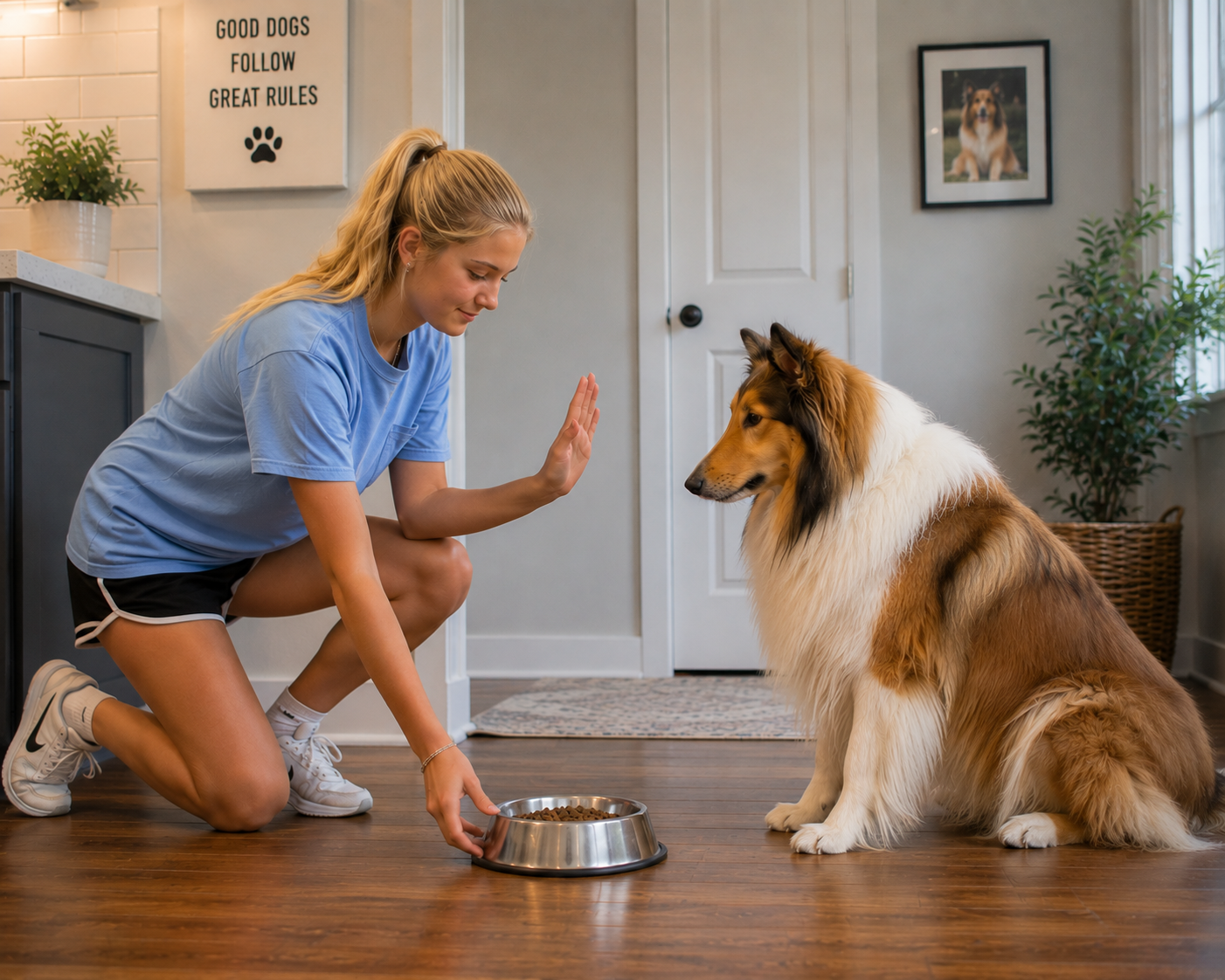
Wait For Food:
At every meal, have your dog sit while you’re filling their food bowl. Once the bowl is on
the floor, require your dog to remain seated and wait calmly until you release them with a
command such as "OKAY." Only after being released should they get up and begin eating.
This simple exercise helps build impulse control, patience, and respect for household rules.
Continued Recall Practice Outside:
Now it's time to begin teaching your dog the Come command in your backyard. Start by placing
your dog in a Sit-Stay. Walk a short distance away, turn to face your dog, and enthusiastically call
them using the command "COME." Keep your voice upbeat and inviting so your dog wants to come
to you. When your dog reaches you, immediately praise them, tell them "YES," and reward them
with a treat. Make coming to you the best thing that happens all day. The goal is for your dog to learn
that responding to the Come command always results in something positive.
Week 3 – Place Command & Impulse Control
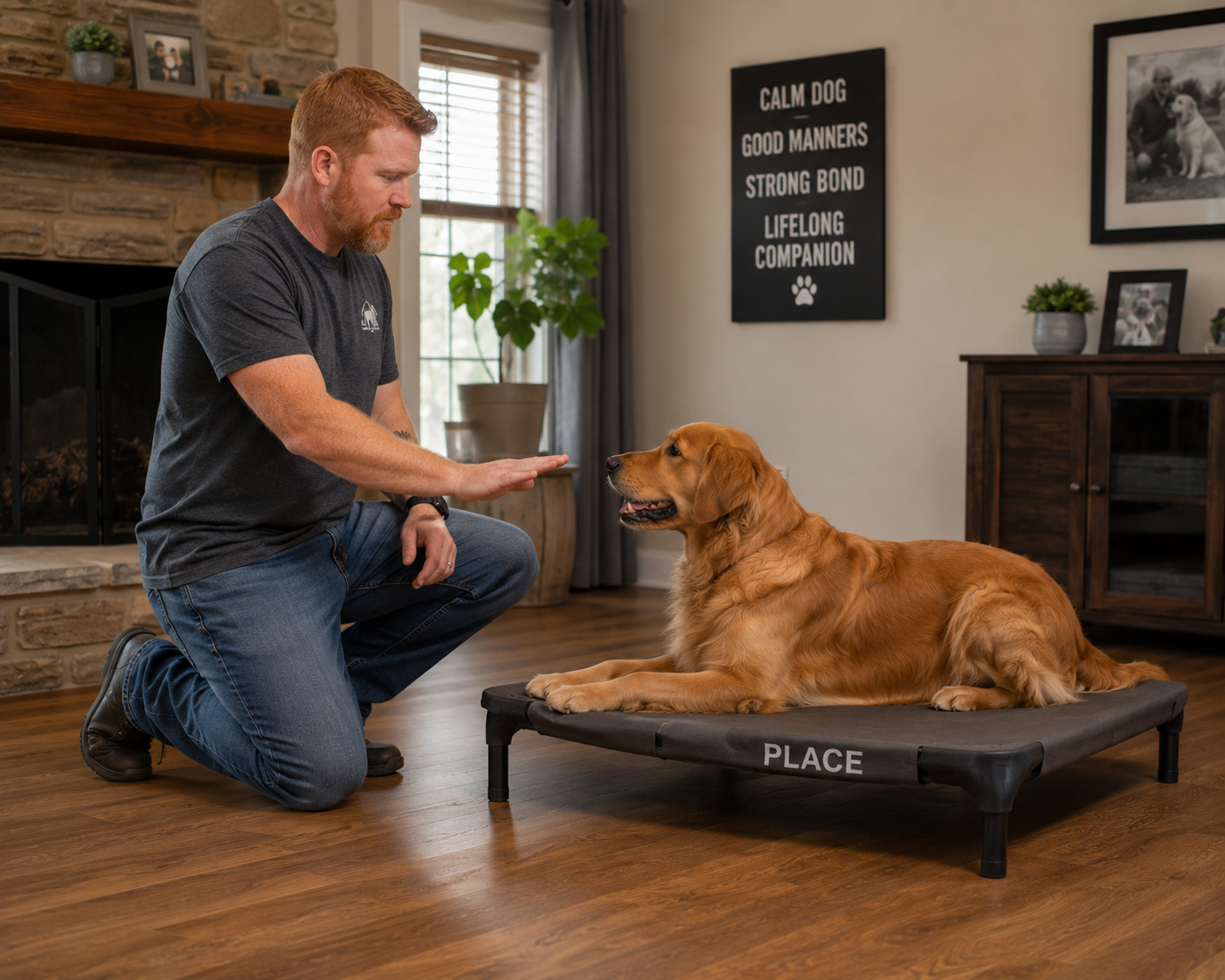
Place Command:
The Place command teaches your dog to go to a designated bed, mat, or platform and remain there
until released. Begin by leading your dog onto the bed using a treat and saying "PLACE" as all four
paws get onto the surface. Once on the bed, reward and praise your dog. After several successful
repetitions, begin asking your dog to remain on the bed in a down position for a few seconds before
rewarding. Gradually increase the amount of time your dog stays in Place and add distractions as
they improve. Always release your dog with a consistent command such as "OKAY." The Place
command is an excellent tool for teaching impulse control, creating calm behavior in the home,
and managing situations such as visitors arriving, family meals, or household activity.
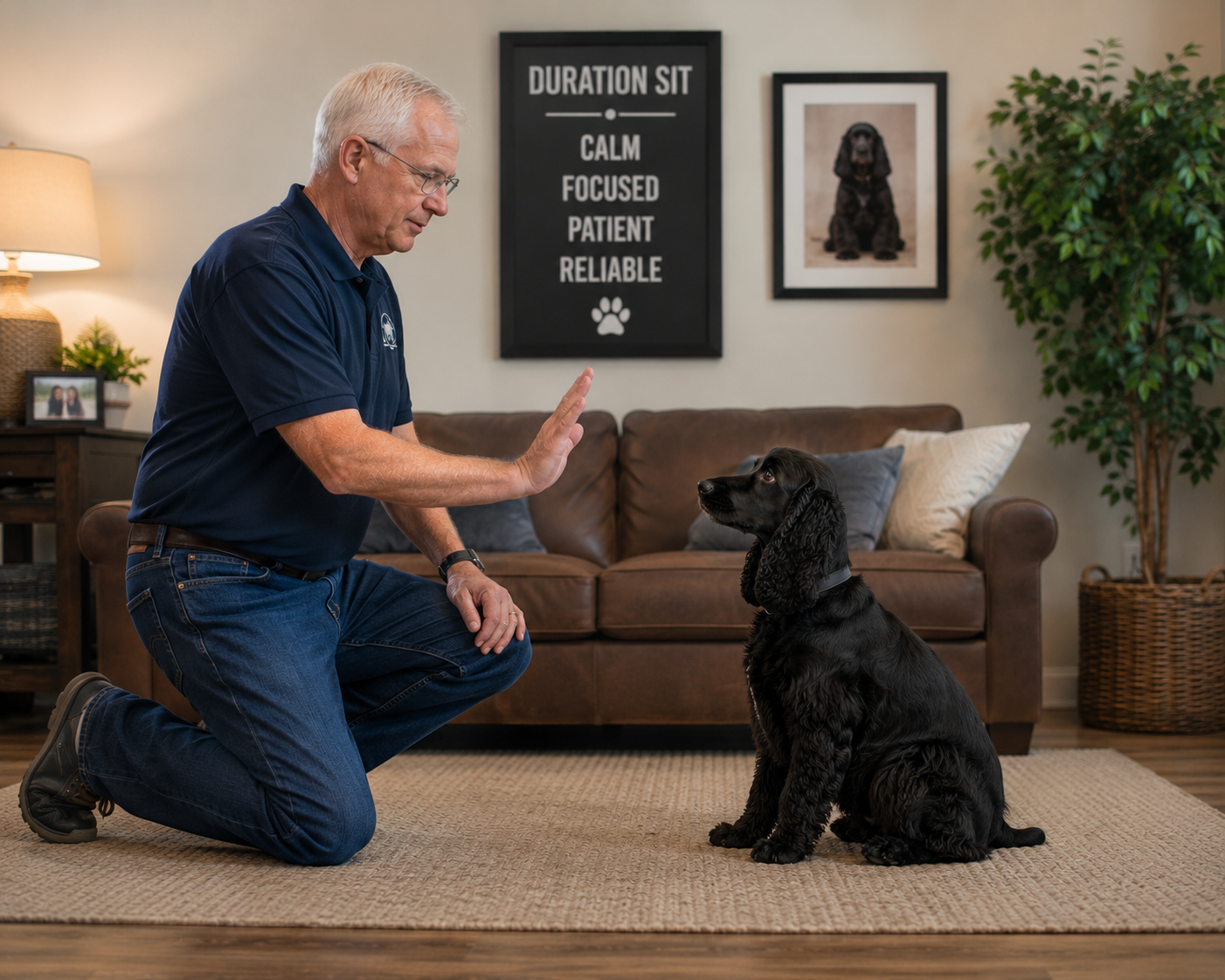
Duration Sit or Stay:
A Duration Sit teaches your dog to remain seated until released, even when distractions are
present. Start with just a few seconds and gradually increase the amount of time your dog
must hold the sit. If your dog gets up, calmly return them to the sit position in the same exact
spot and try again. This exercise builds patience, impulse control, and reliability.
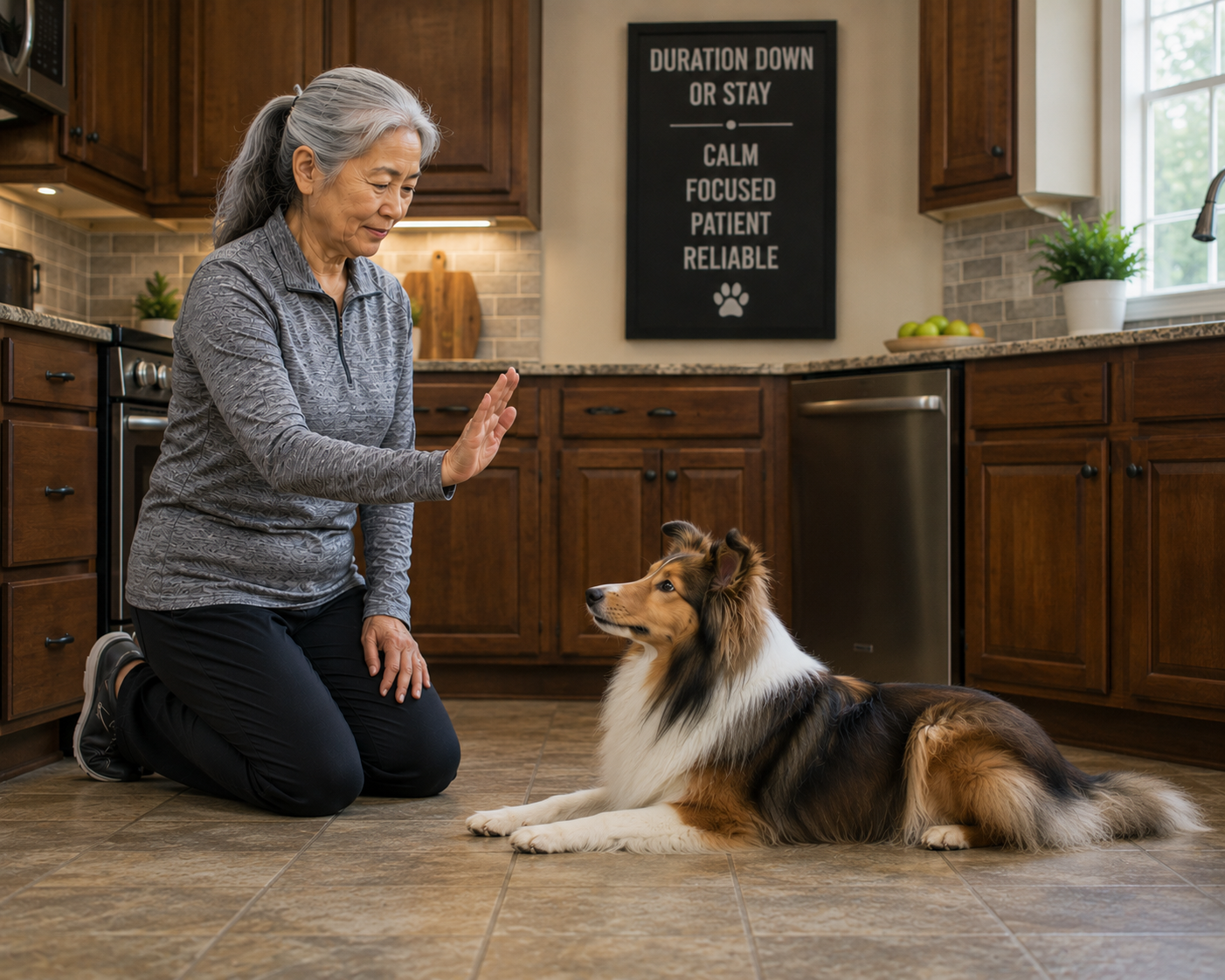
Duration Down or Stay:
A Duration Down teaches your dog to remain lying down until released, even when distractions
are present. Start with just a few seconds and gradually increase the amount of time your dog
must remain in the down position. If your dog gets up, calmly return them to the same exact
spot and place them back into a down. This exercise builds patience, impulse control, calmness,
and reliability.
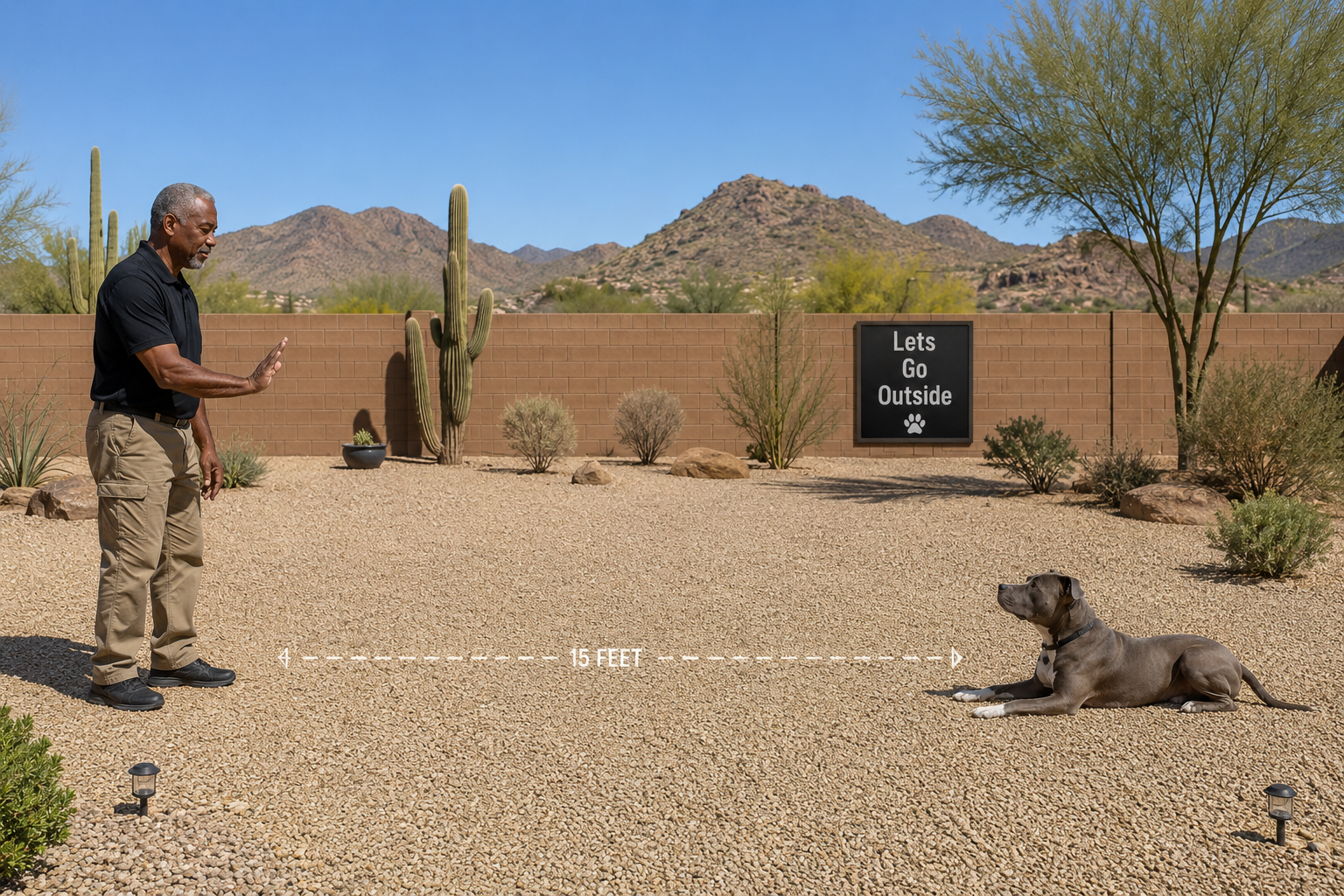
Now Take It Outside From A Distance:
Now it's time to take your training outside. Place your dog in a Down-Stay and gradually increase
the distance between you and your dog while requiring them to remain in position. Start with just
a few feet and work your way farther away as your dog becomes successful. If your dog gets up,
calmly return them to the exact spot and place them back into the down position. This exercise
teaches your dog to remain calm, focused, and reliable even when you are not standing right
beside them.
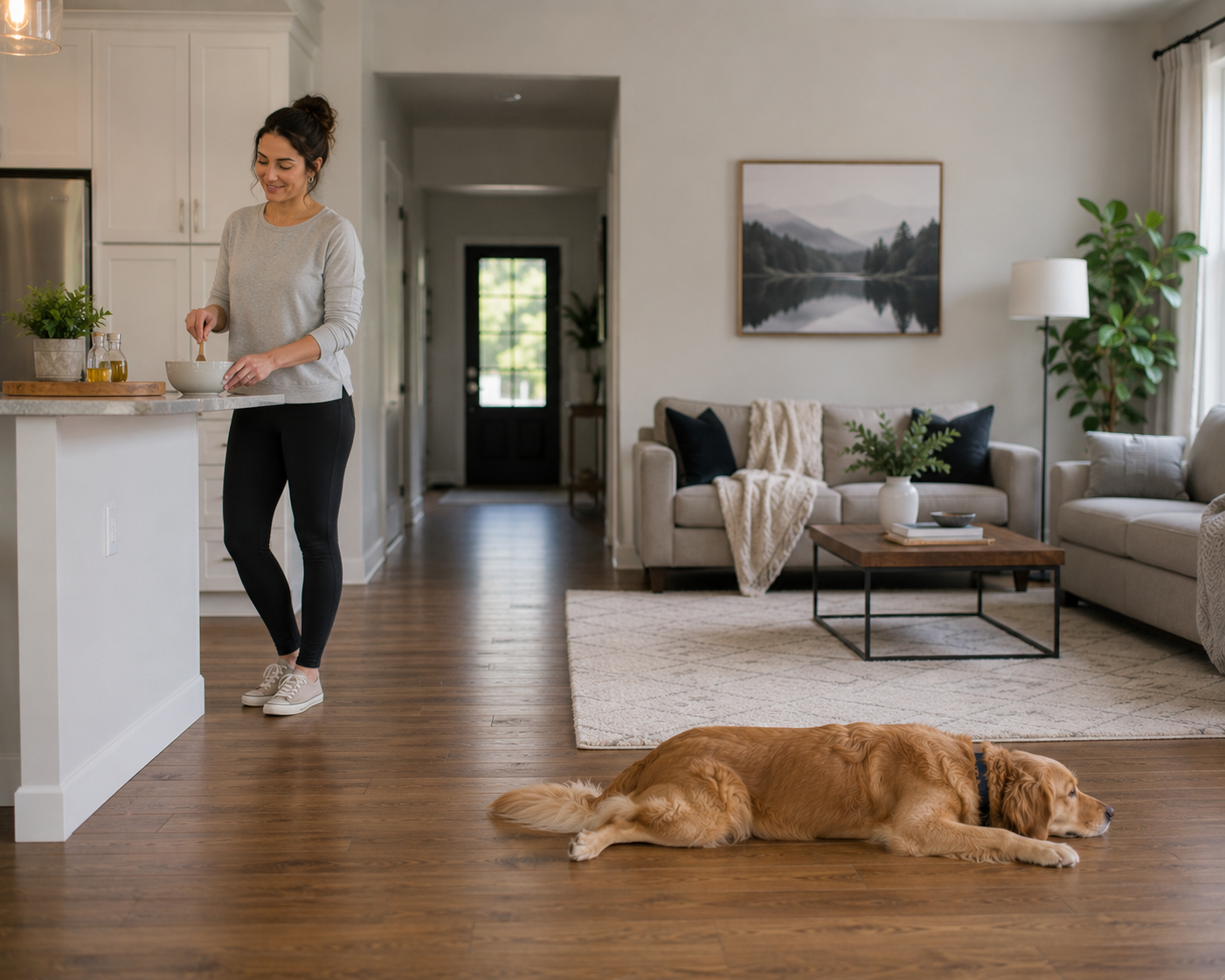
Waiting Calmly:
Teaching your dog to wait calmly helps develop patience and self-control. Ask your dog to sit or
lie down, then require them to remain calm while you move around, open doors, prepare food,
or perform other everyday activities. Reward calm behavior and gradually increase the amount
of time your dog must wait before being released with a command such as "OKAY."
Week 4 – Real World Obedience
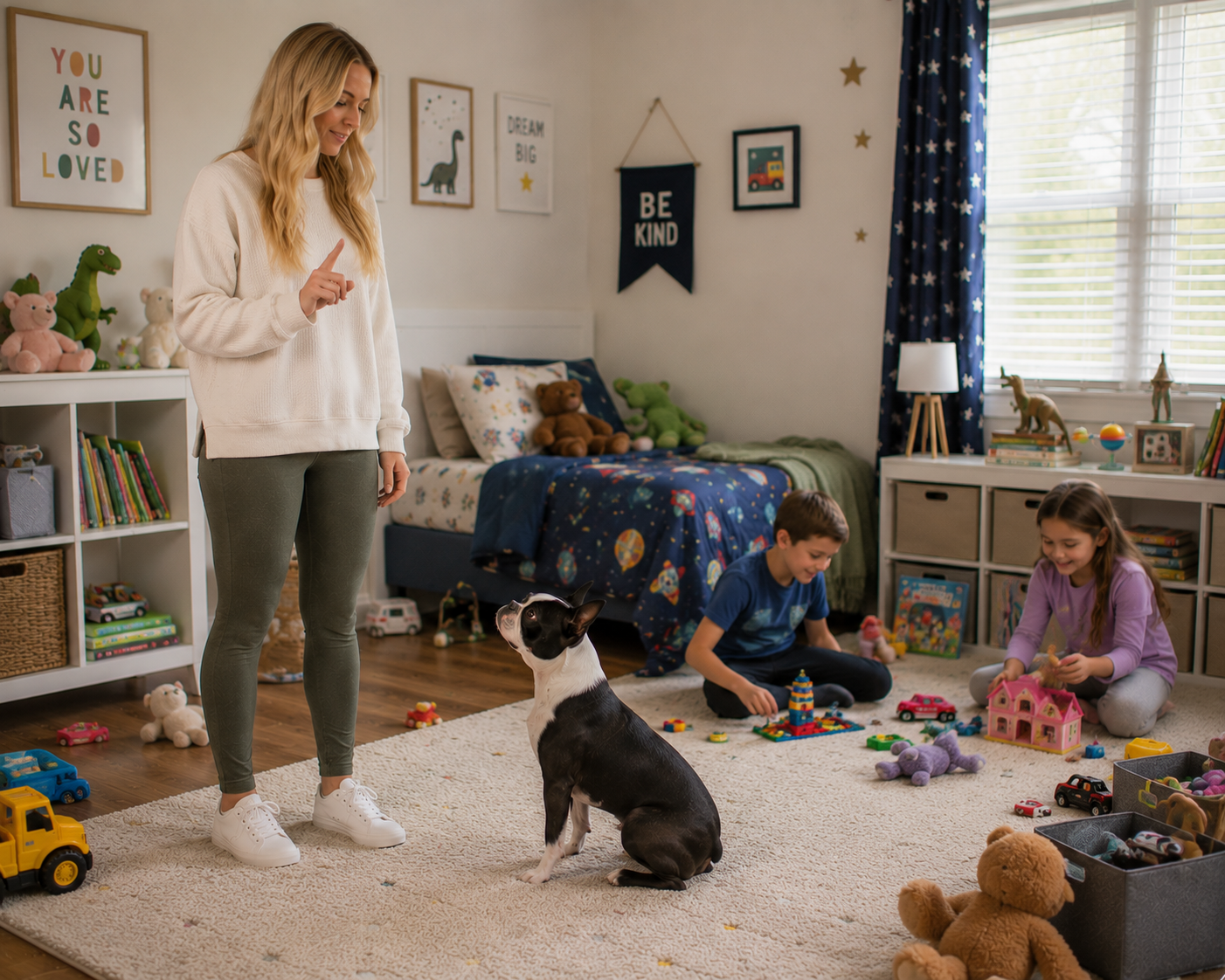
Increased Distractions:
Once your dog is performing commands reliably in a quiet environment, begin adding distractions.
Practice Sit, Down, Come, and Place while family members move around, toys are present, or
other everyday activities are taking place. Start with mild distractions and gradually increase the
difficulty. This teaches your dog to stay focused and obey commands even when something more
interesting is happening around them.
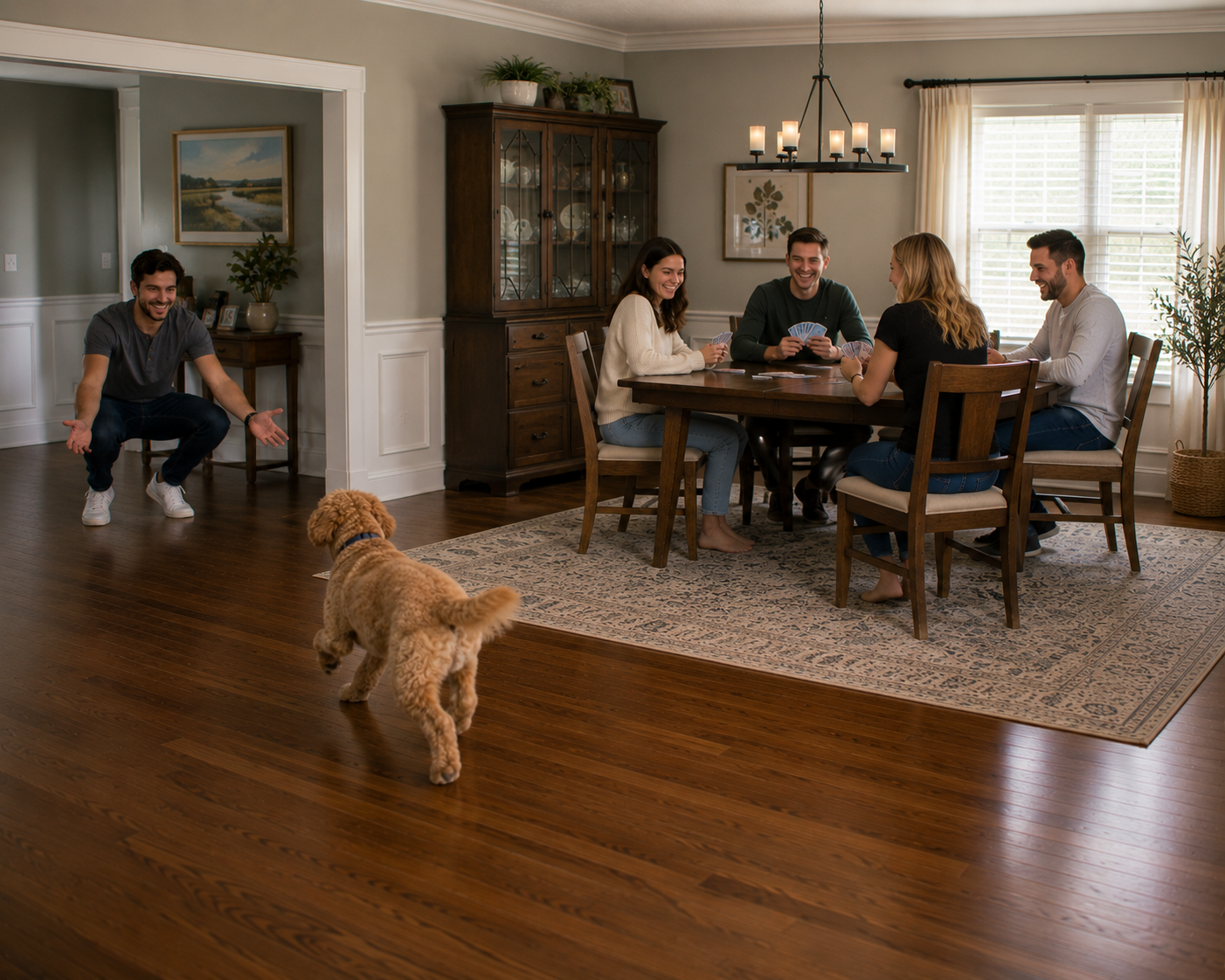
Recall Around Distractions:
Once your dog has a solid Come command, begin practicing around distractions such as toys,
children, other pets, or everyday household activity. Start with mild distractions and gradually
increase the difficulty. Always reward your dog for coming when called. This teaches your dog
that responding to the Come command is more important than whatever else is happening
around them.
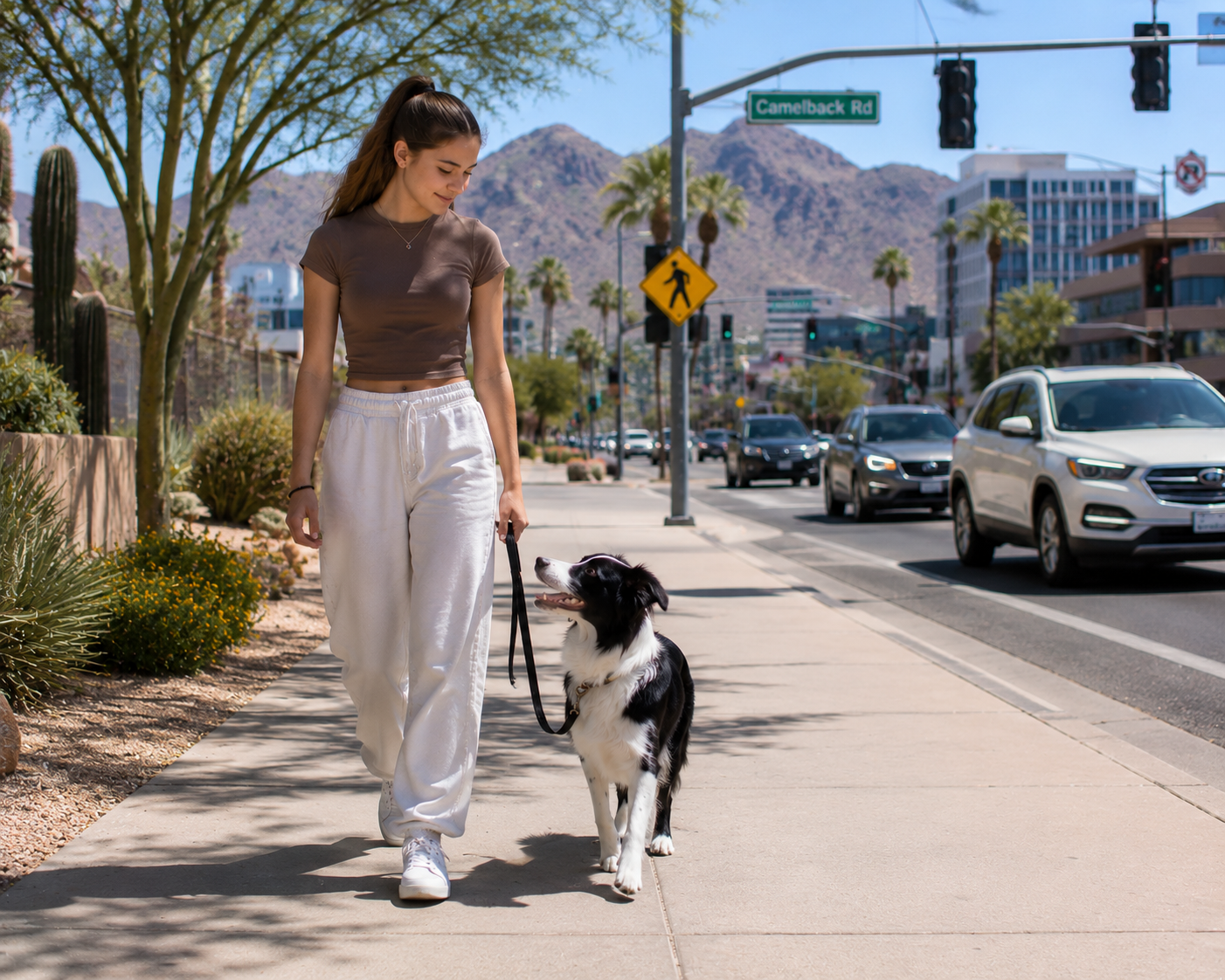
Loose Leash Walking Outside:
Practice loose leash walking in areas with increasing distractions such as people, pets, toys,
traffic or other activity. Keep your dog beside you on a loose leash and require them to sit every
time you stop walking. If your dog pulls ahead, calmly guide them back into position and continue.
This exercise teaches your dog to pay attention to you, remain under control around distractions,
and automatically stop when you stop.
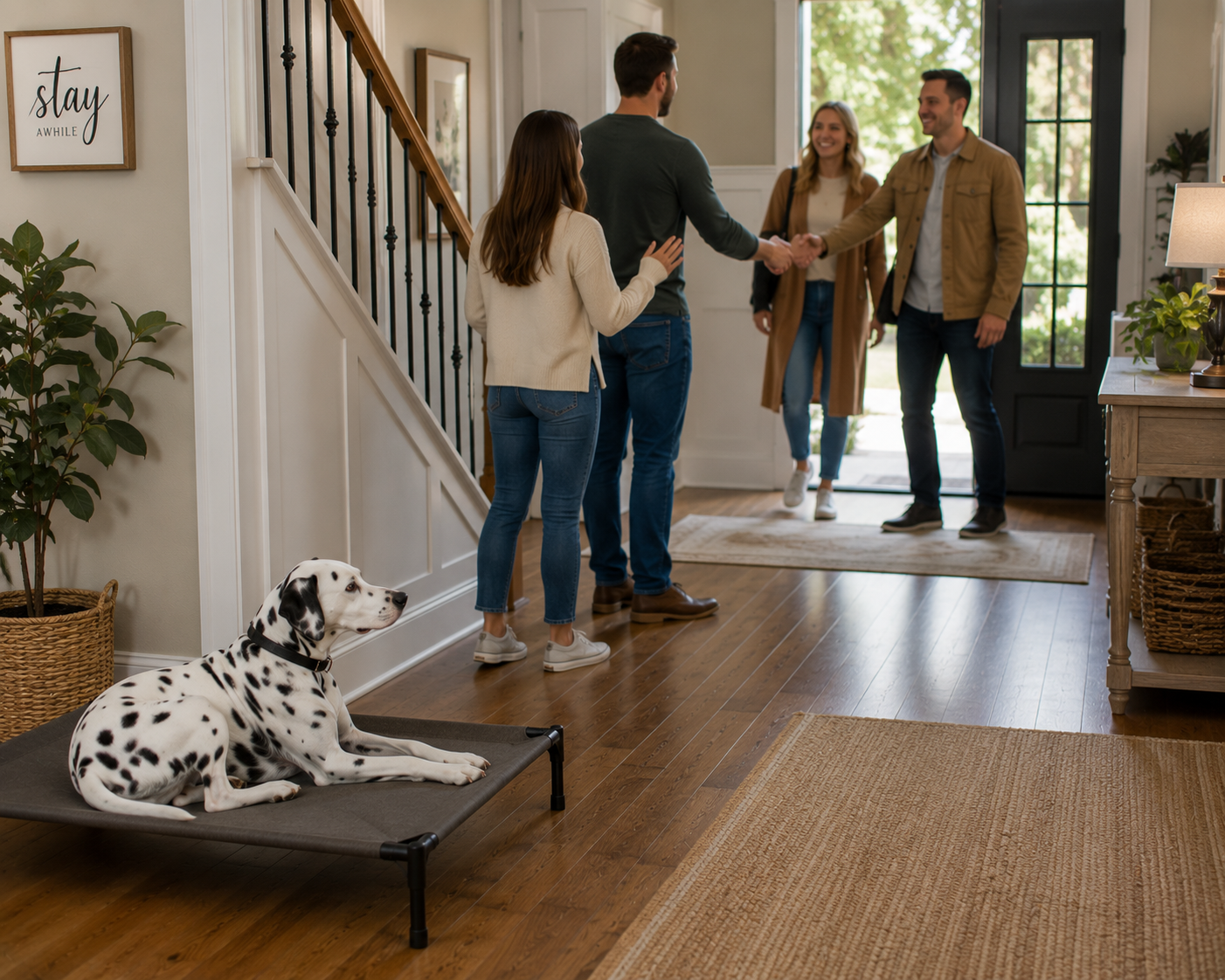
Place Around Activity:
Place your dog on their elevated bed, mat, or platform and require them to remain there while
normal household activity takes place around them. Start with mild distractions such as people
walking by, then gradually increase the difficulty by adding visitors, children, or other activity.
If your dog leaves Place, calmly return them to it. This exercise teaches your dog to remain
calm, focused, and under control regardless of what is happening around them.
Week 5 – Household Reliability
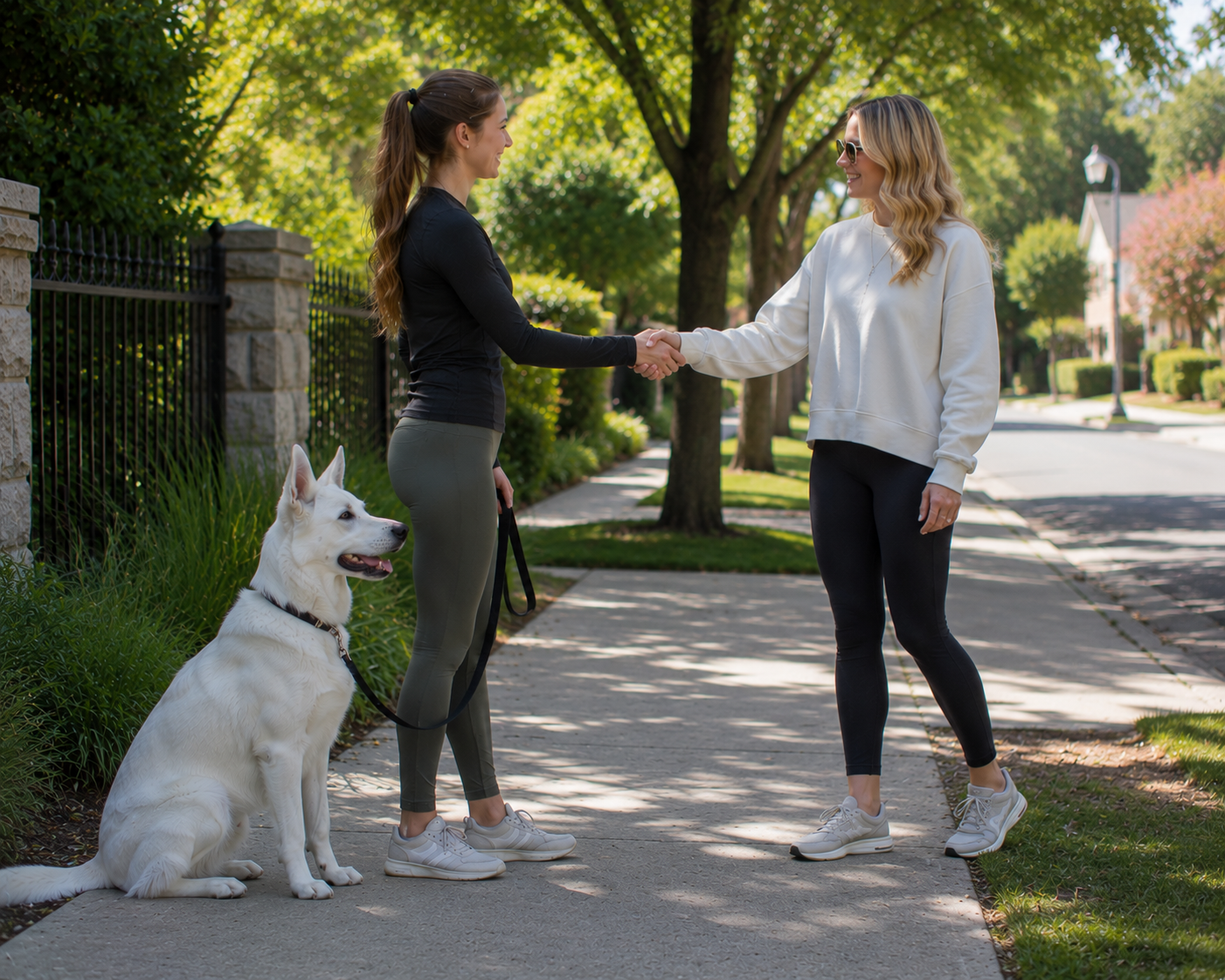
Greeting Visitors Politely:
When visitors arrive, place your dog in a Sit, Down, or Place command and require them to remain
calm while guests enter and get settled. Do not allow jumping, barking, or rushing to the door.
Reward calm behavior and only allow greetings when your dog is relaxed and under control.
This teaches your dog that good manners earn attention while excited behavior does not.
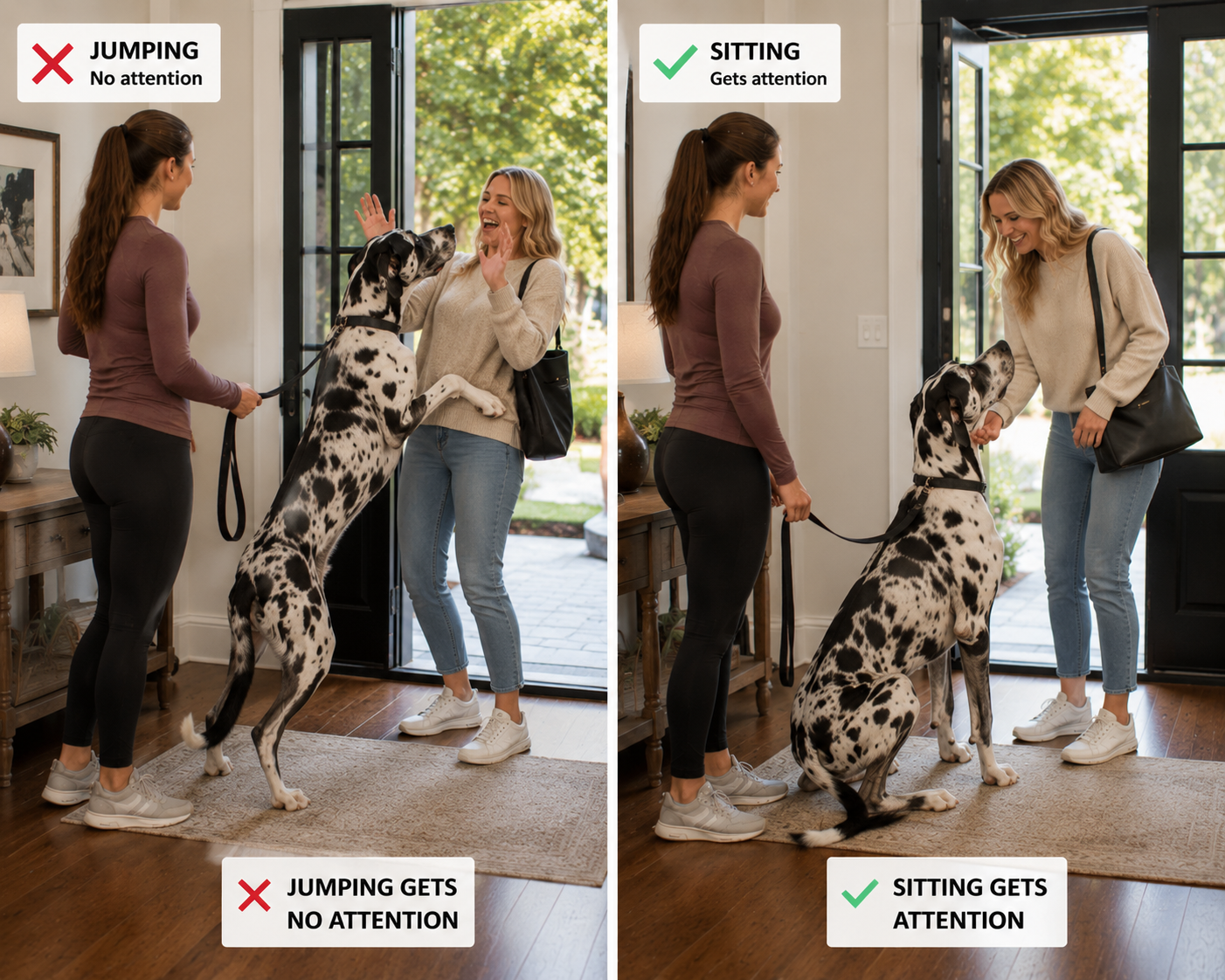
No Jumping:
To teach your dog not to jump on people, require them to sit whenever they greet someone.
If your dog jumps, calmly remove the attention and place them back into a sit. Reward calm,
polite behavior and only allow petting when all four paws and their butt remain on the ground.
Consistency teaches your dog that sitting gets attention while jumping does not.
Leave It:
To teach Leave It, place a treat or object near your dog and tell them "LEAVE IT." If they move
toward it, block access and repeat the command. The moment your dog ignores the item and
looks back at you, reward and praise them. This teaches your dog to ignore things you do not
want them to have and focus on you instead.
Continued Recall:
distractions. Gradually add more distance, people, toys, and activity while expecting the same
reliable response. Always reward and praise your dog when they come. Consistent practice
helps build a recall that you can depend on in real-world situations. Always keep your dog on a
leash unless you are in a fenced secure area
Week 6 – Putting It All Together
By this point, your dog has been introduced to many of the most important obedience skills including Sit, Down, Stay, Come, Place, Leave It, loose leash walking, polite greetings, and remaining calm around distractions. Now it is time to begin combining these skills into real-world situations. During your daily training sessions, ask your dog to perform multiple commands before rewarding them. For example, have your dog Sit, then Down, then Stay while you walk away, followed by a Come command. Practice these exercises in different locations, around different people, and with varying levels of distraction.
Remember that obedience is not about performing commands in a quiet living room—it is about having a dog that listens and responds in everyday life. Continue to reinforce calm behavior, reward good decisions, and hold your dog accountable for commands they already understand. Consistent practice, clear communication, and patience will continue to strengthen the bond between you and your dog while building a reliable companion you can enjoy anywhere.
As you continue your journey with your dog, we encourage you to take advantage of the many free training articles available through Walkers K9 Services. These articles were created from over 40 years of hands-on dog training experience and are designed to help dog owners better understand canine behavior, obedience, problem-solving, and everyday life with their dogs. If you find these articles helpful, please consider sharing them with friends, family members, rescue organizations, and fellow dog owners. Every share helps us reach more people and allows us to continue providing valuable training information to our community.
If you have benefited from our training programs, articles, classes, or advice, one of the best ways you can support Walkers K9 Services is by leaving us a positive review on Google and Facebook. Reviews help other dog owners feel confident when choosing a trainer and allow small businesses like ours to continue growing. Your honest feedback not only means a great deal to us personally, but it also helps other people find the guidance they need to build a better relationship with their dogs. Thank you for your support, for sharing our content, and for allowing us to be a part of your dog's training journey.