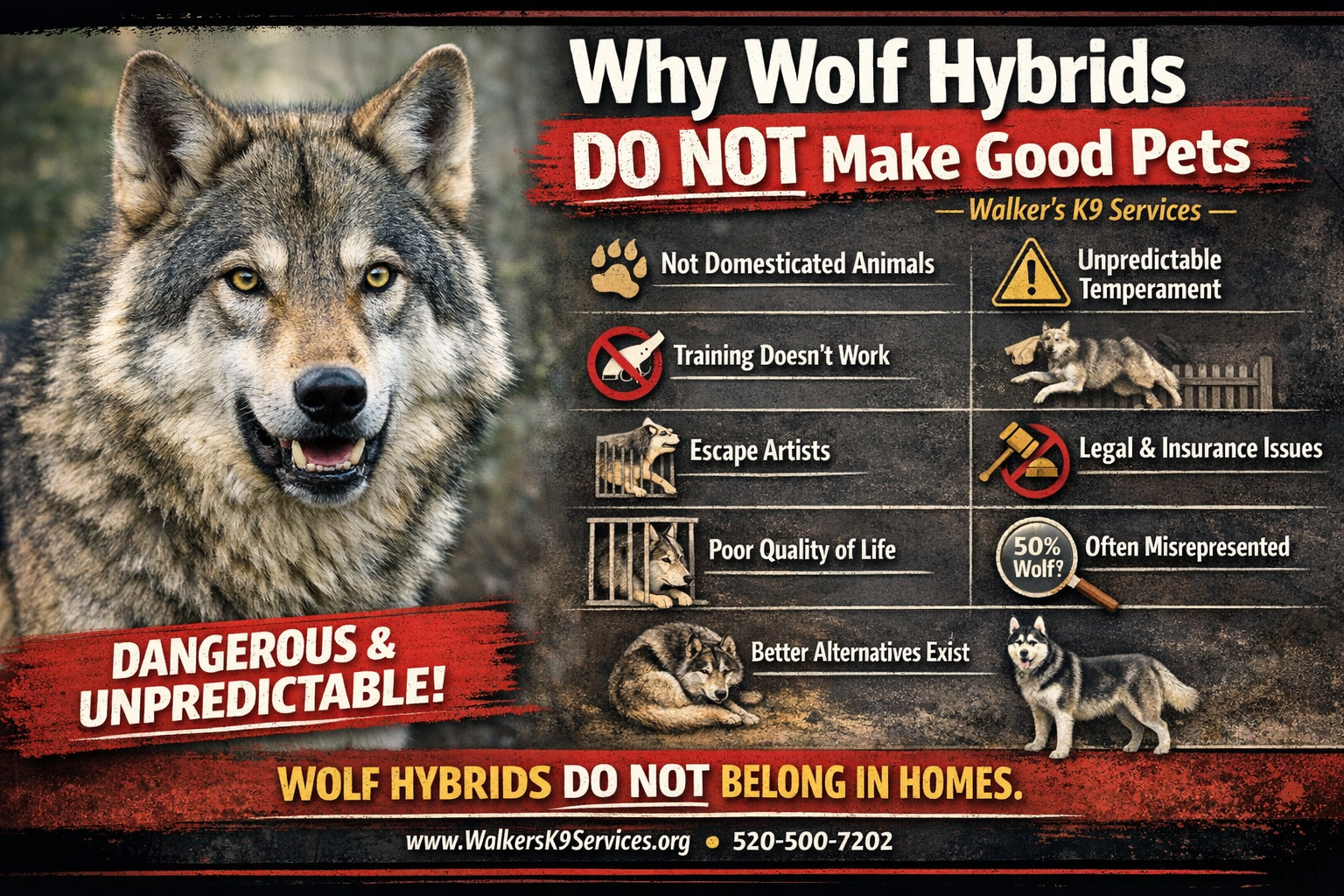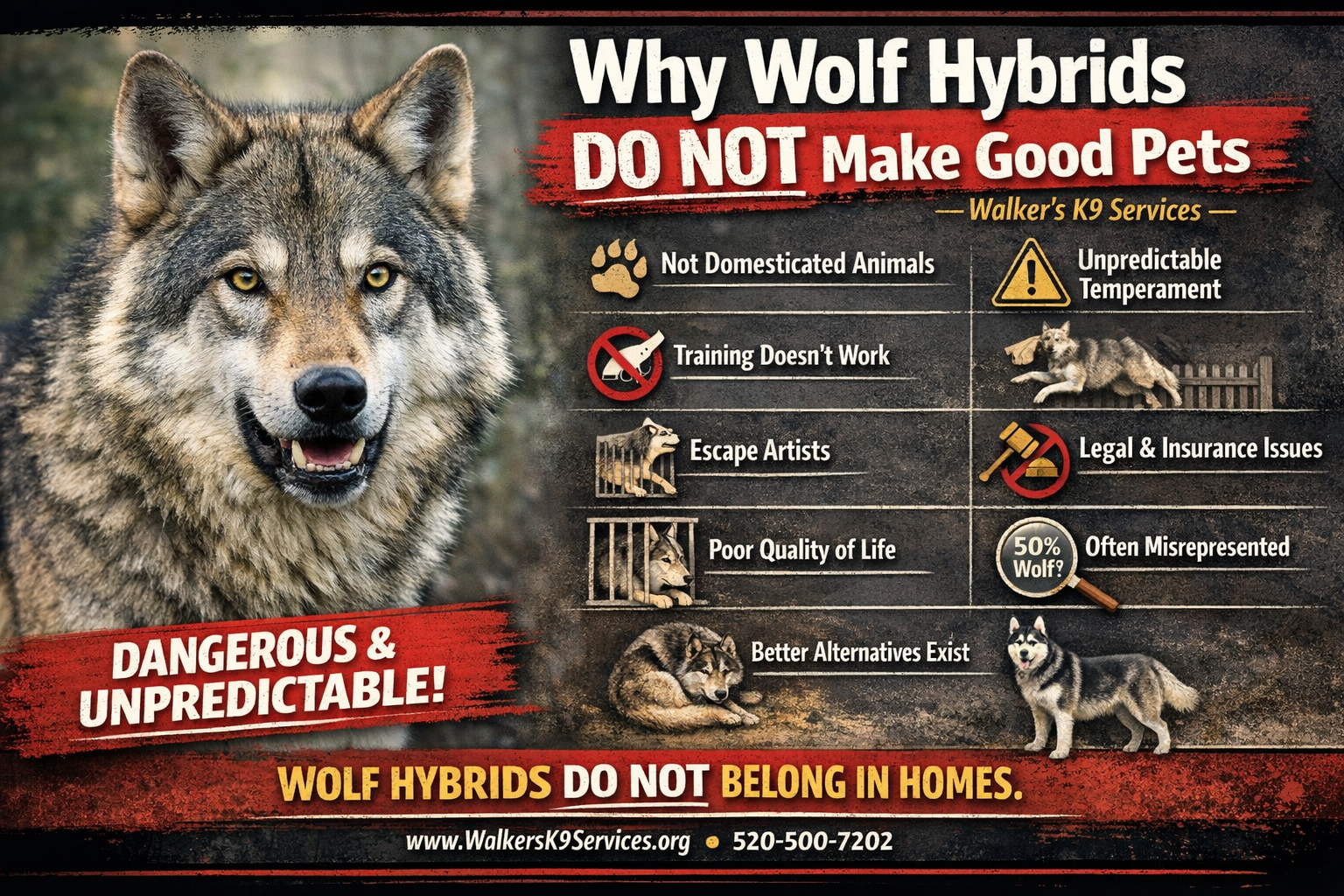
Why Wolf Hybrids Do Not Make Good Pets
By George Walker, Walker’s K9 Services – Tucson, AZ
Wolf hybrids—often called wolfdogs—are frequently marketed as exotic, intelligent, and loyal companions. Photos and videos online can make them look like majestic, oversized dogs with a “wild edge.” Unfortunately, the reality is very different. From a professional dog trainer’s perspective, wolf hybrids are one of the worst choices for a household pet, and in many cases, owning one leads to heartbreak for both the animal and the owner.
Below is a clear, experience-based explanation of why wolf hybrids do not make good pets.
1. Wolf Hybrids Are Not Dogs
No matter how much domestic dog DNA a wolf hybrid has, wolves are not
domesticated animals. Dogs have been selectively bred for tens of
thousands of years to live alongside humans. Wolves have not.
Wolf hybrids retain strong wolf instincts, including:
Extreme wariness of humans
High prey drive
Strong territorial behavior
Instinctive fear responses
These instincts do not “train out.” You cannot obedience-train a wolf
hybrid into being a Labrador.
2. Unpredictable Temperament
One of the biggest dangers of wolf hybrids is behavioral unpredictability.
Even littermates can develop drastically different temperaments.
A wolf hybrid may:
Be calm for years and suddenly become aggressive at maturity
Bond strongly to one person and distrust everyone else
React defensively to normal household situations
Unlike dogs, wolf hybrids do not reliably display warning signals before biting. This makes them especially dangerous around children, visitors, and other pets.
3. Training Is Extremely Limited
Wolf hybrids do not respond to training the way dogs do.
Common issues include:
Poor recall (they do not reliably come when called)
Resistance to leash training
Low motivation to please humans
High independence and problem-solving used to escape, not comply
Obedience commands may work temporarily, but instinct always overrides training in high-stress or stimulating situations.
4. Severe Containment Problems
Wolf hybrids are escape artists.
Most can:
Jump or climb 8–10 foot fences
Dig under reinforced enclosures
Chew through wood, chain link, and weak metal
Open latches and gates
Once loose, a wolf hybrid may kill livestock, pets, or wildlife—placing the animal at risk of being seized or euthanized.
5. Legal and Insurance Issues
Many states, counties, and cities restrict or outright ban wolf hybrids. Even where legal, ownership often requires special permits, inspections, or liability insurance.
Homeowners insurance commonly:
Refuses coverage
Cancels policies
Denies claims involving wolf hybrids
If a bite occurs, owners are often held strictly liable, regardless of circumstances.
6. Poor Quality of Life for the Animal
Despite good intentions, most homes cannot meet a wolf hybrid’s needs.
They require:
Large, secure outdoor enclosures
Constant mental stimulation
Minimal confinement
Limited human interaction compared to dogs
When these needs aren’t met, wolf hybrids often develop:
Chronic stress
Destructive behaviors
Aggression
Self-injury
Many end up surrendered to sanctuaries that are already overcrowded—or euthanized because no placement exists.
7. They Are Often Misrepresented
Many breeders falsely label animals as “low-content wolf hybrids” when they are simply poorly bred dogs—or worse, high-content wolfdogs.
Buyers are frequently misled about:
Percentage of wolf content
Adult size
Behavior at maturity
Legal consequences
By the time problems appear, the animal is often 1–3 years old—when wolf traits become strongest—and rehoming is nearly impossible.
8. Better Alternatives Exist
If you admire the look of wolves, there are domestic dog breeds that offer a similar appearance without the extreme risks, such as:
Alaskan Malamutes
Siberian Huskies
Northern Inuit–type breeds
Even these breeds require experienced owners—but they are still dogs, not wild hybrids.
Final Thoughts
Wolf hybrids are not misunderstood pets—they are mismatched animals forced into environments that do not suit their biology or instincts. Love, training, and good intentions are not enough to override genetics.
For the safety of your family, your community, and the animal itself, wolf hybrids should never be kept as household pets.
Dog Training in Tucson, AZ Dog Training in Marana, AZ Training Options
Walkers K9 Services — Building Better Dogs, One Lesson at a Time 🔹
Please support our mission by sharing our training articles with other dog owners.
Written by: George Walker
Walkers K9 Services | Tucson & Marana, AZ
520-500-7202
www.WalkersK9Services.org