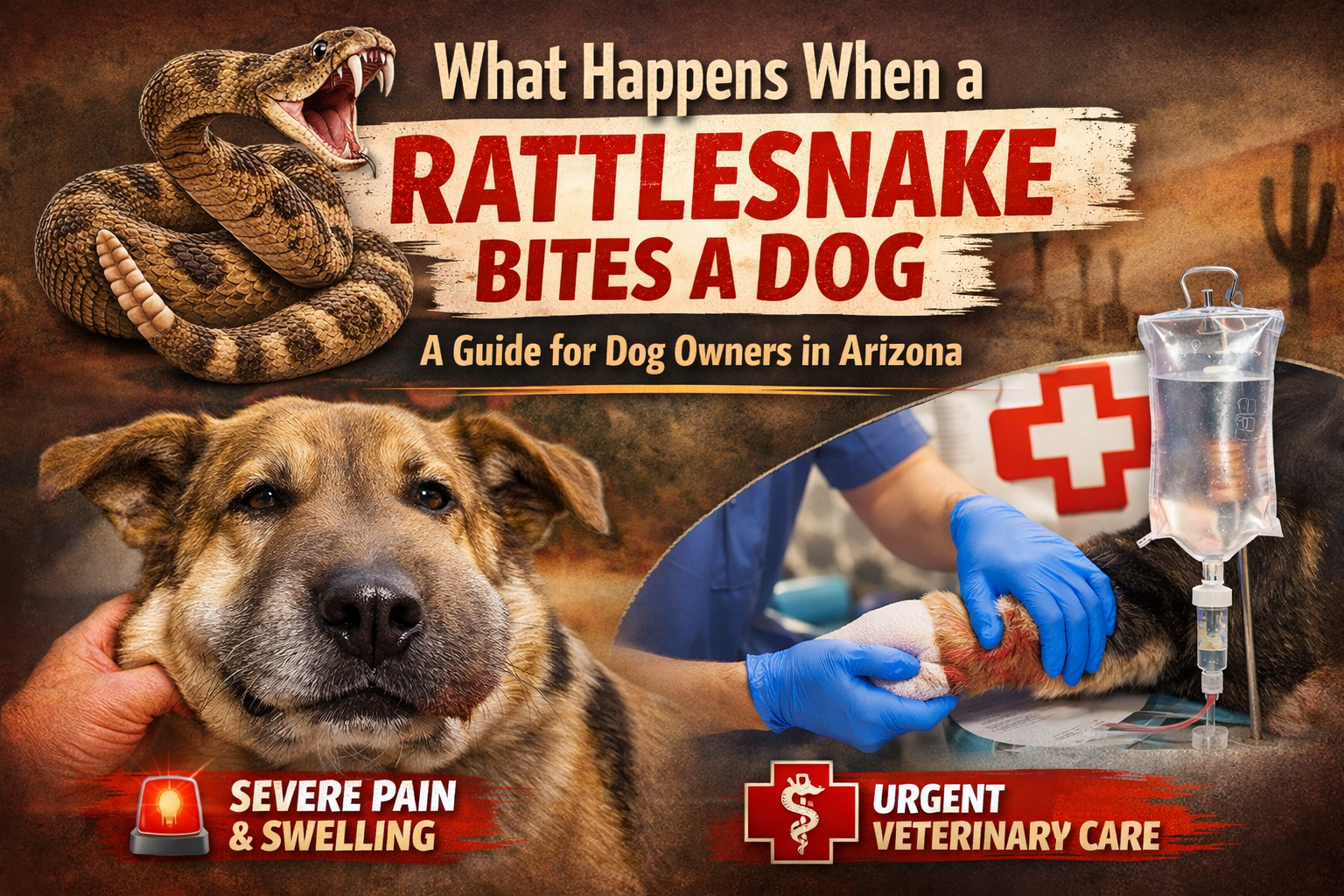
What Happens When a Rattlesnake Bites a Dog
By George Walker, Walker’s K9 Services – Tucson, AZ
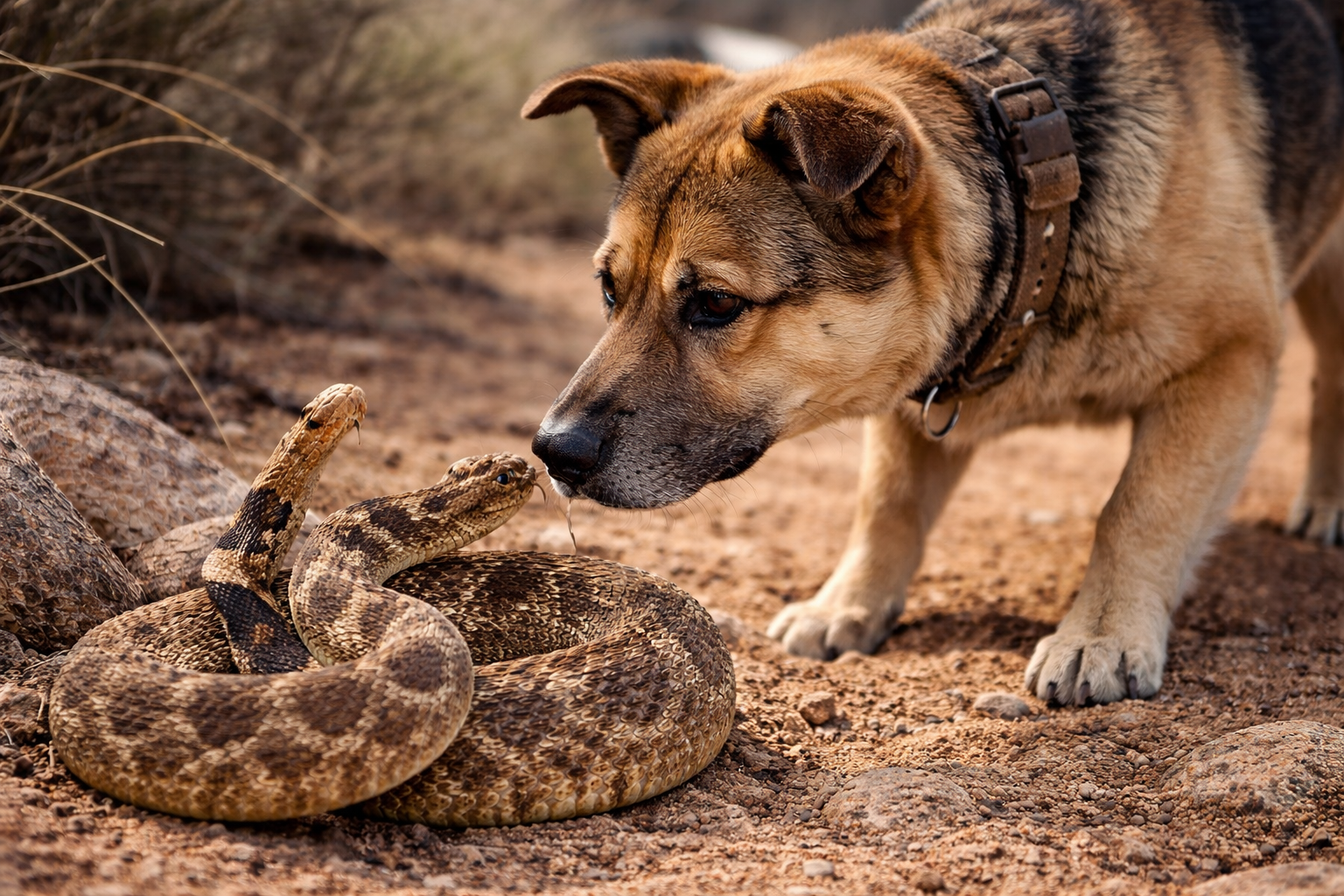
In Southern Arizona, rattlesnakes are a real danger for dogs. Curious by nature, many dogs will investigate the sound, smell, or movement of a snake. Unfortunately, that curiosity can lead to a bite — and when a rattlesnake bites a dog, it quickly becomes a serious medical emergency.
Understanding what happens during a rattlesnake bite can help dog owners recognize the signs and get their dog the help it needs as quickly as possible.
How Rattlesnake Venom Affects Dogs
Most rattlesnakes in Arizona deliver hemotoxic venom. This type of venom primarily attacks blood and tissue. Once injected through the snake’s fangs, the venom begins spreading through the dog’s body through the lymphatic system and bloodstream.
The venom starts damaging:
Blood cells
Blood vessels
Surrounding tissue
This process can begin within minutes of the bite.
The Immediate Reaction
Most dogs react instantly when bitten. Owners often report hearing a sudden
yelp or cry, followed by the dog jumping away from the snake.
Common immediate reactions include:
Sudden pain
Limping
Pawing at the bite area
Agitation or confusion
Because dogs often investigate snakes with their noses, many bites occur on
the muzzle or face. Others happen on the front legs or paws when a dog steps near the snake.
Rapid Swelling
One of the most common signs of a rattlesnake bite is rapid swelling.
Swelling can begin within 5–30 minutes and may continue to worsen over the next several hours. In facial bites, the swelling can be dramatic, sometimes making the dog almost unrecognizable.
The swelling is caused by venom damaging tissue and blood vessels, which leads to fluid leaking into surrounding areas.
Tissue Damage
Rattlesnake venom does more than just cause swelling. It begins to break down tissue and interfere with blood clotting.
As the venom spreads, the dog may develop:
Bruising
Internal bleeding
Severe inflammation
Tissue destruction (necrosis) around the bite
In severe cases, untreated tissue damage can require surgical treatment.
Systemic Symptoms
If a significant amount of venom enters the bloodstream, the dog may begin showing systemic symptoms, meaning the entire body is affected.
These may include:
Weakness or lethargy
Vomiting
Excessive drooling
Rapid breathing
Collapse
Low blood pressure
Blood clotting problems
Severe envenomation can lead to shock, which can be life-threatening without immediate veterinary treatment.
How Quickly Symptoms Appear
Most dogs begin showing symptoms within 10 minutes to 2 hours after being bitten. However, swelling and pain often appear much sooner.
Even if symptoms appear mild at first, the condition can worsen quickly.
Treatment and Survival
The good news is that many dogs recover well when treated promptly by a veterinarian.
Treatment typically includes:
Antivenom
Intravenous fluids
Pain management
Anti-inflammatory medication
Monitoring of blood clotting and organ function
With rapid treatment, survival rates are generally 80–90% or higher.
Dry Bites
Not every rattlesnake bite injects venom. Sometimes snakes deliver what is known as a “dry bite,” where little or no venom is injected.
However, there is no safe way for an owner to determine whether venom was injected. For this reason, every suspected rattlesnake bite should be treated as an emergency.
Prevention Is the Best Protection
In rattlesnake country like Southern Arizona, prevention is the most effective way to protect dogs.
Training dogs to recognize, avoid, and retreat from rattlesnakes can dramatically reduce the risk of dangerous encounters.
Rattlesnake Aversion Training Can Save Your Dog’s Life
At Walkers K9 Services, we provide professional Rattlesnake Aversion Training designed specifically for dogs living in the Tucson and Marana areas. This training teaches dogs to recognize the sight and scent of a rattlesnake and immediately move away from it. The goal is simple — when a dog encounters a rattlesnake, their instinct should be to avoid it, not investigate it. In a region where rattlesnake encounters are common, this training can be one of the most important safety investments a dog owner can make.
Walkers K9 Services — Building Better Dogs, One Lesson at a Time 🔹
Please support our mission by sharing our training articles with other dog owners.
Written by: George Walker
Walkers K9 Services | Tucson & Marana, AZ
📞 520-500-7202
🌐 WalkersK9Services.org