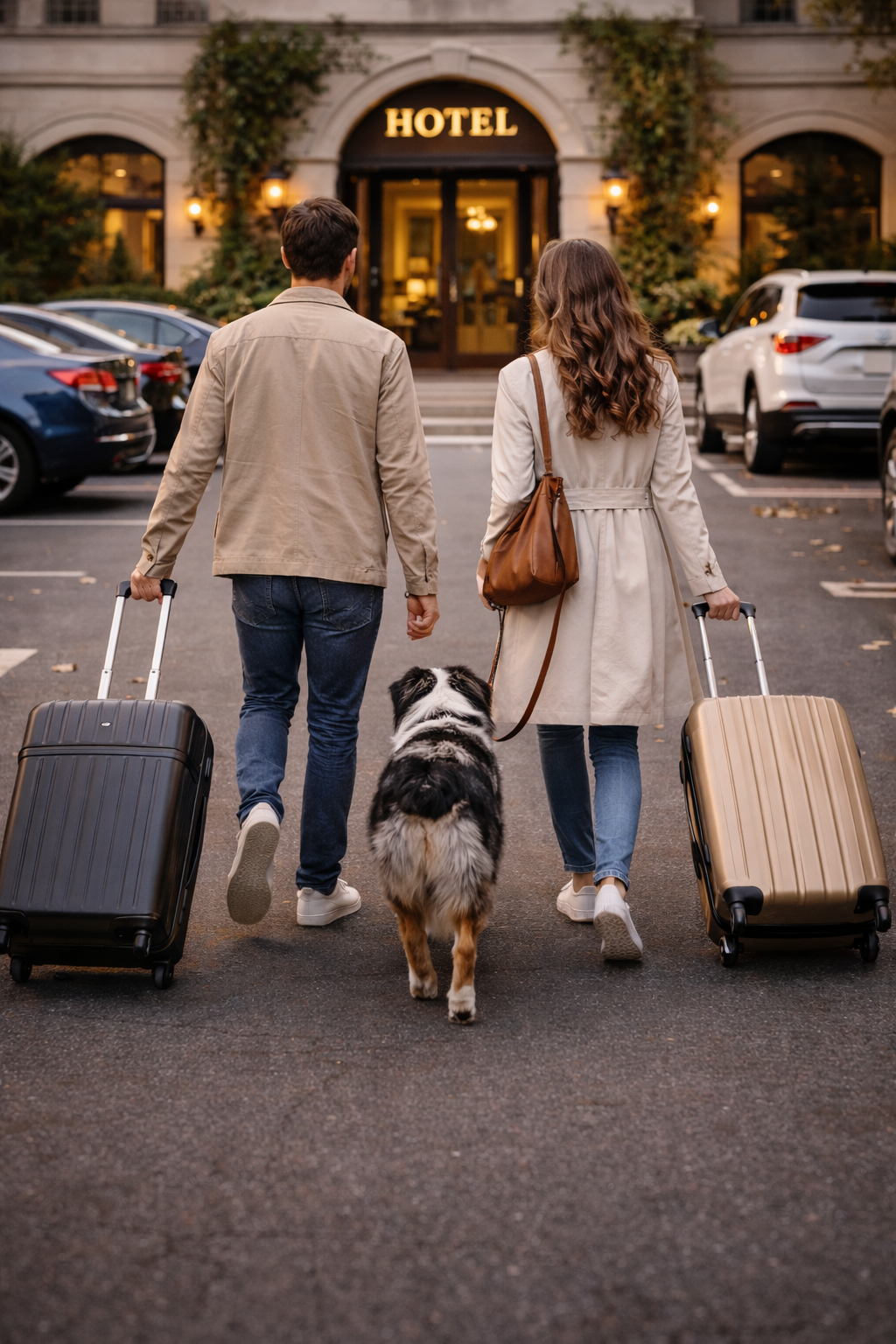
Travel Tips for Dogs
By George Walker, Walker’s K9 Services – Tucson, AZ
Traveling with your dog can be a great experience—or a stressful one—depending on how prepared you are. Whether you’re heading out on a road trip, flying across the country, or just visiting family for the weekend, planning ahead is key to keeping your dog safe, calm, and well-behaved. Below are practical, trainer-approved travel tips to help ensure smooth trips for both you and your dog.
1. Prepare Your Dog Before the Trip
Just like people, dogs do better when they know what to expect.
Practice short trips first: If your dog isn’t used to traveling, start with
short car rides and gradually increase the duration.
Reinforce basic obedience: Commands like sit, place, down, come,
and wait are extremely useful when traveling.
Crate training helps: A dog that is comfortable in a crate will travel
more safely and experience less stress in unfamiliar environments.
Preparation reduces anxiety and prevents problems once you’re on the
road.
2. Safety Comes First in the Car
Letting a dog roam freely in a vehicle is dangerous for everyone.
Use a crate or crash-tested harness: This protects your dog
during sudden stops and prevents distractions.
Never allow dogs to ride in the front seat or on your lap.
Keep heads inside the window: Flying debris can cause serious
injuries, even if your dog enjoys the breeze.
A secure dog is a safer dog—and a safer driver.
3. Pack a Dog Travel Kit
Having familiar items helps your dog feel more at ease.
Include:
Food and treats (don’t switch diets while traveling)
Collapsible food and water bowls
Bottled or familiar water (some dogs get stomach upset from new water sources)
Leash, backup leash, and collar
Poop bags
Bed or blanket from home
Favorite toy or chew
Medications and vet records
Familiar smells and routines go a long way toward keeping dogs calm.
4. Stick to a Routine as Much as Possible
Dogs thrive on consistency.
Feed at normal times
Maintain regular potty breaks
Keep training expectations the same as at home
Just because you’re traveling doesn’t mean the rules disappear. Allowing bad habits on trips often brings those habits back home.
5. Plan Frequent Breaks
For road trips, plan stops every 2–3 hours.
Allow your dog to stretch, hydrate, and potty
Use a leash at all stops—new environments increase the risk of bolting
Avoid busy rest areas if your dog is reactive or anxious
Mental decompression is just as important as physical relief.
6. Be Mindful of Stress Signals
Travel can be overstimulating.
Watch for:
Excessive panting
Drooling
Whining or pacing
Shaking or avoidance behaviors
If you notice stress, slow things down. Calm handling, quiet praise, and structure help dogs regulate their emotions.
7. Hotels and Rentals: Set Expectations Early
When staying somewhere new:
Walk your dog immediately upon arrival
Practice place or settle in the room
Don’t allow barking or door-dashing behaviors
Never leave an untrained dog loose in a hotel room
Treat the space like a training opportunity, not a vacation from structure.
8. Flying With Dogs (If Necessary)
Flying can be stressful and isn’t ideal for every dog.
Confirm airline policies well in advance
Ensure your dog is crate-trained
Avoid sedating dogs unless directed by a veterinarian
Small dogs may travel in-cabin; larger dogs typically fly cargo, which carries additional risk
Whenever possible, ground travel is safer and less stressful.
9. ID and Microchip Are Non-Negotiable
Travel increases the risk of dogs getting lost.
Ensure tags are current with your phone number
Microchip your dog and verify registration info
Consider temporary travel tags with hotel or destination details
This simple step can save your dog’s life.
10. Training Makes Travel Easier
Well-trained dogs are easier to travel with—period.
Dogs that understand boundaries, can settle on command reminding calm in public spaces, and respond reliably to obedience cues handle new environments with confidence.
If travel is something you plan to do often, investing in solid training ahead of time pays off in every mile.
Final Thoughts
Traveling with your dog doesn’t have to be stressful or chaotic. With preparation, structure, and clear expectations, most dogs can learn to be calm, confident travel companions. The better trained your dog is at home, the easier travel will be anywhere else.
Dog Training in Tucson, AZ Dog Training in Marana, AZ Training Options
Walkers K9 Services — Building Better Dogs, One Lesson at a Time 🔹
Please support our mission by sharing our training articles with other dog owners.
Written by: George Walker
Walkers K9 Services | Tucson, AZ
📞 520-500-7202