The Real Challenges of Adopting a Dog
By George Walker, Walker’s K9 Services – Tucson, AZ
Adopting a dog can be one of the most rewarding decisions you ever make. You’re giving an animal a second chance and bringing new life into your home. But here’s the truth most people don’t talk about:
Adoption is not a rescue fairy tale.
It’s a responsibility.
As a professional dog trainer serving Tucson and Marana, Arizona, I’ve worked
with hundreds of adopted dogs. Some transitioned beautifully. Others struggled — not
because they were “bad dogs,” but because their new owners weren’t fully prepared
for the reality.
Let’s talk honestly about the challenges of adopting a dog.
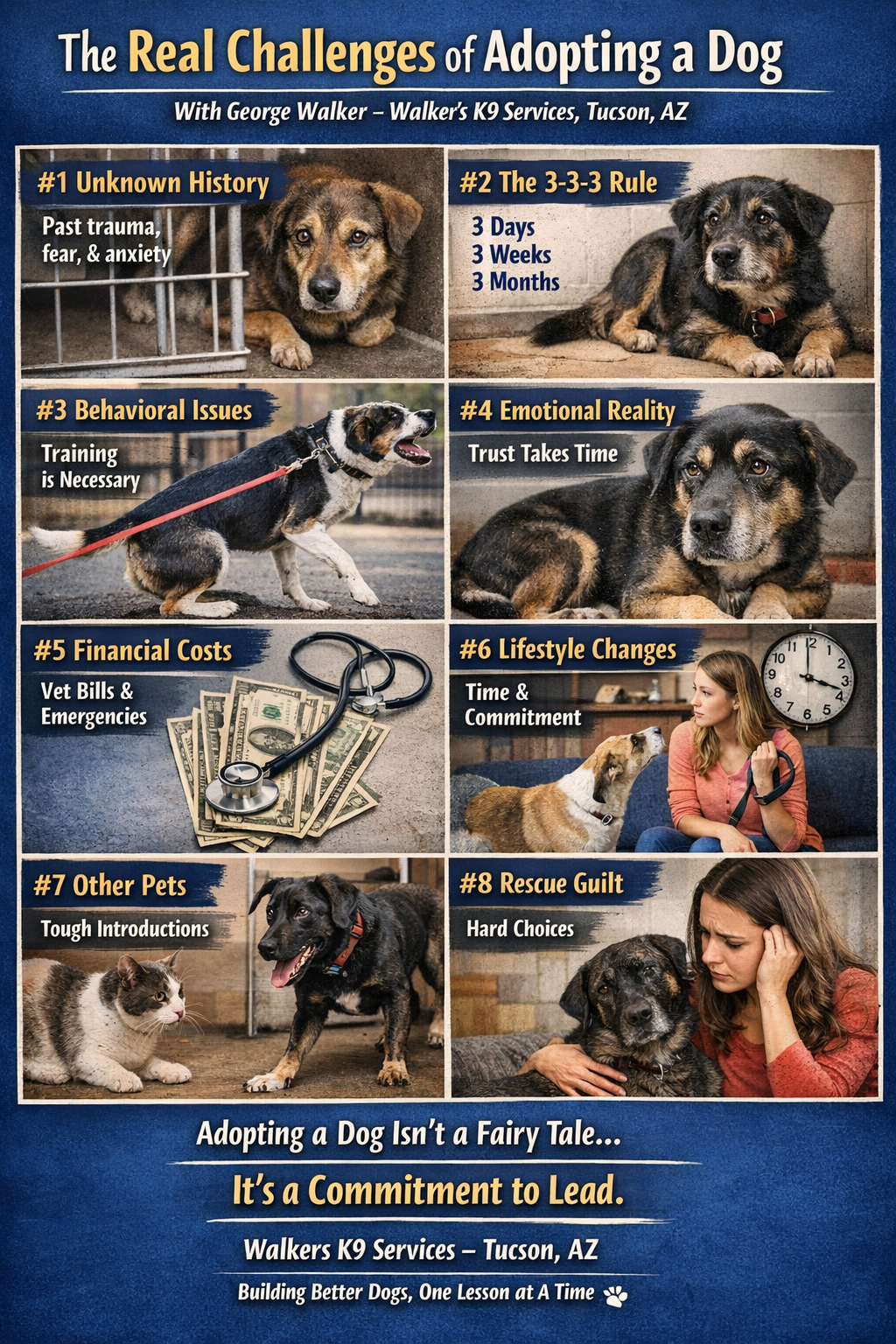
1. You Don’t Always Know the Dog’s History
Many adopted dogs come with incomplete or unknown backgrounds.
You may not know:
How they were treated
Whether they were abused or neglected
What kind of socialization they had
If they were ever properly trained
That means you might discover behavior issues after the honeymoon phase ends:
Fear of men or children
Separation anxiety
Resource guarding
Reactivity toward other dogs
These behaviors aren’t personality flaws — they’re survival patterns the dog learned
before you met them.
2. The “3-3-3 Rule” Is Real
Most adopted dogs go through an adjustment timeline:
3 Days: Overwhelmed, shut down, or overstimulated
3 Weeks: Testing boundaries
3 Months: Starting to feel at home
Many owners panic around the 2–4 week mark when behavior changes. The dog that seemed calm suddenly starts barking, chewing, or ignoring commands.
That’s not regression.
That’s comfort.
The dog finally feels safe enough to express itself.
3. Behavioral Baggage Can Be Heavy
Some adopted dogs arrive with habits that require real work:
Leash pulling
Jumping on guests
Housebreaking issues
Crate anxiety
Fence fighting
Aggression or reactivity
Training isn’t optional with many adopted dogs — it’s necessary. Structure creates security. Clear rules create confidence.
Without leadership and consistency, behaviors often worsen instead of improving.
4. Emotional Expectations vs. Reality
Many people adopt with the expectation of instant gratitude and loyalty.
Instead, they may get:
Avoidance
Growling
Destruction
Indifference
Bonding takes time. Trust must be earned. Some dogs have learned that humans are unpredictable or unsafe.
Adoption is not about being “saved.”
It’s about building trust through repetition and leadership.
5. Financial Responsibility
Adoption fees are just the beginning.
Real costs include:
Veterinary exams and vaccines
Spay/neuter (if not already done)
Professional training
Quality food
Emergency medical bills
Before adopting, ask yourself:
What is my spending cap if something serious happens?
Love doesn’t replace planning.
6. Lifestyle Changes
A dog changes your schedule.
Early mornings
Training sessions
Exercise requirements
Travel limitations
Boarding or pet-sitting costs
High-energy working breeds especially require daily structure. A bored dog becomes a destructive dog.
Adoption should fit your lifestyle — not strain it.
7. Your Other Pets May Not Approve
If you already have dogs or cats, introductions must be managed carefully.
Territorial behavior, jealousy, and stress are common during the first few weeks. Poor introductions are one of the leading causes of adoption failures.
Slow and structured always beats fast and emotional.
8. Rescue Guilt Can Cloud Judgment
Some adopters ignore serious red flags because they feel guilty returning a dog.
But here’s the hard truth:
Not every home is the right fit for every dog.
Recognizing incompatibility early is sometimes the responsible choice — especially if safety is involved.
The Positive Side (With Realistic Expectations)
Adopted dogs can become:
Loyal companions
Incredible working partners
Family protectors
Therapy dogs
Best friends
But the transformation doesn’t happen by accident.
It happens through:
Structure
Training
Consistency
Clear communication
Patience
If you adopt expecting effort, you’ll succeed more often than if you adopt expecting gratitude.
Final Thought
Adopting a dog isn’t about saving them.
It’s about committing to lead them.
When you understand the challenges ahead of time, you set both yourself and your dog up for success.
If you’re considering adoption in Tucson or Marana, invest in training early. The first 30–60 days matter more than most people realize.
Dog Training in Tucson, AZ Dog Training in Marana, AZ Training Options
Walkers K9 Services — Building Better Dogs, One Lesson at a Time
Please support our mission by sharing our training articles with other dog owners.
Written by: George Walker
Walkers K9 Services | Tucson, AZ
📞 520-500-7202