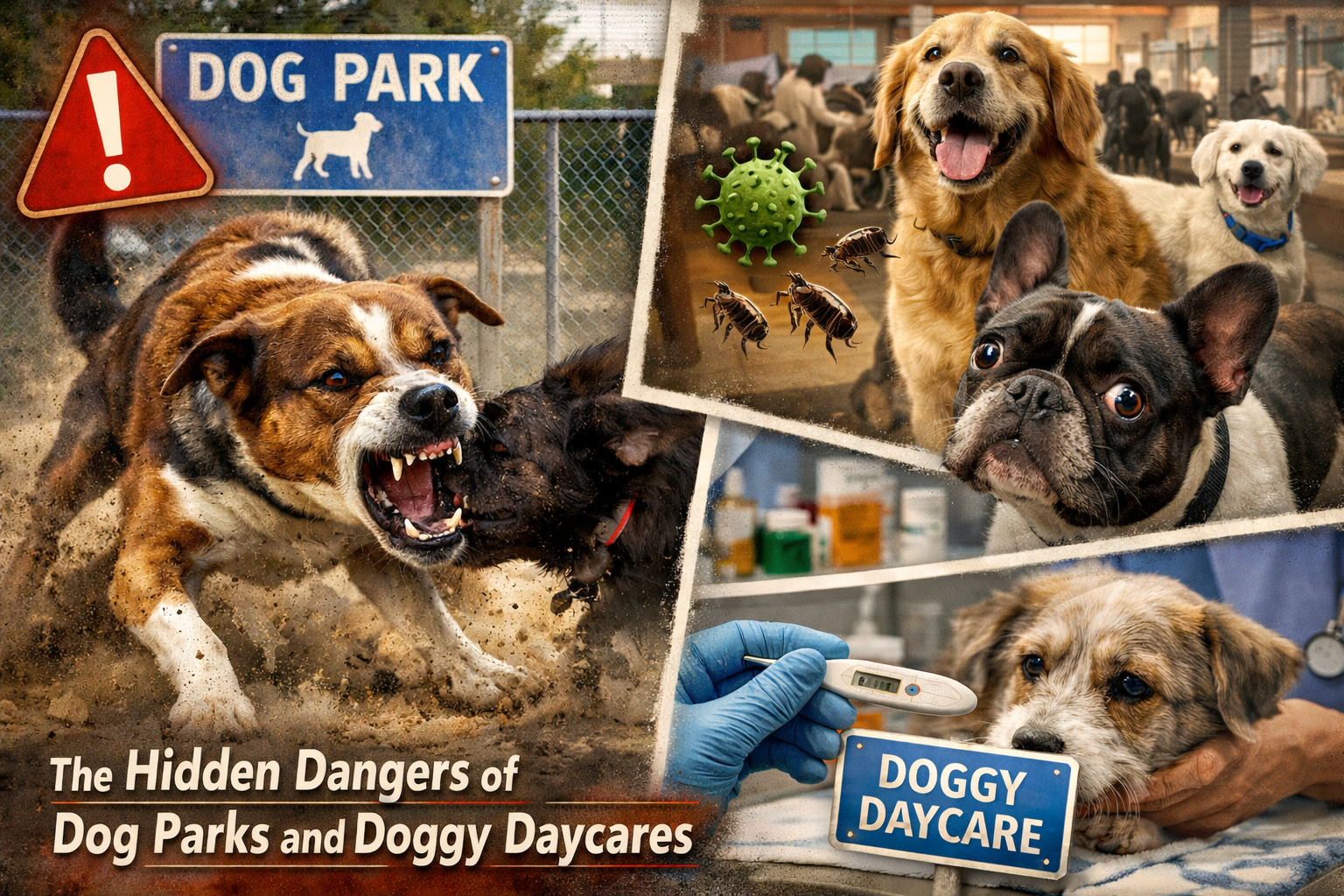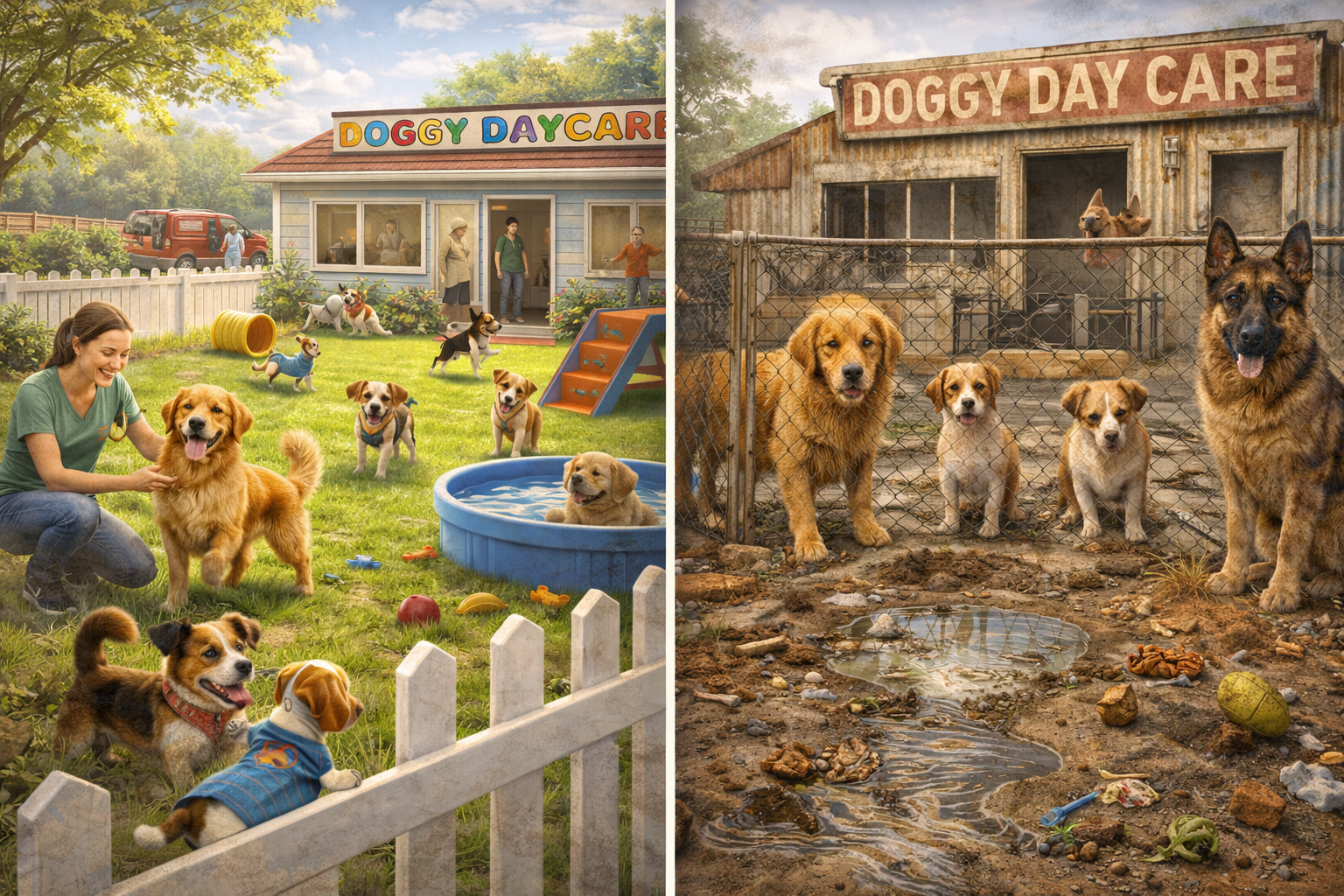
The Hidden Dangers of Dog Parks and Doggy Daycares
By George Walker, Walker’s K9 Services – Tucson, AZ
Dog parks and doggy daycares sound like ideal places for dogs to socialize, exercise, and burn energy. Many owners picture happy, carefree play and well-rounded dogs. But the reality is often very different. While these environments can work for a small percentage of dogs, they also come with significant risks—physical, behavioral, and emotional—that many owners are never warned about.
As a trainer who has worked with thousands of dogs, I see the consequences of dog parks and daycares more often than the benefits. This article breaks down the dangers so you can make informed decisions that keep your dog safe.
1. Unpredictable Dogs and Poor Supervision
The biggest risk in both dog parks and daycares is the presence of dogs whose behavior is completely unknown.
Unscreened Dogs at Parks
Anyone can bring any dog—friendly, fearful, aggressive, sick, untrained—and turn them loose inside a fenced area. Owners often overestimate their dog’s social skills or ignore obvious red flags.
Undertrained Staff at Daycares
Most doggy daycare staff are not trainers and lack the skill to read subtle canine body language or manage group dynamics.
This leads to:
Escalating tensions left unchecked
Play turning into bullying
Fights erupting before staff notice warning signs
One mistake can traumatize a dog for life. I’ve dealt with hundreds of dogs in our Aggressive Dog Rehabilitation programs because of these types of situations. Your friendly dog gets attacked now it’s either aggressive or fearful.
2. Dog Fights and Injuries
Even “playful” groups can go wrong instantly. Common injuries include:
Puncture wounds
Torn ears
Dislocated joints
Facial injuries
Broken bones
Dog fights happen fast, and breaking them up safely is extremely difficult.
At dog parks, it’s worse—owners often jump in and get bitten themselves.
3. Disease and Parasite Exposure
High-traffic environments are breeding grounds for illness.
Dogs can contract:
Kennel cough
Giardiasis
Parvovirus
Canine influenza
Fleas, ticks, worms, and mites
Even vaccinated dogs can get sick. And not all owners vaccinate or deworm their pets.
At dog parks, the ground may be contaminated with feces, urine, and shared water bowls.
Daycares often rotate large numbers of dogs each day, increasing exposure.
4. Bad Behavioral Habits Develop Quickly
Dog parks and daycares are chaotic, overstimulating, and full of mixed signals.
This is the opposite of controlled training.
Dogs often learn:
Reactivity
Leash aggression (from being rushed by off-leash dogs)
Rude play behaviors
Overarousal and hyperactivity
Selective listening
Fence fighting
A single bad interaction can trigger lifelong issues.
5. Bullying and Pack Mentality
Dogs are not all social butterflies. Many prefer calm interactions or one-on-one play.
In large groups:
Stronger dogs often overwhelm weaker or shy dogs
Nervous dogs get chased, cornered, or pinned
Excited dogs don’t know how to de-escalate
Pack instincts can kick in, making behavior dangerous
A dog may appear to be “playing,” but in reality, they’re terrified or shutting down.
6. Emotional Trauma That Owners Don’t Notice
A dog can leave the park or daycare appearing physically fine… but emotionally shaken.
Signs of trauma include:
Avoiding other dogs
Increased barking or growling
Separation anxiety
Fear of strangers
Clinginess
Sudden aggression
These issues don’t always show up immediately—they build over time.
7. Not All Dogs Need or Want Group Play
This is one of the biggest misconceptions in the dog world.
Many dogs prefer:
Structured walks
Training sessions
Small, controlled playdates
Time with their family
Throwing an introverted or anxious dog into a chaotic group is unfair—and dangerous.
8. Safer Alternatives to Parks and Daycares
If you want your dogs to socialize, exercise, and stay mentally stimulated, there are better options.
Try These Instead:
✔ Structured walks with training
✔ One-on-one playdates with known, reliable dogs
✔ Secure private fields or rental yards
✔ Obedience classes
✔ Agility, scent work, tracking, or trick training
✔ Enrichment games at home
Your dog will be happier, safer, and better behaved.
Final Thoughts
Dog parks and doggy daycares are marketed as easy solutions for exercise and socialization, but the risks often outweigh the rewards. Many of the dogs I rehabilitate developed their issues because of these environments—not in spite of them.
Your dog’s safety and emotional well-being are worth more than convenience.
Choose controlled, purposeful interactions over chaotic free-for-alls.
Dog Training in Tucson, AZ Dog Training in Marana, AZ Training Options
Walkers K9 Services — Building Better Dogs, One Lesson at a Time
Please support our mission by sharing our training articles with other dog owners.
Written by: George Walker
Walkers K9 Services | Tucson, AZ
📞 520-500-7202