Teaching Your Dog to Down Using Luring
By George Walker, Walker’s K9 Services – Tucson, AZ
Teaching your dog to down on command is one of the most valuable skills you can give them. It promotes calm behavior, improves impulse control, and strengthens your communication as a team. Using luring is one of the simplest and most effective ways to teach this behavior—especially for puppies or dogs new to training.
Below is a clear, step-by-step guide to help you get reliable downs using positive, reward-based methods.
Why Luring Works
Luring uses a food reward to guide your dog into the correct position. It’s intuitive for dogs—they follow the treat with their nose, and their body naturally follows. This creates an easy, stress-free learning environment and quickly builds understanding of the down position.
Step-by-Step: Teaching the Down With Luring
1. Start With Your Dog in a Sit
Begin on a non-slippery surface so your dog feels comfortable lying down. Have a small, soft treat in your hand.
Tip: Keep your dog close to you so you maintain control of the motion and prevent sliding or creeping forward.
2. Use a Low, Slow Lure
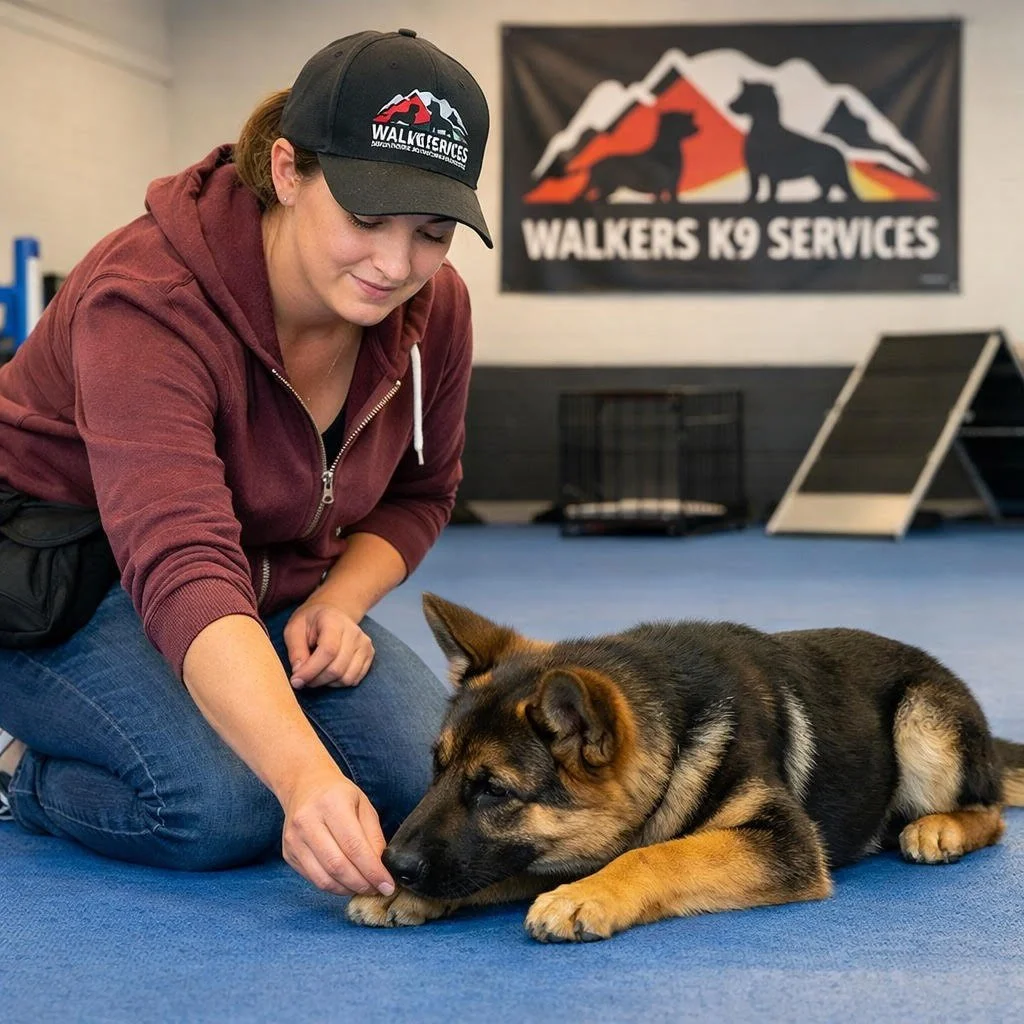
Place the treat right at your dog’s nose and slowly guide your hand straight down toward the floor, right between their front paws.
If your hand is too high, your dog may stand instead of lying down.
If you move too fast, they may lose interest or get confused.
Your goal is to create a motion that encourages their elbows to bend and lower.
3. Move the Treat Forward
Once your hand reaches the floor, slide it slowly outward (away from your dog). Their head will follow the food lure, and their body will naturally stretch into the down position.
Reward the instant their elbows hit the ground.
4. Repeat Until the Motion Is Smooth
Practice this lure several times until your dog consistently follows the motion into a down.
Do not add the verbal command yet. Wait until your dog is performing the movement easily and predictably.
5. Add the Verbal Cue (“Down”)
Once your dog understands the lure, say “Down” before you begin the lure motion.
After a few successful repetitions, make your lure smaller and smaller. Eventually, your hand motion becomes a simple signal, and the treat transitions from lure to reward.
6. Fade the Lure Completely
Gradually reduce the hand motion:
Start with the full lure.
Then move to a small hand signal.
Eventually pair the verbal cue with a very subtle gesture—or none at all.
Your dog should lie down from the verbal cue alone.
Troubleshooting Common Issues
Dog keeps standing up
Your lure may be too high. Keep it low and close to the floor.
Dog creeps forward instead of lying down
Try luring them back toward their body instead of forward.
You can also teach the down in a narrow hallway or with a wall behind them.
Dog refuses to lie down
Some dogs feel vulnerable in a down position.
Try:
Training on a comfortable surface
Offering higher-value treats
Rewarding small attempts (elbows bending, lowering head)
Practicing when your dog is calm—not overly energetic or distracted
Practice in Real-Life Situations
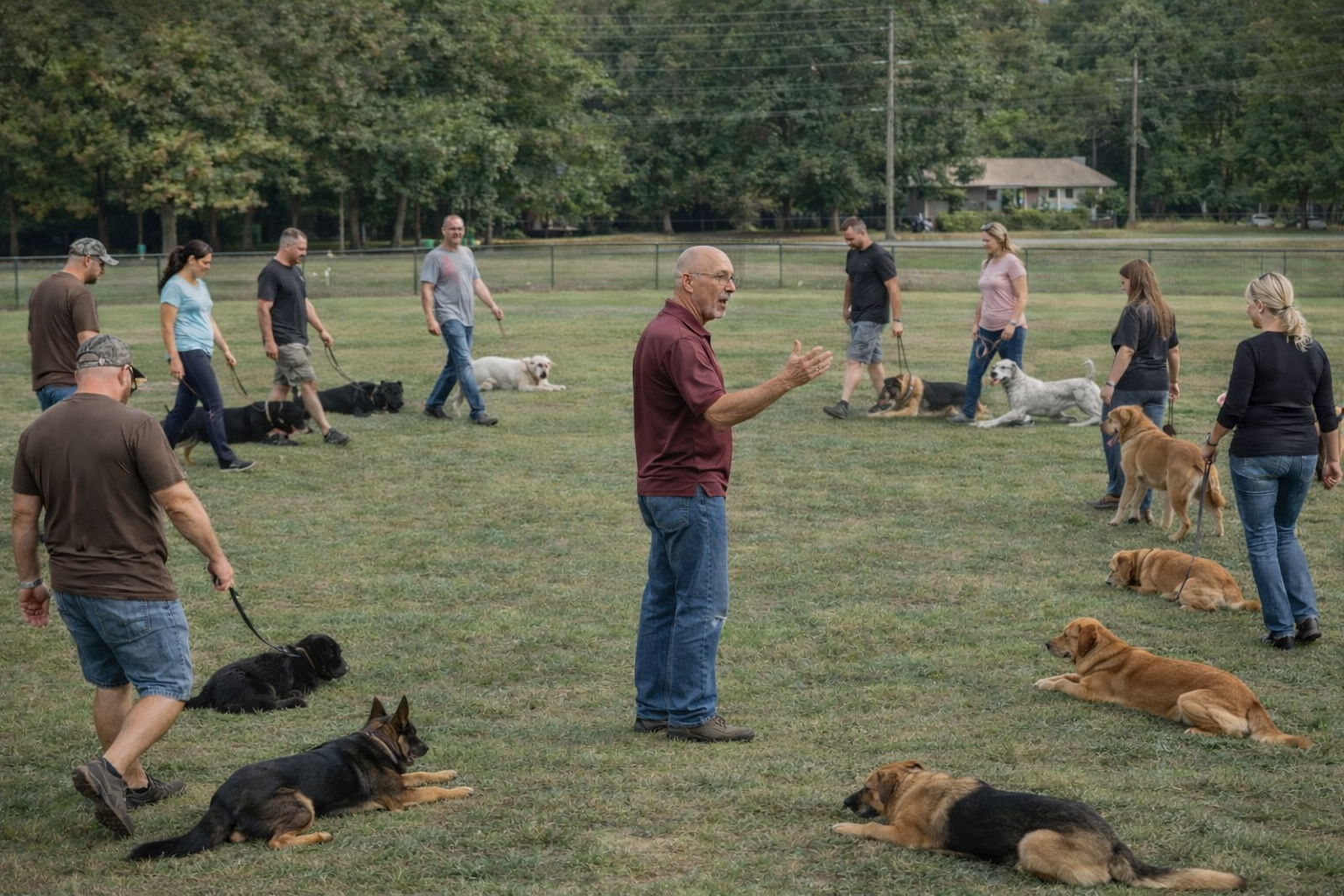
Once your dog reliably downs indoors:
Try it in the backyard
Add mild distractions
Practice before meals, walks, or play
Build duration by rewarding your dog for staying down longer
A solid down is the foundation for polite greetings, calm behavior in public, and strong overall obedience.
Final Thoughts
Luring is one of the most effective and dog-friendly ways to teach the down command. With patience, consistency, and clear communication, your dog will master this foundational skill and become calmer, more responsive, and easier to manage in everyday life.
Dog Training in Tucson, AZ Dog Training in Marana, AZ Training Options
Walkers K9 Services — Building Better Dogs, One Lesson at a Time 🔹
Please support our mission by sharing our training articles with other dog owners.
Written by: George Walker
Walkers K9 Services | Tucson, AZ
📞 520-500-7202