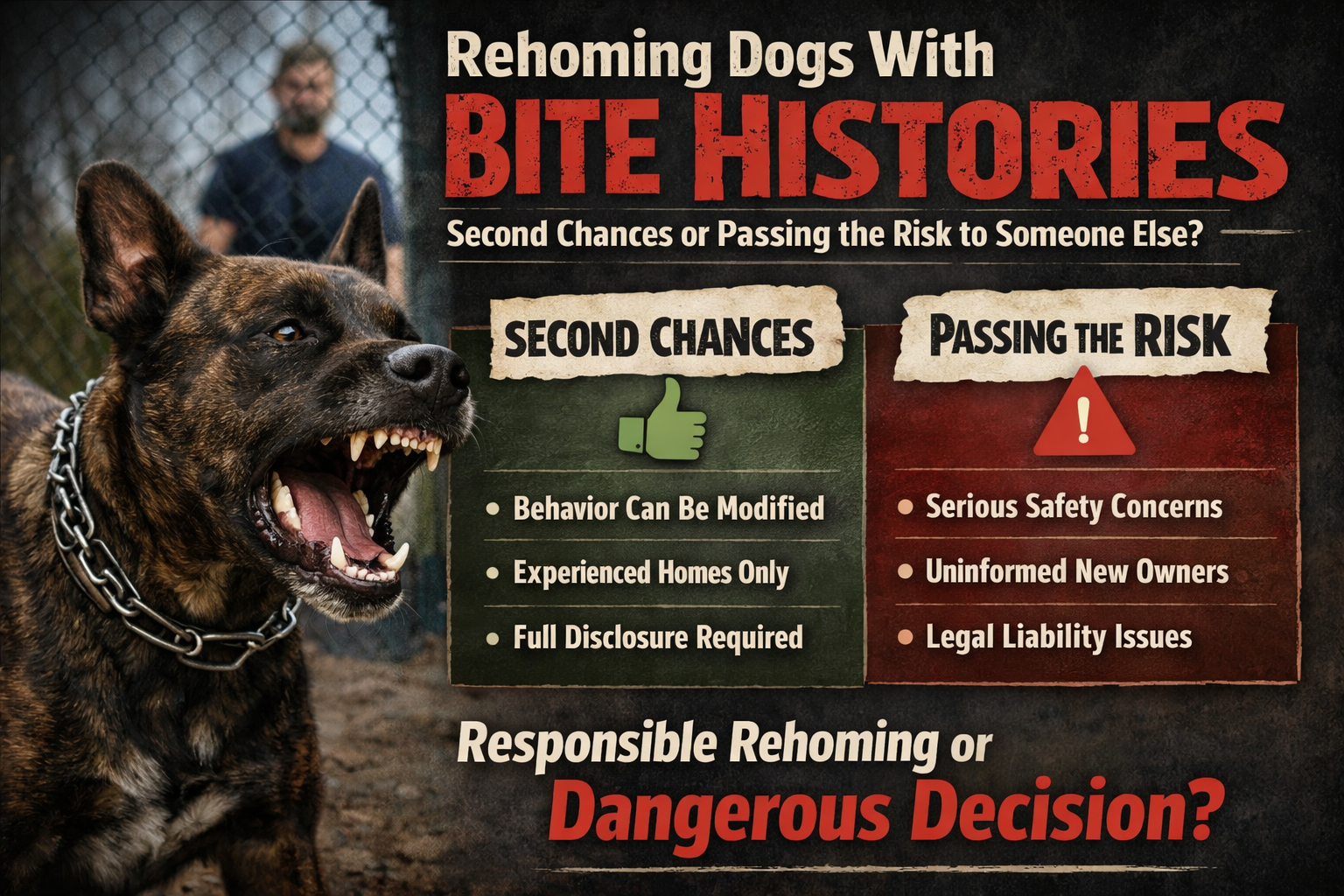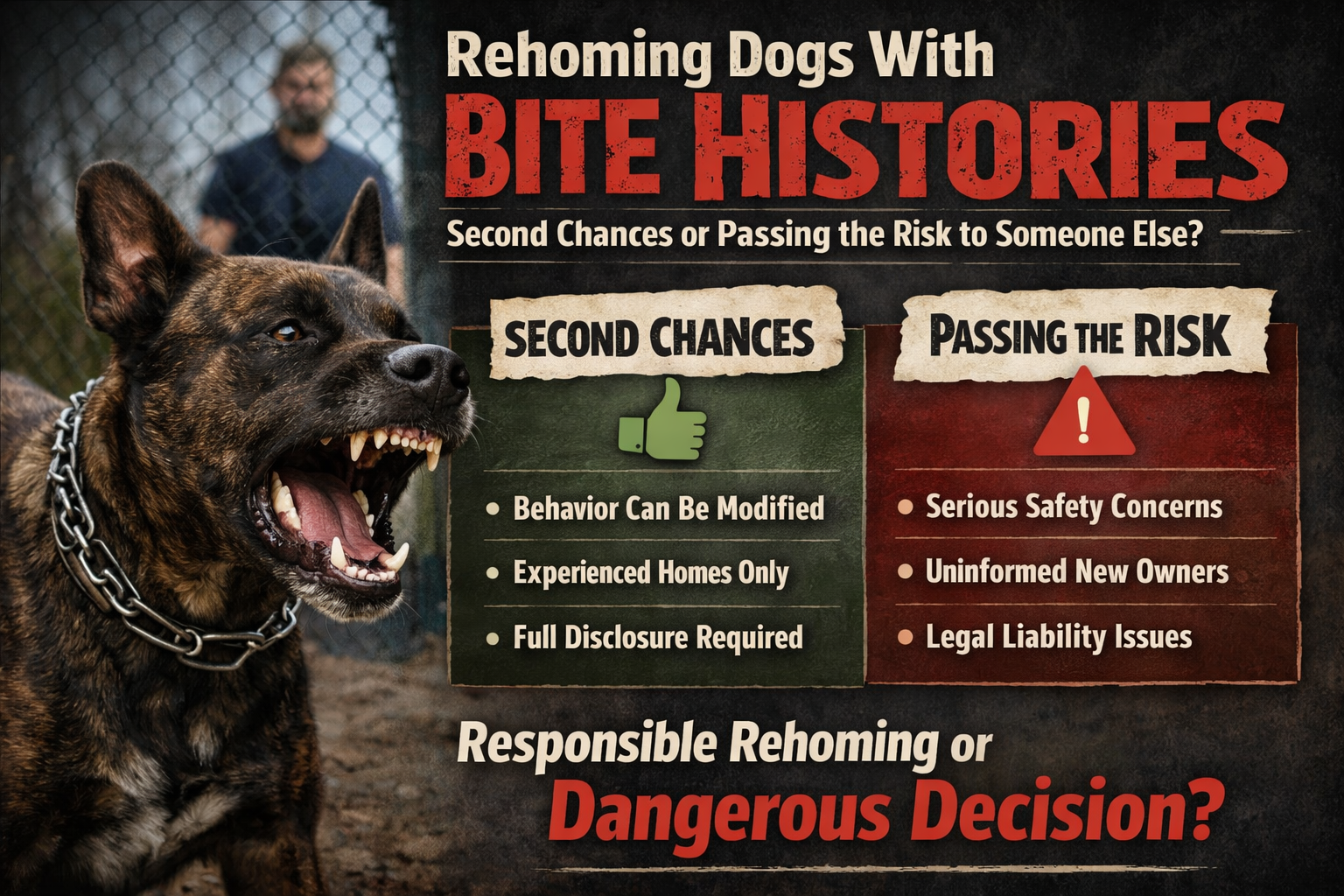
Rehoming Dogs With Bite Histories
Second Chances or Passing the Risk to Someone Else?
By George Walker, Walker’s K9 Services – Tucson, AZ
Rehoming a dog is never a simple decision. When that dog has a documented bite history, the situation becomes far more complex—emotionally, ethically, and legally. Many well-meaning people ask the same question: Are we giving a dog a second chance, or are we passing a serious risk to someone else?
This article is not meant to shame, scare, or oversimplify. Instead, it aims to lay out the realities of rehoming dogs with bite histories so that decisions are made with clarity, responsibility, and public safety in mind.
Understanding What a “Bite History” Really Means
Not all bites are equal. A snapped warning that never breaks skin is vastly different from a
sustained attack causing serious injury. Context matters:
Severity – Was skin broken? Were stitches required?
Target – Adult, child, family member, stranger, or another animal
Trigger – Pain, fear, resource guarding, territorial behavior, or redirection
Pattern – One isolated incident or repeated behavior
A dog that bit once during a veterinary procedure due to pain is not the same as a dog that
has bitten multiple people unprovoked. Lumping all “bite dogs” together is one of the
biggest mistakes made in rehoming discussions.
The Argument for Second Chances
Supporters of rehoming often point out truths that deserve acknowledgment:
Dogs are products of environment and handling
Poor socialization, lack of structure, abuse, or inconsistent rules can all contributeto aggressive behavior.
Behavior can be modified
With proper training, management, and experienced ownership, some dogs can live safely and predictably.Euthanasia is irreversible
For dogs whose aggression is situational and manageable, rehoming may genuinely be a humane alternative.
In these cases, rehoming can be ethical—but only when done with full transparency, professional evaluation, and strict placement criteria.
The Risk of Passing the Problem Along
This is where the conversation becomes uncomfortable but necessary.
Rehoming a dog with a bite history without full disclosure is not giving a second chance—it is shifting liability and danger onto an unsuspecting person, family, or community.
Key concerns include:
Public safety – A bite history increases the risk of future incidents, especially in new environments
Children and visitors – Even experienced owners cannot control every situation
Legal liability – New owners may face serious legal consequences if another bite occurs
False confidence – A calm meet-and-greet does not predict long-term behavior under stress
When a dog is rehomed into a less controlled or less experienced home, the risk often increases—not decreases.
Transparency Is Non-Negotiable
Ethical rehoming requires complete honesty, including:
Full bite history with dates and circumstances
Veterinary and behavioral records
Known triggers and warning signs
Management requirements (muzzles, no kids, no strangers, leash protocols)
Anything less is irresponsible. “We didn’t want to scare them off” is not an excuse—it’s negligence.
When Rehoming Can Be Appropriate
Rehoming a dog with a bite history may be justified when all of the following are true:
The bite was low-level or situational
A qualified trainer or behavior professional has evaluated the dog
The dog shows improvement with consistent structure
The new home is experienced, informed, and prepared
Management strategies are realistic and permanent
Even then, rehoming should be considered management, not a cure.
When Rehoming Is Not Ethical
Rehoming becomes unethical when:
The dog has caused severe injury
There are multiple bite incidents
Aggression is unpredictable or escalating
The dog requires constant, unrealistic control to remain safe
Disclosure is incomplete or minimized
In these cases, the risk to humans and other animals outweighs the desire to save the dog at all costs.
The Hard Truth No One Likes to Say
Loving dogs does not mean ignoring reality.
Not every dog is safe to place in another home.
Not every outcome has a happy ending.
Choosing not to rehome a dangerous dog is not cruelty—it can be an act of responsibility.
Final Thoughts
Rehoming dogs with bite histories is one of the hardest ethical dilemmas in animal welfare. The answer is not “always yes” or “always no.” The real question is whether the decision prioritizes public safety, honesty, and long-term welfare—or whether it simply moves the risk out of sight.
Second chances should never come at the expense of unsuspecting people.
Dog Training in Tucson, AZ Dog Training in Marana, AZ Training Options
Walkers K9 Services — Building Better Dogs, One Lesson at a Time 🔹
Please support our mission by sharing our training articles with other dog owners.
Written by: George Walker
Walkers K9 Services | Tucson & Marana, AZ
📞 520-500-7202
🌐 WalkersK9Services.org