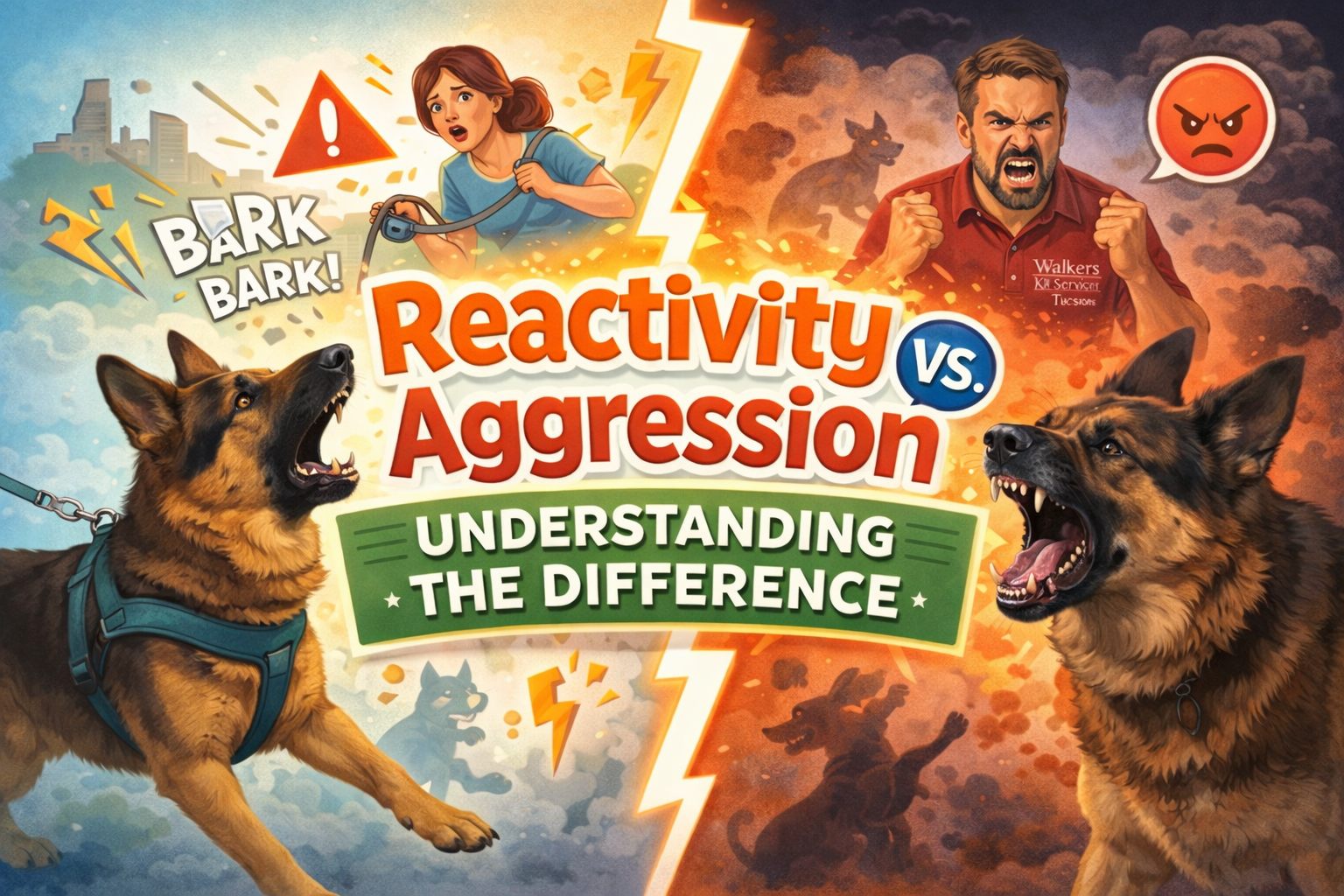
Reactivity vs. Aggression: Understanding the Difference
By George Walker, Walker’s K9 Services – Tucson, AZ
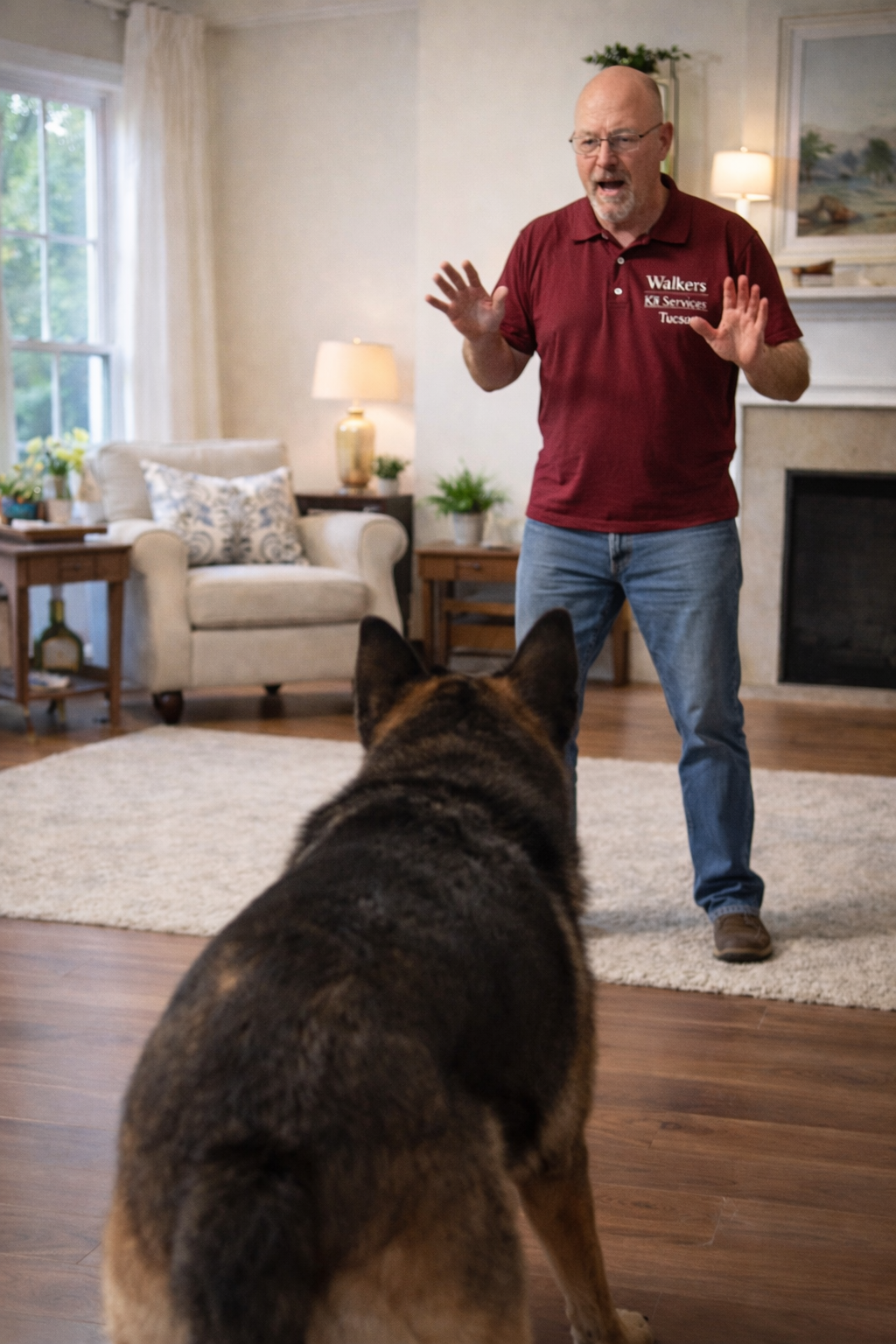
Dogs communicate through body language, vocalizations, and behavior—but sometimes those signals can be confusing or misinterpreted. One of the most common misunderstandings in the dog training world is the difference between reactivity and aggression. While these two behaviors may look similar on the surface—lunging, barking, growling—the motivations behind them can be very different. Understanding the distinction is crucial for keeping your dog safe, improving behavior, and preventing problems from escalating.
What Is Reactivity?
Reactivity is an overreaction to a stimulus. The dog sees, hears, or smells something
and responds with an exaggerated emotional outburst.
Common signs of reactivity:
Lunging or barking at other dogs or people
Over-excitement or frustration on leash
Intense staring or stiff posture
Whining or pacing
Difficulty focusing when a trigger is nearby
Reactivity is often rooted in:
Fear or insecurity
Frustration (e.g., wanting to greet but being held back by a leash)
Lack of exposure to certain environments or situations
Genetics and temperament
Poor leash handling or tension
Key point:
Reactive dogs are not necessarily dangerous. They are emotionally overwhelmed and
lack the tools to cope with their triggers.
What Is Aggression?
Aggression, on the other hand, is intent to cause harm—or at least communicate a very clear warning that the dog is willing to escalate if needed.
Common signs of aggression:
Growling or snarling with intent
Snapping or biting
Guarding resources or territory
Charging without retreat
Hard eye contact paired with forward, purposeful movement
Aggression can stem from:
Fear (fear-based aggression is extremely common)
Resource guarding (food, toys, humans, space)
Pain or medical issues
Genetic predispositions
Previous trauma or poor handling
Key point:
Aggression is purposeful and often escalates if not addressed. While reactivity can look aggressive, true aggression is more serious and carries higher risk.
The Overlap: Why People Get Confused
A reactive dog may bark and lunge, which can appear aggressive to the untrained eye. However, many reactive dogs are simply trying to create distance or express discomfort—they’re not trying to hurt anyone.
A truly aggressive dog typically:
Shows fewer signs of fear
Moves forward with purpose
Has a bite history or attempts to bite
Follows through on threats rather than bluffing
A reactive dog usually:
Wants distance, not conflict
Shows fear-based body language (ears back, tail tucked, wide eyes)
Calms down once the trigger is removed
Has trouble controlling impulses
Why Reactivity Can Turn Into Aggression
Left unmanaged, reactivity can escalate. A dog that repeatedly practices intense outbursts may:
Build more frustration
Gain confidence in their behavior
Learn that barking makes things go away
Transition from “I’m scared” to “I will attack first”
This is why early intervention and solid leadership matter.
How to Help a Reactive Dog
With the right training, reactive dogs can make tremendous progress. Focus on:
Distance: Work far enough from triggers to keep the dog thinking.
Desensitization: Gradually expose the dog in controlled situations.
Counterconditioning: Pair triggers with something positive.
Better leash handling: Avoid tight leashes that add tension.
Clear structure and rules: Predictability reduces anxiety.
Teaching neutrality: Reward calm behavior, and correction with outbursts.
How to Help an Aggressive Dog
Aggression requires more structured, cautious, and professional intervention. Strategies include:
Behavior assessment to identify root causes
Management (muzzles, secure fences, controlled setups)
Leadership and routine to build trust
Obedience training to improve impulse control
Desensitization programs with clear safety protocols
Addressing medical factors with a veterinarian
Aggressive behavior should never be ignored, minimized, or punished without understanding the cause—doing so can make things worse.
Why Getting the Diagnosis Right Matters
Mislabeling a dog can lead to ineffective or unsafe solutions:
If a reactive dog is mistaken for aggressive
The dog may be punished for fear-based behavior, increasing insecurity.
If an aggressive dog is mistaken for reactive
You risk exposing people, other dogs, and the dog itself to dangerous situations.
When to Seek Professional Help
Always reach out to a qualified trainer or behavior professional—especially when:
Your dog’s behavior is getting worse
There’s a bite history
Someone feels unsafe
You’re unsure whether it’s reactivity or aggression
A proper evaluation gives you a clear roadmap to success.
Final Thoughts
Reactivity and aggression may look similar, but their motivations—and the way we address them—are very different. Understanding this distinction empowers you to help your dog grow, learn, and feel safe. With patience, structure, and the right guidance, most dogs can make huge improvements and live calm, stable lives.
Dog Training in Tucson, AZ Dog Training in Marana, AZ Training Options
Walkers K9 Services — Building Better Dogs, One Lesson at a Time 🔹
Please support our mission by sharing our training articles with other dog owners.
Written by: George Walker
Walkers K9 Services | Tucson, AZ
📞 520-500-7202