Pros & Cons of Spaying Your Dog
By George Walker, Walker’s K9 Services – Tucson, AZ
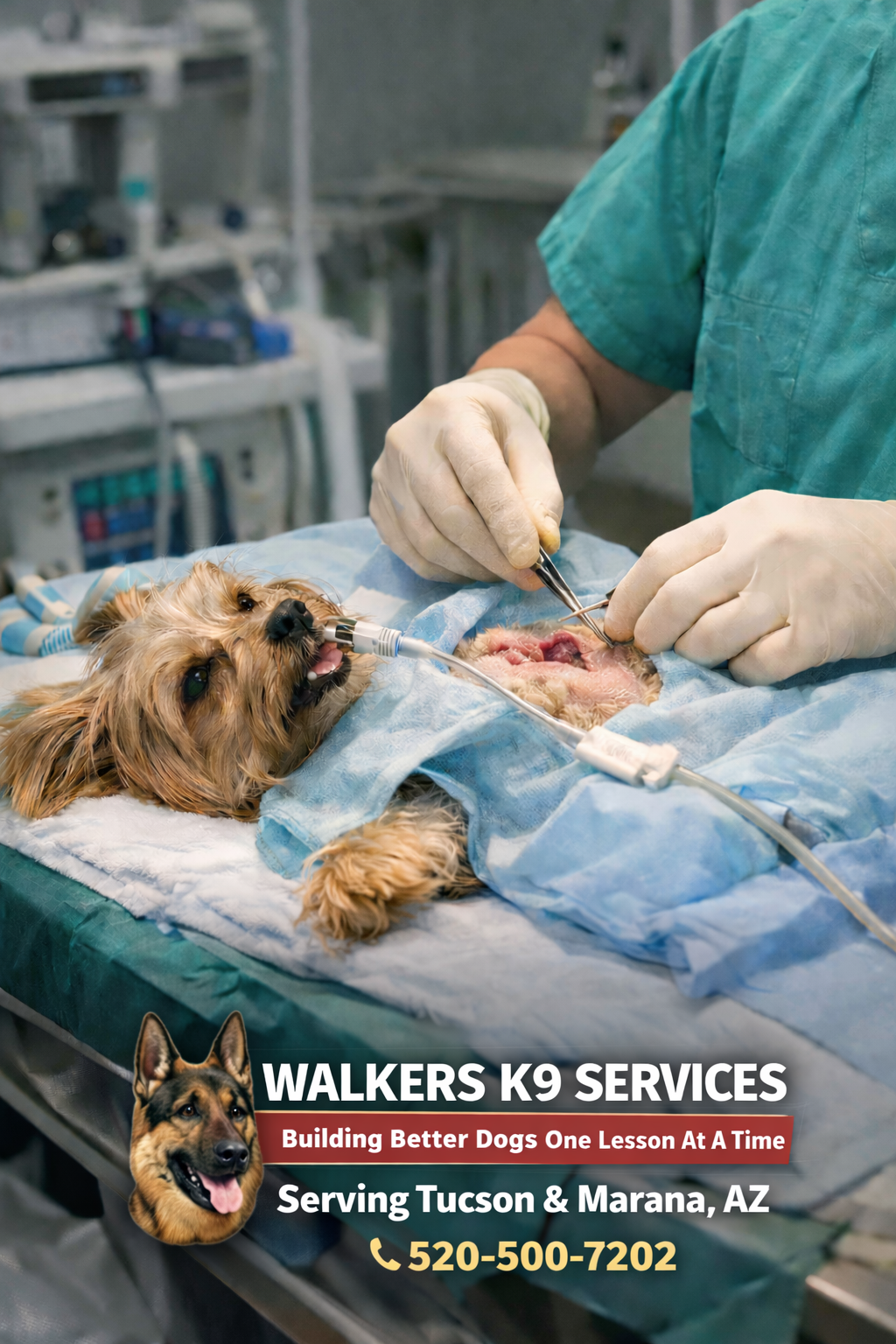
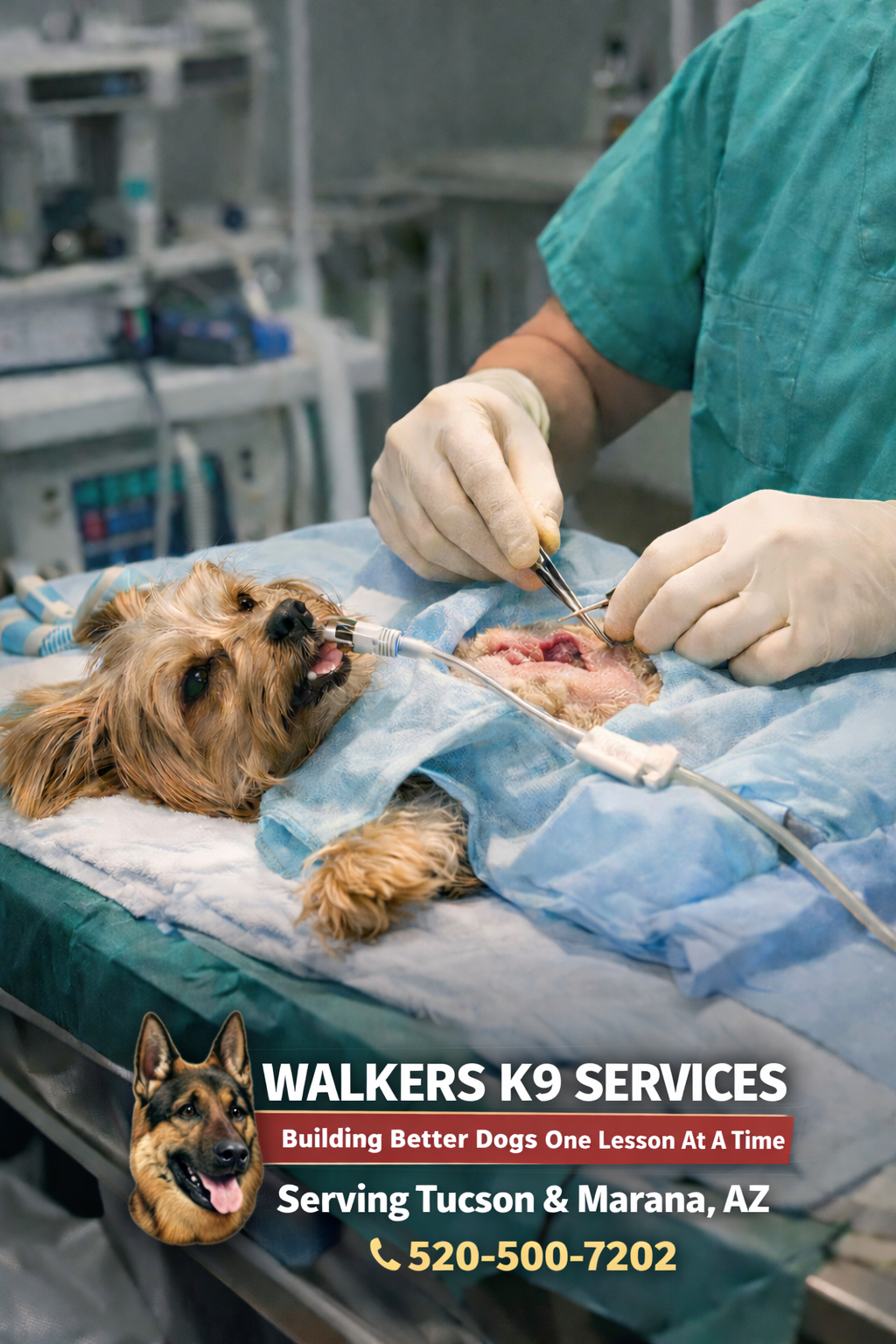
Spaying (surgically removing a female dog’s reproductive organs) is one of the most common veterinary procedures—yet many owners still aren’t sure whether it’s the right choice for their dog. Like most things in dog ownership, the right answer depends on your dog’s age, breed, temperament, and your lifestyle.
Below is a balanced breakdown to help you make an informed decision.
Pros of Spaying Your Dog
1. Prevents Heat Cycles
A female in heat bleeds, attracts male dogs from miles away, and can be more restless or vocal.
Spaying eliminates all of that and keeps your home calmer and cleaner.
2. Prevents Accidental Litters
There is already an overpopulation crisis. Even one accidental litter adds to that problem. Spaying
guarantees you won’t face surprise puppies or behavioral changes tied to mating.
3. Reduces Risk of Certain Medical Issues
Pyometra (uterine infection) — A life-threatening condition common in older, unspayed females.
Spaying eliminates the risk entirely.
Ovarian and uterine cancers — Removed with the reproductive organs.
Reduces breast cancer risk — Especially if done before the first or second heat cycle.
4. Helps With Some Behavioral Issues
While not a cure-all, some hormone-driven behaviors may decrease:
Roaming
Marking (some females do it)
Hormone-related irritability or anxiety during heat
5. Less Hormone-Driven Stress
Some females become needy, agitated, or anxious during heat cycles. Spaying eliminates those swings.
Cons of Spaying Your Dog
1. Risk of Weight Gain
Hormone changes can slow metabolism. This is manageable with:
Proper diet
Structured exercise
Avoiding free-feeding
Spaying does not automatically make a dog overweight—owner habits do.
2. Potential Impact on Joint Development (If Done Too Early)
Large and giant breeds may benefit from waiting until growth plates close (often 12–24 months). Early spaying may increase the risk of:
ACL injuries
Hip issues
Certain joint disorders
Always consult a vet familiar with your dog’s breed.
3. Surgical & Anesthesia Risks
Any surgery carries some risk. Complications are rare with modern veterinary medicine, but still possible.
4. Changes in Coat or Energy Level (in Some Dogs)
Some breeds—especially long-haired ones—may experience mild coat texture changes.
Energy levels can shift slightly, but personality generally stays the same.
5. Spaying Does Not Fix Behavioral Problems
Hormones don’t cause disobedience.
Training does.
A spay can reduce hormone-driven behaviors, but it won’t turn an unruly dog into a polite one.
So… Should You Spay Your Dog?
Most family dogs benefit from being spayed—especially to prevent medical emergencies later in life. The key factor is timing, especially for large breeds.
If you’re unsure, talk to a vet AND a trainer who understand your dog’s size, lifestyle, and temperament. There is no one-size-fits-all answer.
My Professional Recommendation
Small & medium breeds: Spay around 6–12 months.
Large & giant breeds: Consider waiting until 12–24 months, depending on growth and behavior.
Behaviorally unstable dogs: Sometimes spaying earlier can help reduce hormone swings that make training harder.
Your dog’s health and long-term wellbeing should guide the decision—not outdated assumptions or pressure from other owners.
My Personal Perspective on Spaying & Neutering
Personally, I do not spay or neuter dogs unless there is a clear medical reason, or the dog is adopted from a shelter where sterilization is required. I believe this is a topic that deserves thoughtful consideration rather than a one-size-fits-all approach.
If you stop and think about it for a moment, the comparison is telling. If a 19-year-old woman has medical issues involving her uterus, doctors will exhaust every reasonable option before considering a hysterectomy. Why? Because of the significant hormonal changes, long-term health implications, and potential physical and emotional effects that procedure can cause.
Dogs are no different in this regard. Removing reproductive organs is not a neutral decision—it permanently alters hormones that play a role in growth, metabolism, behavior, joint health, and overall well-being. That doesn’t mean spaying or neutering is always wrong, but it does mean the decision should be individualized, medically justified, and thoughtfully weighed rather than treated as automatic.
Dog Training in Tucson, AZ Dog Training in Marana, AZ Training Options
Walkers K9 Services — Building Better Dogs, One Lesson at a Time 🔹
Please support our mission by sharing our training articles with other dog owners.
Written by: George Walker
Walkers K9 Services | Tucson, AZ
📞 520-500-7202