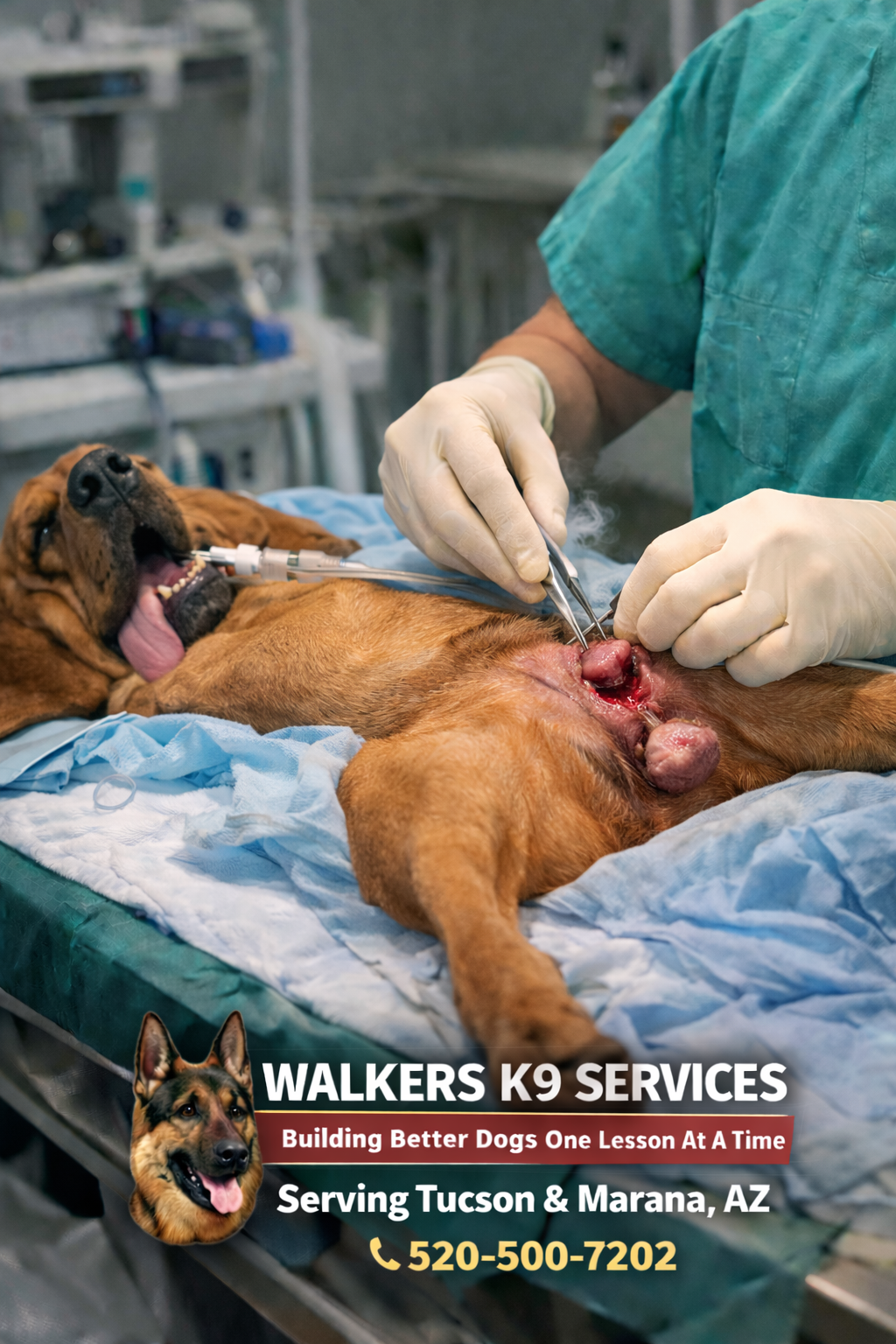
Pros & Cons of Neutering Your Dog
By George Walker — Walker’s K9 Services, Tucson AZ
Neutering is one of those topics that gets dog owners fired up on both sides. Some swear by it, others avoid it completely—and the truth is, it isn’t a one-size-fits-all decision. As a trainer, I see both the benefits and the drawbacks show up in real dogs and real homes every single day. The key is understanding what neutering can help with, what it won’t fix, and how timing plays a major role in your dog’s behavior and long-term health.
Below is a balanced breakdown to help you make the best possible decision for your dog.
The Pros of Neutering
1. Reduced Roaming & Escape Behavior
Intact males have one mission when a nearby female is in heat: find her. Neutering can
reduce the hormonal drive behind fence-jumping, bolting out doors, and wandering.
2. Helps With Certain Forms of Aggression
Neutering doesn’t turn an aggressive dog into a calm dog—but it can reduce hormone-driven
behaviors like male-to-male competitiveness, posturing, and fighting for dominance.
3. Decreases Marking Behavior
While training is still required, neutering often reduces the urge to constantly mark territory,
both inside and outside the home.
4. Health Benefits
Neutering eliminates the risk of testicular cancer and can reduce the chance of prostate issues later in life.
5. Prevents Accidental Litters
Even the best owners have slips. Neutering ensures you won’t contribute to accidental breeding or shelter overpopulation.
The Cons of Neutering
1. Potential Impact on Growth & Joint Development
Early neutering—especially before 12–18 months—may increase the risk of joint problems, particularly in large breeds (hips, knees, elbows). Waiting until physical maturity is often recommended for working breeds, power breeds, and large/giant dogs.
2. Possible Increase in Anxiety or Reactivity
For certain dogs, especially nervous or genetically timid dogs, early neutering can worsen fear-based behavior. Removing hormones too early can stunt confidence.
3. Weight Gain
Neutered dogs burn fewer calories and often gain weight if their food intake isn’t adjusted. This is preventable—but still something to plan for.
4. Doesn’t Solve Behavioral Problems by Itself
Neutering is not a replacement for training.
It won’t fix:
Leash pulling
Reactivity
Resource guarding
Separation anxiety
Poor manners
Lack of structure in the home
Training and leadership always matter more.
5. Change in Coat & Muscle Development (Certain Breeds)
Some double-coated breeds develop a fluffier, harder-to-maintain coat after neutering, and muscle definition may soften over time.
So… When Is the Right Time?
This depends on your dog’s breed, temperament, size, lifestyle, and goals.
General rule of thumb I use with clients:
Small breeds: 9–12 months
Medium breeds: 12–15 months
Large/power breeds (Shepherds, Rotties, Pits, Corsos, Malinois): 18–24 months
Nervous or fear-prone dogs: Often better to wait until emotional maturity
If you’re unsure, talk to a vet and a balanced trainer—both viewpoints give you the full picture.
Final Thoughts
Neutering can absolutely be beneficial, but it should be done with intention and good timing—not pressure, guilt, or blanket opinions. Every dog is different. The key is making an informed decision based on your dog’s age, behavior, temperament, and future goals.
My Personal Perspective on Spaying & Neutering
Personally, I do not spay or neuter dogs unless there is a clear medical reason, or the dog is adopted from a shelter where sterilization is required. I believe this is a topic that deserves thoughtful consideration rather than a one-size-fits-all approach.
If you stop and think about it for a moment, the comparison is telling. If a 19-year-old woman has medical issues involving her uterus, doctors will exhaust every reasonable option before considering a hysterectomy. Why? Because of the significant hormonal changes, long-term health implications, and potential physical and emotional effects that procedure can cause.
Dogs are no different in this regard. Removing reproductive organs is not a neutral decision—it permanently alters hormones that play a role in growth, metabolism, behavior, joint health, and overall well-being. That doesn’t mean spaying or neutering is always wrong, but it does mean the decision should be individualized, medically justified, and thoughtfully weighed rather than treated as automatic.
Dog Training in Tucson, AZ Dog Training in Marana, AZ Training Options
Walkers K9 Services — Building Better Dogs, One Lesson at a Time 🔹
Please support our mission by sharing our training articles with other dog owners.
Written by: George Walker
Walkers K9 Services | Tucson, AZ
📞 520-500-7202