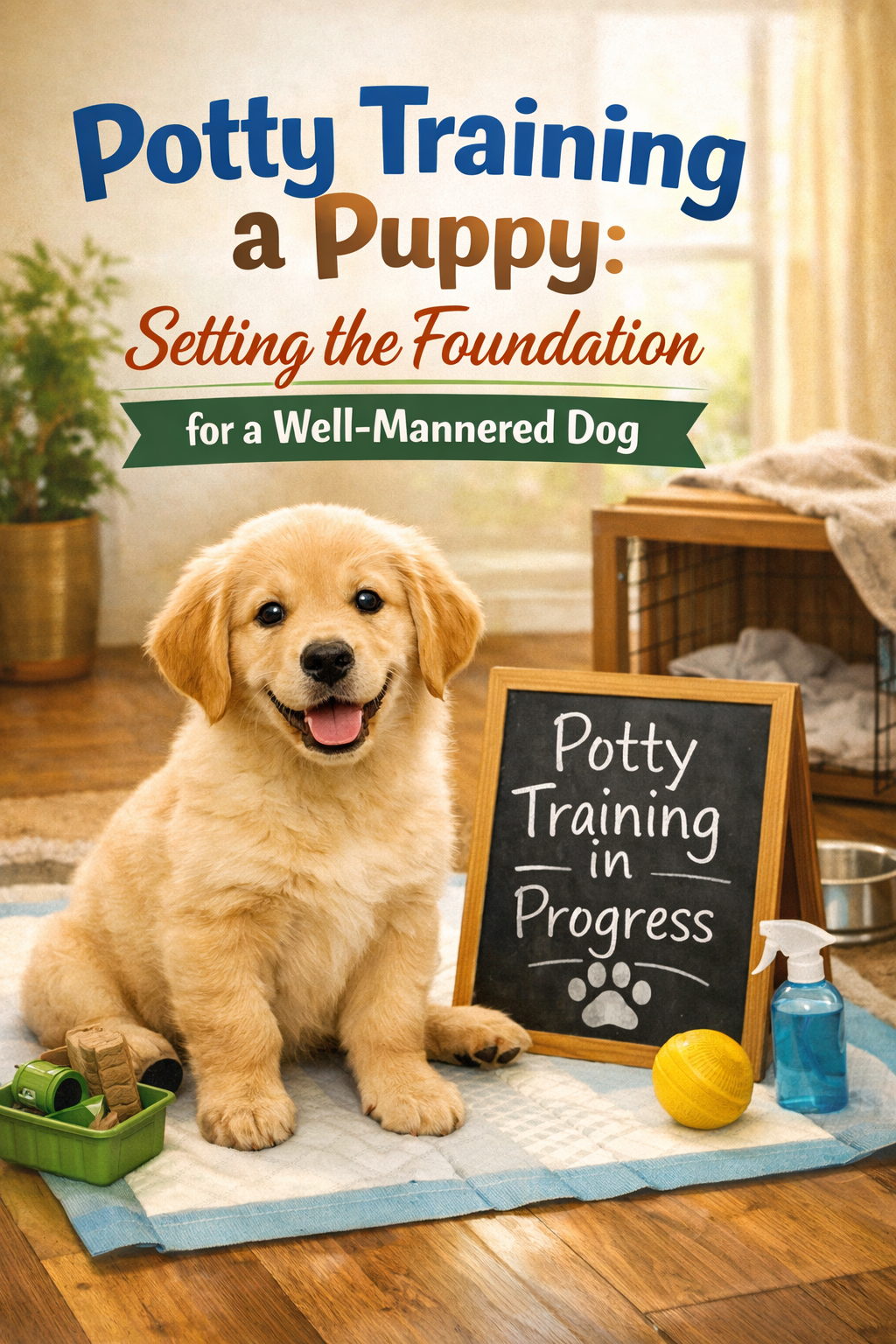
Potty Training a Puppy: Setting the Foundation
for a Well-Mannered Dog
Potty training a puppy is one of the first major challenges new owners face. It’s also one of the most important. A dog that understands where to go, how to ask, and what’s expected will grow into a calmer and more confident adult. Potty training isn’t about punishment or frustration — it’s about structure, timing, supervision, and consistency.
Here’s how to set your puppy up for success.
Why Puppies Struggle at First
Young puppies have tiny bladders, almost no muscle control, and zero concept of human rules. They don’t come pre-programmed to know that your rug is not a bathroom. Every accident is simply a lack of information, not a lack of intelligence.
Your job is to guide them with a clear routine and immediate feedback.
1. Establish a Predictable Schedule
Dogs learn best through patterns. The more consistently you take your puppy out, the faster they connect the dots.
Your puppy should go outside:
First thing in the morning
After every meal
After play sessions
After waking up from naps
Before bedtime
Every 1–2 hours in between, depending on their age
If you wait too long, the puppy will simply empty their bladder wherever they happen to be. Prevent the mistake so you don’t have to fix it.
2. Supervision Is Non-Negotiable
If the puppy is loose in your home, you must be watching them. Not half-watching… actually watching.
Early warning signs include:
Sniffing intensely
Circling
Wandering off
Suddenly becoming quiet
The moment you see this body language, calmly take your puppy outside. Don’t yell. Don’t scare them. Just interrupt and move.
If you can’t supervise, the puppy should be:
In a crate
In a small playpen area
Tethered to you
Freedom is earned, not given.
3. Use the Crate to Your Advantage
A crate is not a punishment — it’s a tool for structure and good habits. Puppies naturally avoid soiling where they sleep, making a crate one of the most powerful potty-training aids.
Crate tips:
Size matters: just enough room to stand, turn, and lie down. Most new crates come with a divider to restrict the size
Take the puppy out immediately after opening the crate
Praise calmly outside, not inside
A crate prevents accidents, builds confidence, and teaches bladder control.
4. Reward the Right Behavior — Instantly
Timing is everything. When your puppy finishes going outside, that’s when you praise.
The formula:
Pee + Poop outside → Calm praise + small treat.
Not inside. Not 30 seconds later. Right after the last drop hits the ground. You’re creating an association that will shape their future behavior.
5. Clean Up Mistakes Properly
Accidents will happen — even with perfect management. When they do, clean the area with an enzymatic cleaner. Regular cleaners won’t remove scent markers that encourage repeat accidents.
Do not scold the puppy. They won’t understand, and you’ll only make them fearful of going in front of you.
6. Add Structure to Feeding and Water
Routine feeding helps keep potty times predictable.
Tips:
Feed on a schedule
Remove the food bowl when they walk away
Limit water before bedtime
Give water regularly during active periods
A puppy with round-the-clock access to food and water becomes very difficult to regulate.
7. Teach a Potty Cue
Once your puppy is consistently going outside, you can add a cue like “Go potty.” Say it as they start to go, not before. Over time, they learn to pee or poop on command, which becomes extremely useful during bad weather, busy mornings, or travel.
8. Expect Progress — Not Perfection
Most puppies aren’t fully reliable until 5–7 months old. Some learn fast, some take longer. What matters is consistency, structure, and supervision. If you stick with the program, your puppy will succeed.
Final Thoughts
Potty training is all about building habits. Your puppy isn’t misbehaving — they’re learning. The cleaner their routine, the faster they succeed. Stay patient, stay structured, and take responsibility for guiding them every step of the way.
Dog Training in Tucson, AZ Dog Training in Marana, AZ Training Options
Please help us by sharing our training articles
Written by: George Walker
Walkers K9 Services — Tucson, AZ
520-500-7202