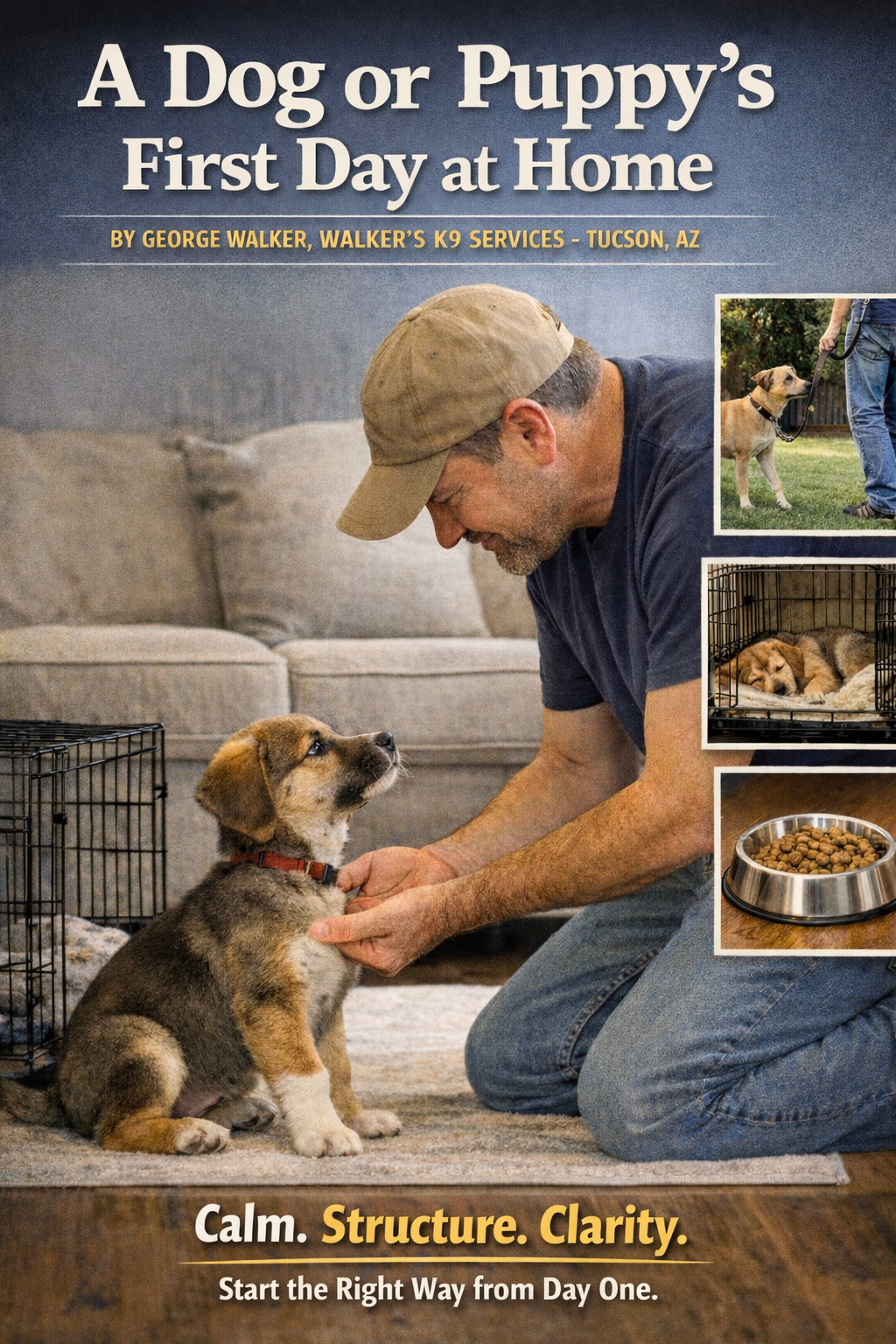
A Dog or Puppy’s First Day at Home
By George Walker, Walker’s K9 Services – Tucson, AZ
Bringing a new dog or puppy home is an exciting moment—but that first day sets the tone for everything that follows. Whether you’ve adopted an adult dog or welcomed a young puppy, the way you handle Day One can greatly influence your dog’s confidence, behavior, and adjustment to their new life.
Here’s what every owner should know to make the first day calm, structured, and successful.
1. Keep the First Day Calm and Low-Key
Your new dog is leaving everything familiar behind. New smells, new people, new rules—it’s a lot to process.
Avoid:
Crowded introductions
Excited children overwhelming the dog
Immediate trips to stores, dog parks, or friends’ houses
Instead, allow your dog time to decompress. Calm energy from you leads to calm behavior from your dog.
2. Introduce the Home Slowly
Don’t give your dog free run of the entire house right away.
Start with:
One main room or area
Access to water and a designated rest spot
A crate or quiet corner where the dog can retreat
Too much space too soon can create anxiety, accidents, and unwanted behaviors.
3. Establish Structure Immediately
Dogs thrive on structure, not freedom.
From the very first day:
Set clear boundaries (what rooms are allowed, furniture rules, etc.)
Begin a predictable schedule for potty breaks, feeding, and rest
Use a leash indoors if needed to guide behavior
Structure builds trust and helps your dog understand what’s expected.
4. Start Potty Training Right Away
Even adult dogs may have accidents on the first day due to stress.
Take your dog outside:
Immediately upon arriving home
After eating or drinking
After naps
Every 1–2 hours for puppies
Reward successful potty trips calmly and consistently.
5. Keep Feeding Simple
Stick to the food your dog was eating before coming home, at least for the first week.
Sudden food changes can cause:
Diarrhea
Upset stomach
Added stress
Feed at scheduled times to begin building routine and reliability.
6. Don’t Expect Instant Obedience or Bonding
Your dog does not know you yet—and that’s okay.
The first day is not the time to:
Test commands repeatedly
Correct heavily
Expect perfect behavior
Focus on observation, calm guidance, and relationship-building. Training is a process, not a one-day event.
7. Limit Handling and Forced Affection
Many dogs need space before they want affection.
Let the dog:
Approach you first
Choose when to interact
Relax without constant touching
Respecting space builds trust faster than forced cuddling.
8. The First Night Matters
Prepare for the first night before bedtime arrives.
Helpful tips:
Provide a crate or safe sleeping area
Expect some whining or restlessness
Do not reinforce anxiety with excessive attention
Consistency and calm reassurance—not giving in—help your dog settle.
9. Begin Training the Right Way
Training doesn’t mean drilling commands on Day One. It means:
Teaching calm behavior
Reinforcing good choices
Preventing bad habits from forming
Early guidance prevents long-term problems.
Final Thoughts
A dog or puppy’s first day at home should be about calm, structure, and clarity. Dogs don’t need excitement—they need leadership. The more predictable and controlled that first day is, the smoother your dog’s transition will be.
Start right, and you’ll avoid many of the behavior issues owners struggle with later.
Dog Training in Tucson, AZ Dog Training in Marana, AZ Training Options
Walkers K9 Services — Building Better Dogs, One Lesson at a Time 🔹
Please support our mission by sharing our training articles with other dog owners.
Written by: George Walker
Walkers K9 Services | Tucson & Marana, AZ
📞 520-500-7202