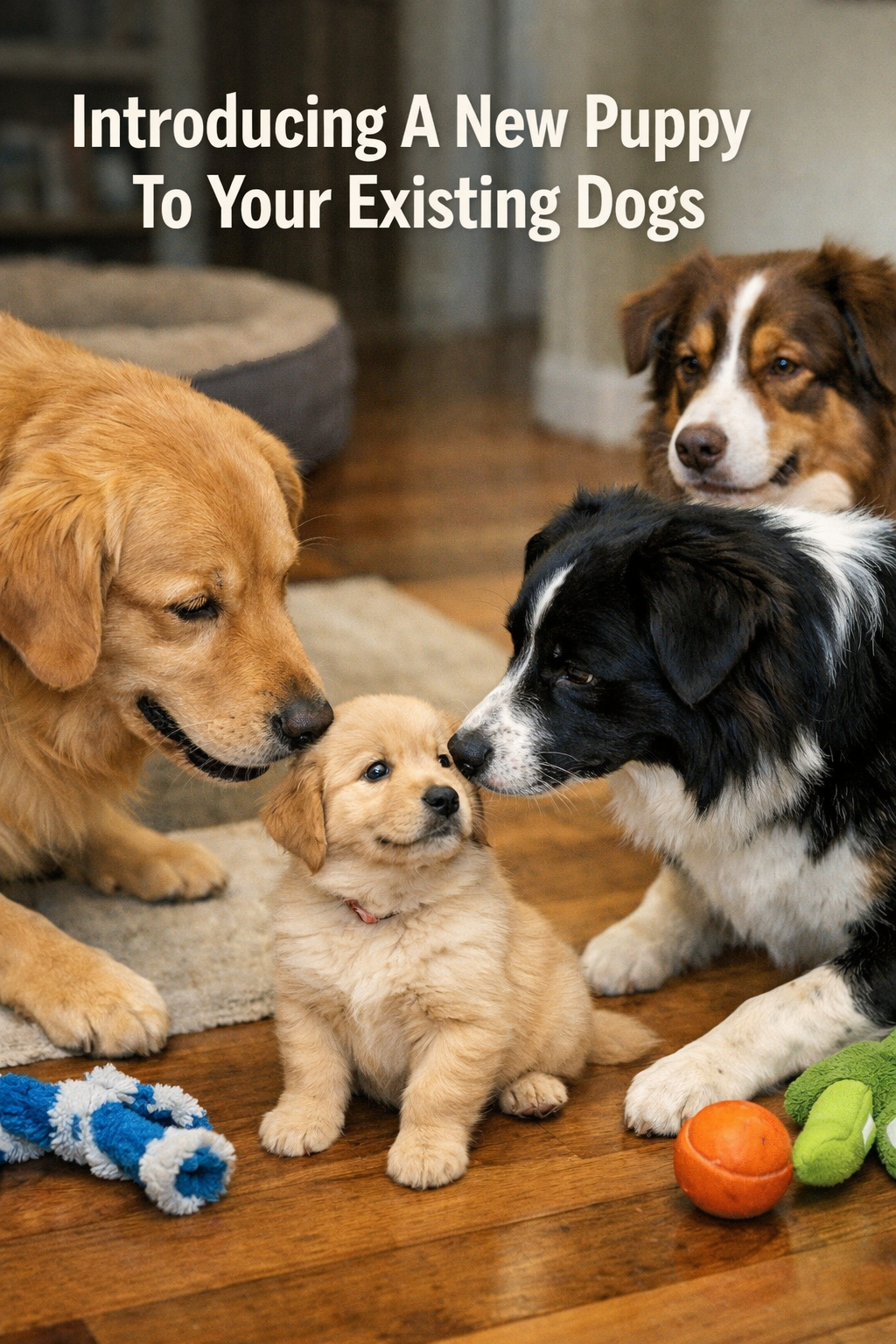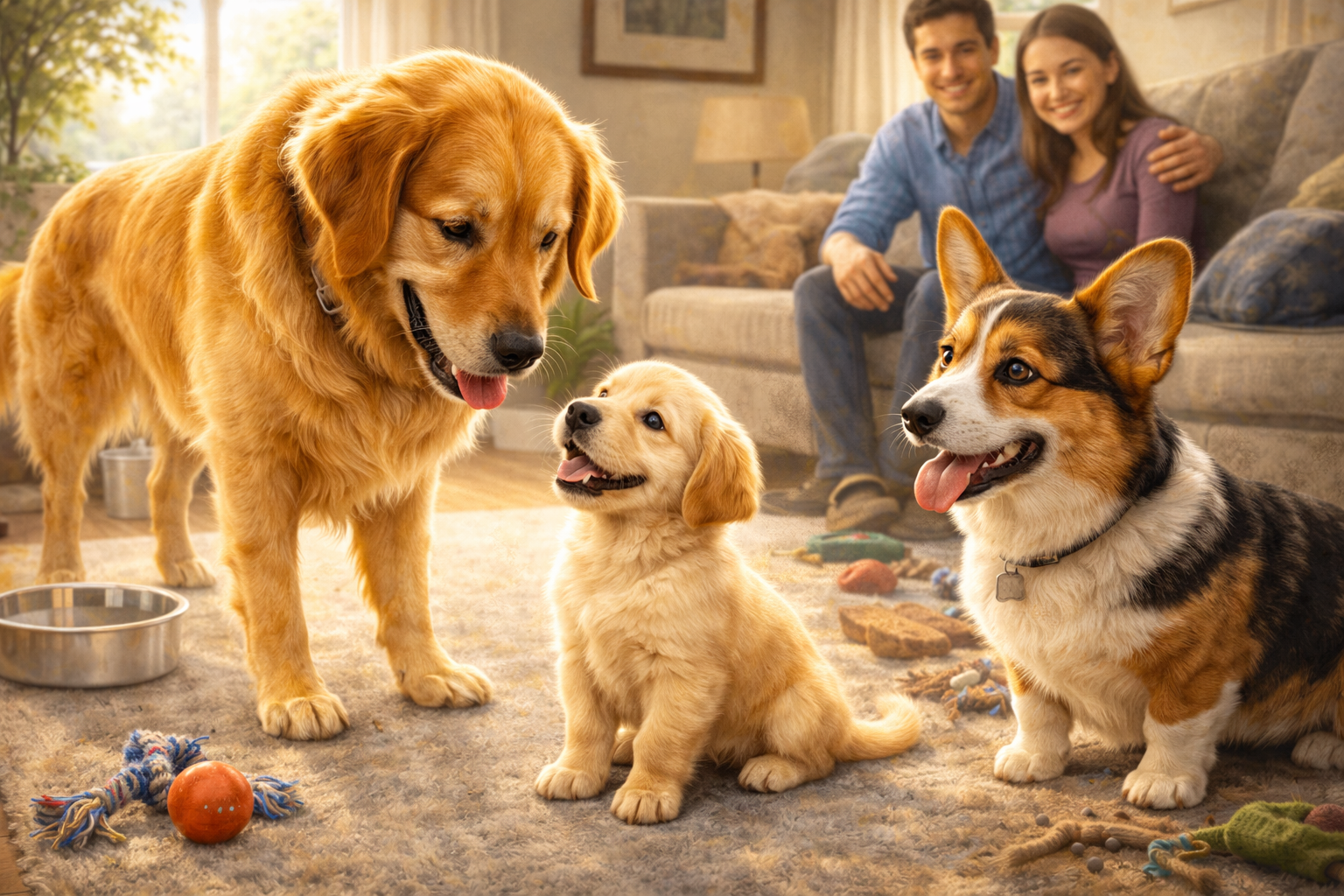
Introducing A New Puppy To Your Existing Dogs
By George Walker, Walker’s K9 Services – Tucson, AZ
Bringing home a new puppy is an exciting time—but it can also be a major adjustment for your current dogs. The key to a smooth transition is structure, leadership, and patience. When introductions are handled correctly, you can prevent jealousy, fights, stress, and long-term behavior issues. Below is the proven, professional approach I recommend for all dog owners when adding a new puppy to the pack.
Start With the Right Mindset
Your older dogs have an established routine, rank, and understanding of the household. A puppy does not automatically get a free pass just because it’s young. Dogs respect rules, not age.
Your job is to keep the peace, set boundaries, and control the environment so all dogs feel safe and stable.
1. Begin With a Neutral-Location Introduction
Do NOT bring the puppy straight into your home and drop it on the floor to “see what happens.”
This overwhelms the puppy and can trigger territorial behavior in your existing dogs.
Best practice:
Meet outside on neutral ground (driveway, yard, sidewalk).
Keep all dogs on leashes.
Walk them side-by-side with space in between before allowing any sniffing.
Allow quick, brief sniffs—then move again.
Movement relieves tension and prevents staring, guarding, or fixation.
2. Control the First Home Entry
Once everyone has walked together and seems relaxed:
Bring the existing dogs into the home first.
Bring the puppy in second, calmly and without fanfare.
This lets your older dogs know you’re still in charge of the order and the space.
3. No Free-for-All Inside the Home
For the first few days to weeks (depending on the dogs), the puppy should be:
Leashed indoors
Crated when unsupervised
Kept out of your older dogs’ personal space
Blocked from pestering, biting, or jumping on older dogs
Your older dogs should never be expected to “correct the puppy.”
You should step in long before it gets to that point.
4. Protect Your Older Dogs’ Resources
Puppies have no manners. They will charge food bowls, steal toys, and invade beds.
To prevent resource guarding:
Feed dogs separately.
Remove high-value toys for now.
Let older dogs keep their resting spaces.
Never let the puppy bulldoze or bug the older dogs while they’re resting.
Resource guarding almost always starts because the humans didn’t control access.
5. Supervise All Interactions
Even friendly dogs need supervision with a puppy.
Puppies are relentless. Older dogs are patient—until they’re not.
Watch for:
Staring
Stiff body posture
Lip lifting
Tail held high and tight
Freezing before snapping
If you see tension, calmly separate and give everyone space.
Corrections should be fair, calm, and immediate—never emotional.
6. Short, Controlled Play Sessions
Your puppy and older dogs should play only in short bursts at first.
End play before it gets too wild.
Don’t allow full-speed tackles or body-slamming.
Teach the puppy “Come,” “Leave it,” and “Sit” to give structure to interactions.
Controlled play builds healthy relationships. Chaos destroys them.
7. Reinforce Calm Behavior, Not Excitement
Reward your older dogs for calm, relaxed behavior around the puppy.
Reward the puppy for ignoring the older dogs and focusing on you.
This teaches both sides that being calm equals good things—excitement does not.
8. Maintain Your Existing Dogs’ Routine
Your current dogs should still get:
Their regular walks
Their individual training
Their one-on-one time with you
Never let your older dogs feel replaced or overlooked. Puppies should fit into your dogs’ world—not turn it upside down.
9. Crate-Train the Puppy From Day One
Crates prevent:
Fights
Resource stealing
Overexcitement
Stress
Bad habits forming
Crating the puppy gives the older dogs peaceful time to relax and helps the puppy learn boundaries and independence.
10. Take It Slow and Stay Consistent
Some dog packs bond in a day. Others take weeks or months. Both are normal.
Success depends on:
Your structure
Your rules
Your consistency
Your leadership
Never rush introductions and never assume “they’ll figure it out.”
When you control the environment, you control the outcome.
Final Thoughts
Introducing a new puppy the right way builds harmony, reduces stress, and sets all dogs up for success. Dogs don’t need instant friendship—they need clarity, leadership, and calm direction. Follow these steps, maintain boundaries, and give your dogs the structure they need to grow into a stable, happy pack.
Dog Training in Tucson, AZ Dog Training in Marana, AZ Training Options
Walkers K9 Services — Building Better Dogs, One Lesson at a Time
Please support our mission by sharing our training articles with other dog owners.
Written by: George Walker
Walkers K9 Services | Tucson, AZ
📞 520-500-7202