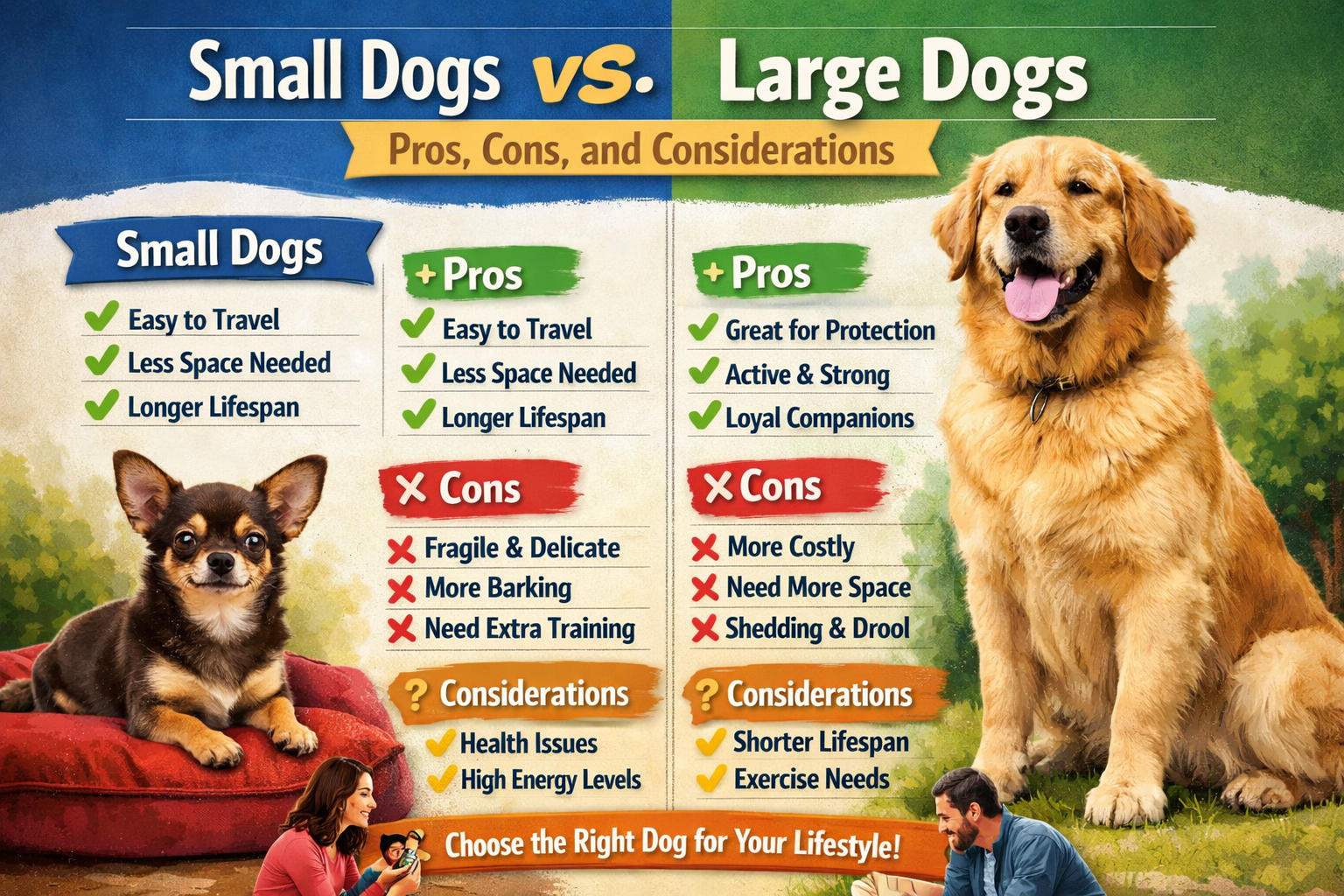
Small Dogs vs. Large Dogs: Pros, Cons, and Considerations
Introduction
Choosing between a small dog and a large dog isn’t just about looks. Size affects behavior, training needs, energy levels, space requirements, lifestyle compatibility, and even long-term costs. Understanding these differences helps owners choose a dog that fits their home and expectations.
This guide breaks down the real-world pros, cons, and considerations for both small and large dogs.
Small Dogs: Pros, Cons & Considerations
Pros of Small Dogs
1. Great for smaller living spaces
Small breeds fit comfortably into apartments, condos, and smaller homes.
2. Easier to travel with
They’re simpler to transport and generally welcomed more easily in hotels and rentals.
3. Lower cost of ownership
Food, supplies, medications, and gear are all much cheaper.
4. Often more adaptable
They adjust quickly to new environments and routines.
Cons of Small Dogs
1. Behavior issues often go uncorrected
Owners overlook barking, snapping, or guarding because the dog is small.
2. Fragility
Toy breeds can be injured easily, especially in homes with large dogs or small children.
3. Potty training challenges
Smaller bladders can mean more accidents and slower progress.
4. Higher-pitched, more frequent barking
This can cause problems in shared living spaces.
Large Dogs: Pros, Cons & Considerations
Pros of Large Dogs
1. Often calmer indoors
Large dogs frequently have lower indoor energy compared to small breeds.
2. Great for active households
They excel at hiking, running, and outdoor adventures.
3. Provide a strong sense of security
Their size naturally deters intruders without needing aggression.
4. Easier to train
Many large breeds are highly focused and eager to please.
Cons of Large Dogs
1. Higher costs
Food, medical care, and gear all cost significantly more.
2. Require structure and training
A 90-lb dog jumping, pulling, or ignoring commands becomes a serious issue.
3. Shorter lifespans
Large and giant breeds age faster.
4. Space needs
They need room to move and stretch comfortably.
5. More difficult to travel with
Weight limits, breed restrictions, and size limitations can make trips challenging.
Temperament Differences
Small Dogs
More reactive or alert
Can be clingy or anxious
Typically more vocal
Large Dogs
More confident and steady
Often better with children (when trained properly)
More predictable temperaments in many breeds
Which Size Is Right for You?
Consider these factors:
Lifestyle (apartment vs. outdoorsy)
Activity level
Budget
Family dynamics
Training commitment
There’s no “better” size—only a better match.
Dog Training in Tucson, AZ Dog Training in Marana, AZ Training Options
Walkers K9 Services — Building Better Dogs, One Lesson at a Time 🔹
Please support our mission by sharing our training articles with other dog owners.
Written by: George Walker