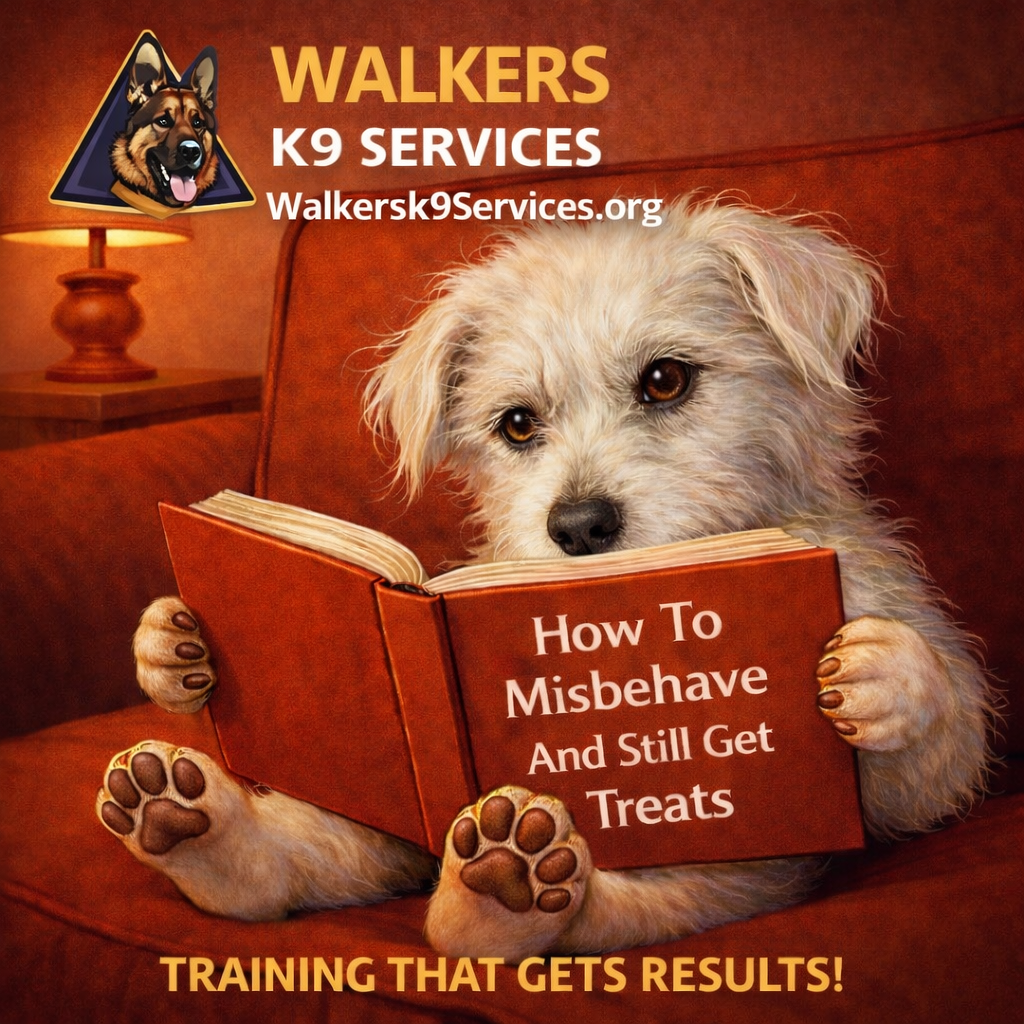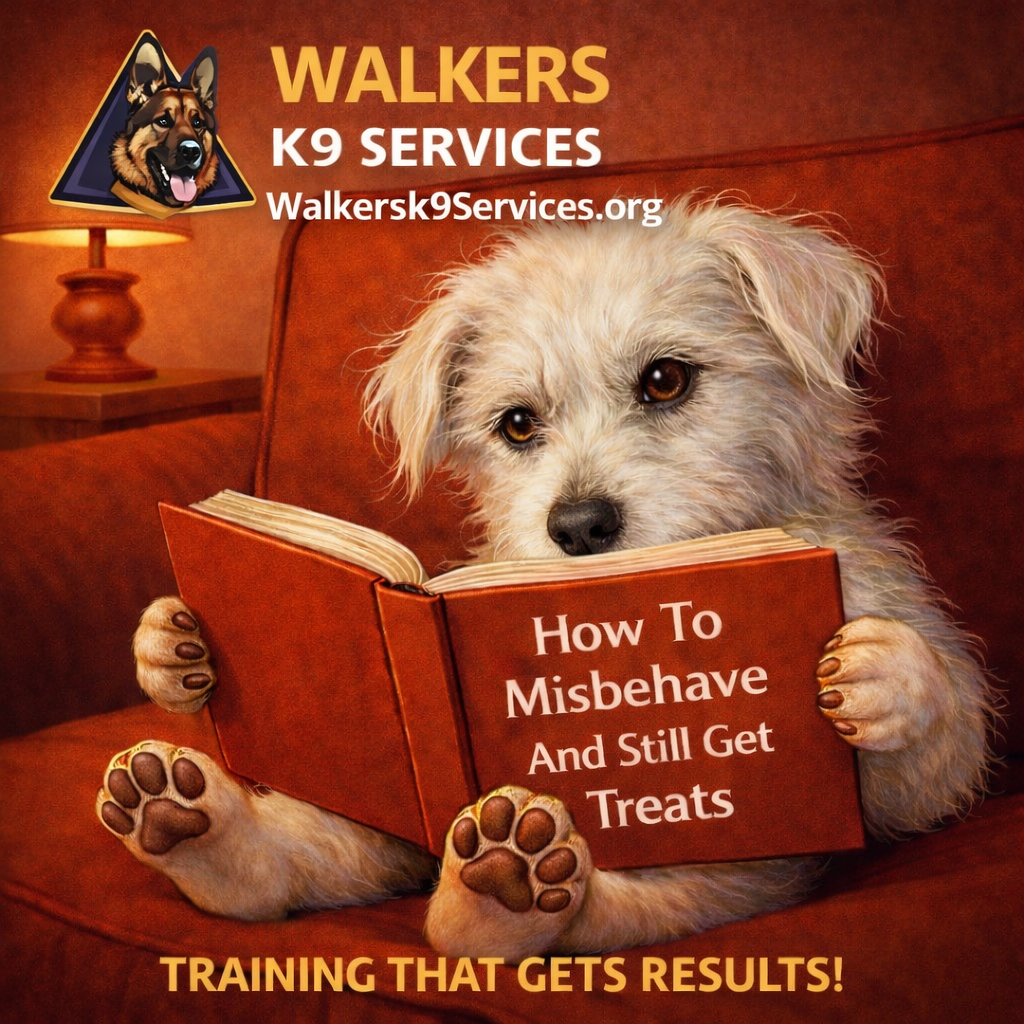
When Rewards Go Wrong:
How We Accidentally Train Bad Dog Behavior
By George Walker, Walker’s K9 Services – Tucson, AZ
Most dog owners genuinely want to do right by their dogs. They love them, care about them, and want them to be happy. Unfortunately, good intentions don’t always equal good training. One of the most common — and most damaging — mistakes I see is people subconsciously rewarding bad behavior with treats, attention, or reassurance.
What feels like kindness in the moment is often the very thing locking problem behaviors in place.
How This Happens Without People Realizing It
Dogs don’t understand why you do something — they only understand what happens
immediately after their behavior.
If a behavior is followed by something the dog likes, that behavior gets stronger. Period.
Here are some everyday examples:
A dog barks or whines → owner gives a treat to “calm them down”
A dog jumps on guests → guest gives a treat to distract the dog
A dog growls or shows fear → owner pets and reassures (“It’s okay, it’s okay”)
A dog paws, nudges, or stares → owner gives a snack to make it stop
From the dog’s point of view, the lesson is crystal clear:
“When I do this behavior, good things happen.”
The dog isn’t being manipulative. They’re being trained.
Why Treat Timing Matters More Than the Treat Itself
Treats are not the problem. Timing is the problem.
A treat given:
After a calm, desired behavior → reinforces good behavior
During or immediately after bad behavior → reinforces the bad behavior
Dogs live in the moment. Even a few seconds late can change what the dog thinks they’re being rewarded for.
If your dog is barking, and you wait until the barking pauses for half a second before handing over food, your dog doesn’t think, “I stopped barking.” They think, “Barking eventually works.”
Fear-Based Behaviors Are the Most Commonly Reinforced
One of the biggest mistakes owners make is rewarding fear and insecurity.
Example:
A dog is afraid of another dog or a stranger.
The owner responds with petting, baby talk, or treats.
From a human perspective, this feels compassionate.
From a dog’s perspective, it confirms:
“Yes, this situation is serious. My fear response just got rewarded.”
This doesn’t build confidence — it builds dependency and anxiety.
Calm leadership builds confidence. Emotional reassurance often does the opposite.
Attention Is a Reward Too (Not Just Treats)
Food isn’t the only thing that reinforces behavior.
Dogs can be rewarded by:
Eye contact
Talking
Touching
Laughing
Even scolding, in some cases
If your dog misbehaves and you immediately engage with them, many dogs interpret that as success.
To the dog:
Any attention is better than no attention.
Why This Creates Long-Term Behavior Problems
When bad behavior consistently gets rewarded, dogs:
Escalate behaviors
Offer them more frequently
Use them strategically
Become frustrated when they don’t work
This is how you end up with dogs that:
Bark relentlessly
Demand attention
Refuse to settle
Appear “stubborn” or “dominant”
In reality, they’re just doing what has always paid off.
The Fix: Reward Calm, Ignore Chaos
The solution is simple — but not easy.
Stop rewarding the unwanted behavior
No treats
No soothing
No engagement
Wait for calm, neutral behavior
Four feet on the floor
Quiet body language
Relaxed posture
Then reward
Food
Praise
Affection
Access to what the dog wants
This teaches the dog:
“Calm behavior is what works.”
A Final Thought for Dog Owners
Dogs are incredible learners — whether we mean to teach them or not.
Every interaction is a lesson.
Every reward sends a message.
If you’re struggling with behavior issues, ask yourself one simple question:
“What might my dog be getting rewarded for right now?”
The answer often explains everything.
Dog Training in Tucson, AZ Dog Training in Marana, AZ Training Options
Walkers K9 Services — Building Better Dogs, One Lesson at a Time 🔹
Please support our mission by sharing our training articles with other dog owners.
Written by: George Walker
Walkers K9 Services | Tucson, AZ
📞 520-500-7202