Mental Stimulation Games for Dogs
By George Walker, Walker’s K9 Services – Tucson, AZ
Mental exercise is just as important as physical activity for your dog. A well-stimulated mind reduces anxiety, prevents destructive behaviors, and strengthens your bond. Many behavior problems—barking, chewing, pacing, reactivity—stem from boredom. When you give the brain a job, the body relaxes.
This article breaks down the most effective mental stimulation games for dogs, why they work, and how to incorporate them into your daily routine.
Why Mental Stimulation Matters
Dogs were bred to work: track, herd, guard, retrieve, pull, or patrol. Even family pets retain these instincts, and when those instincts go unused, frustration builds.
Mental games:
Build confidence
Strengthen impulse control
Improve obedience
Reduce anxiety and hyperactivity
Satisfy natural instincts in safe, structured ways
A tired mind truly is a happy mind.
Top Mental Stimulation Games for Dogs
1. Sniffing & Scent Games
A dog’s nose is its superpower. Fifteen minutes of scent work can mentally tire a dog more than an hour of walking.
Easy Sniffing Games
• Treat Scatter:
Throw kibble or small treats into the grass, a snuffle mat, or around a room. Let your dog work to find every piece.
• Find It Game:
Start by showing your dog a treat, placing it under a cup, and saying “Find it.” As they improve, hide treats behind furniture, in boxes, or in another room.
• Scent Trails:
Rub a treat or toy on the ground to create a track leading to a final reward.
Why it Works
Sniffing lowers cortisol and activates problem-solving pathways. It’s one of the most natural and fulfilling activities for dogs.
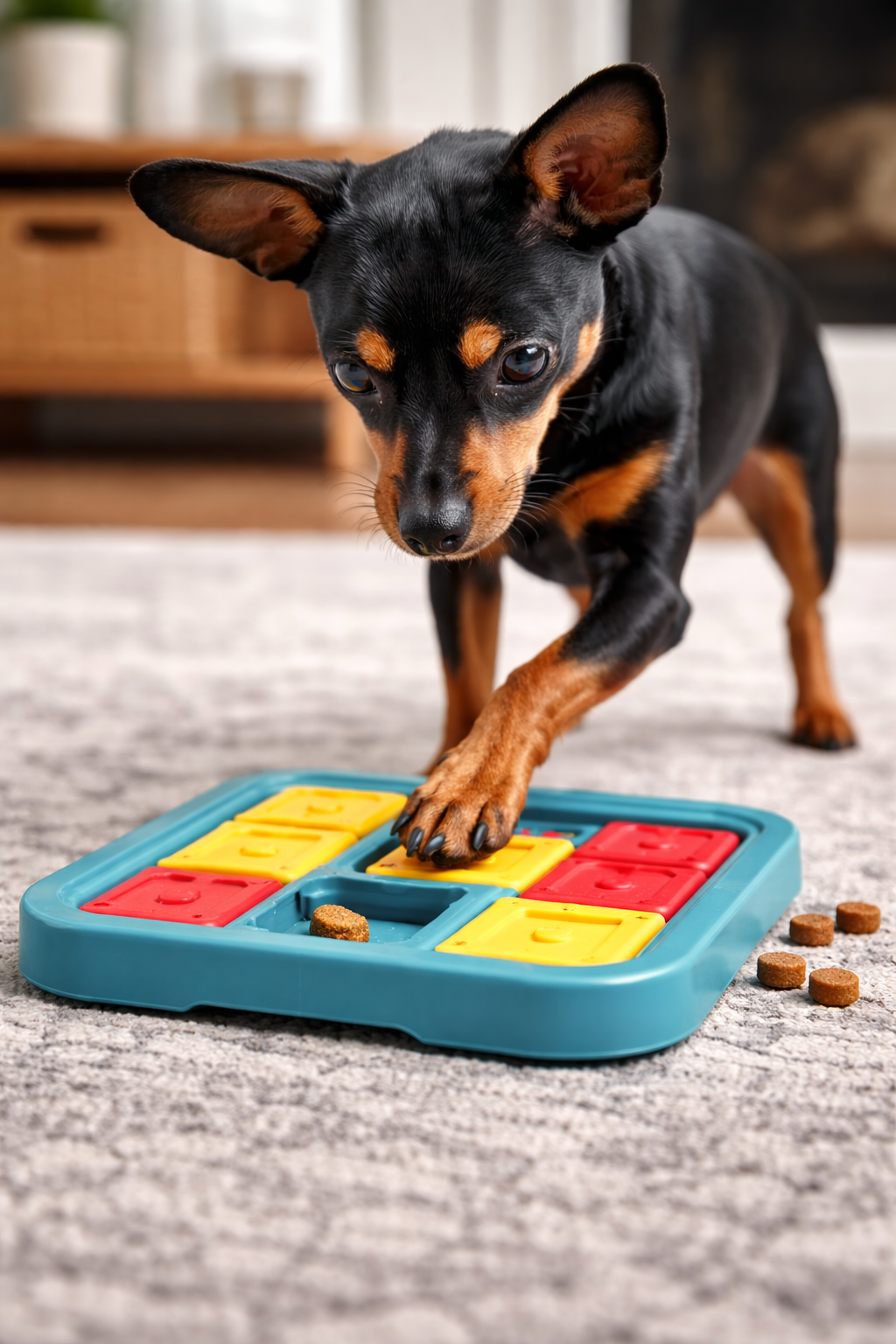
2. Puzzle Feeders & Interactive Toys
Food puzzles force dogs to slow down, think, and work for their meal.
Recommended Puzzle Types
• Slow-feeder bowls – beginner level
• Kongs stuffed with food – intermediate
• Rolling or shaking treat-dispensing balls – intermediate to advanced
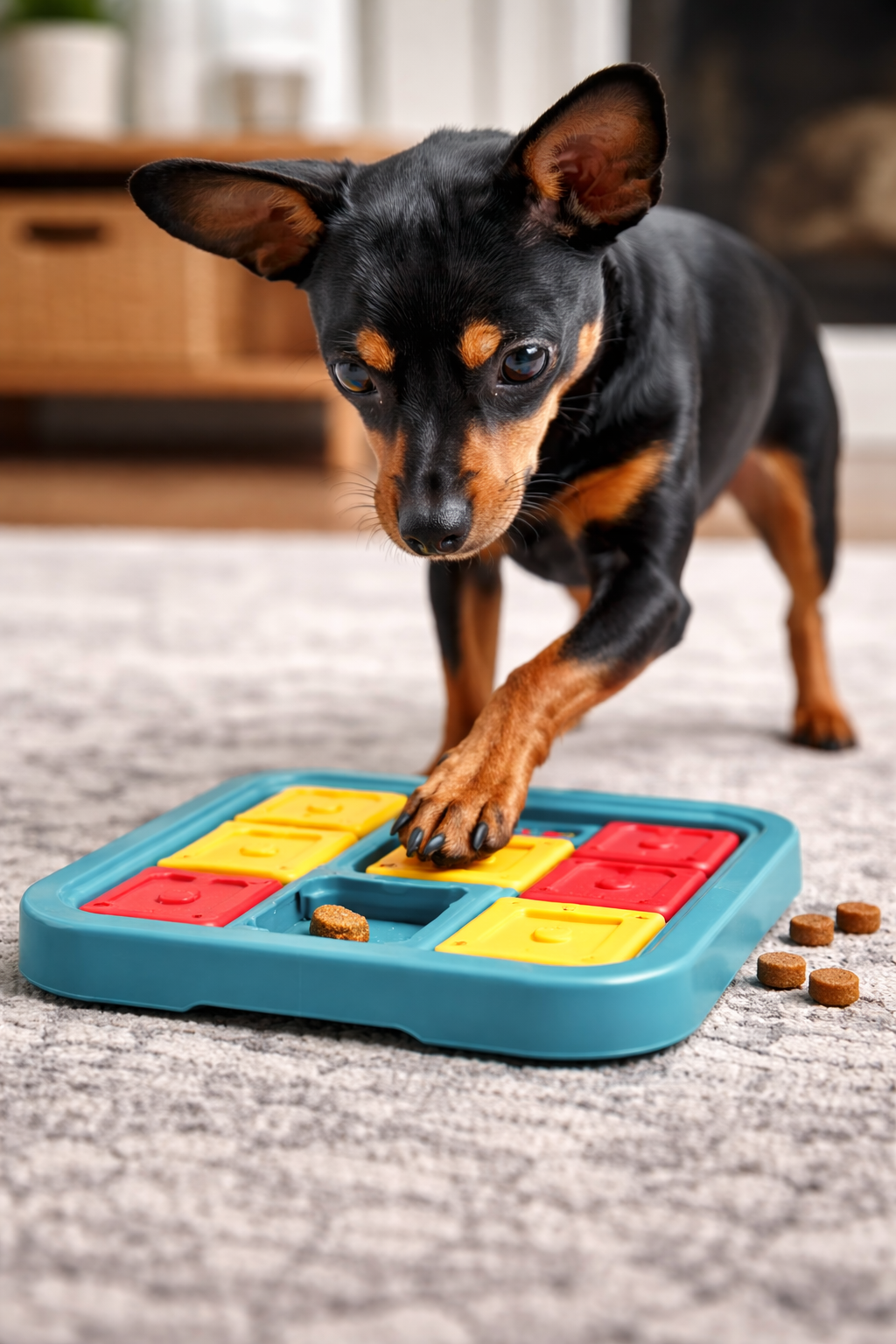
• Sliding-tile puzzle boards – advanced
• DIY puzzles – muffin tin with tennis balls, a towel burrito, cardboard boxes
Stuffing Ideas for Kongs
Kibble + peanut butter
Greek yogurt + banana
Wet food frozen overnight
Pumpkin + kibble mix
Why it Works
Puzzle feeders mimic foraging and hunting, providing long-lasting mental engagement.
3. Obedience Drills with a Twist
Training doesn’t have to be repetitive. Adding variation keeps your dog thinking.
Game Ideas
• Rapid-Fire Commands:
Sit → Down → Sit → Touch → Heel → Place
Mix in new patterns each session.
• Command Chains:
Ask for two or three behaviors before rewarding to increase cognitive demand.
• Moving Downs & Sits:
Ask for cues while walking or jogging to reinforce responsiveness.
Why it Works
Obedience requires listening, processing, and impulse control—three pillars of
mental fitness.
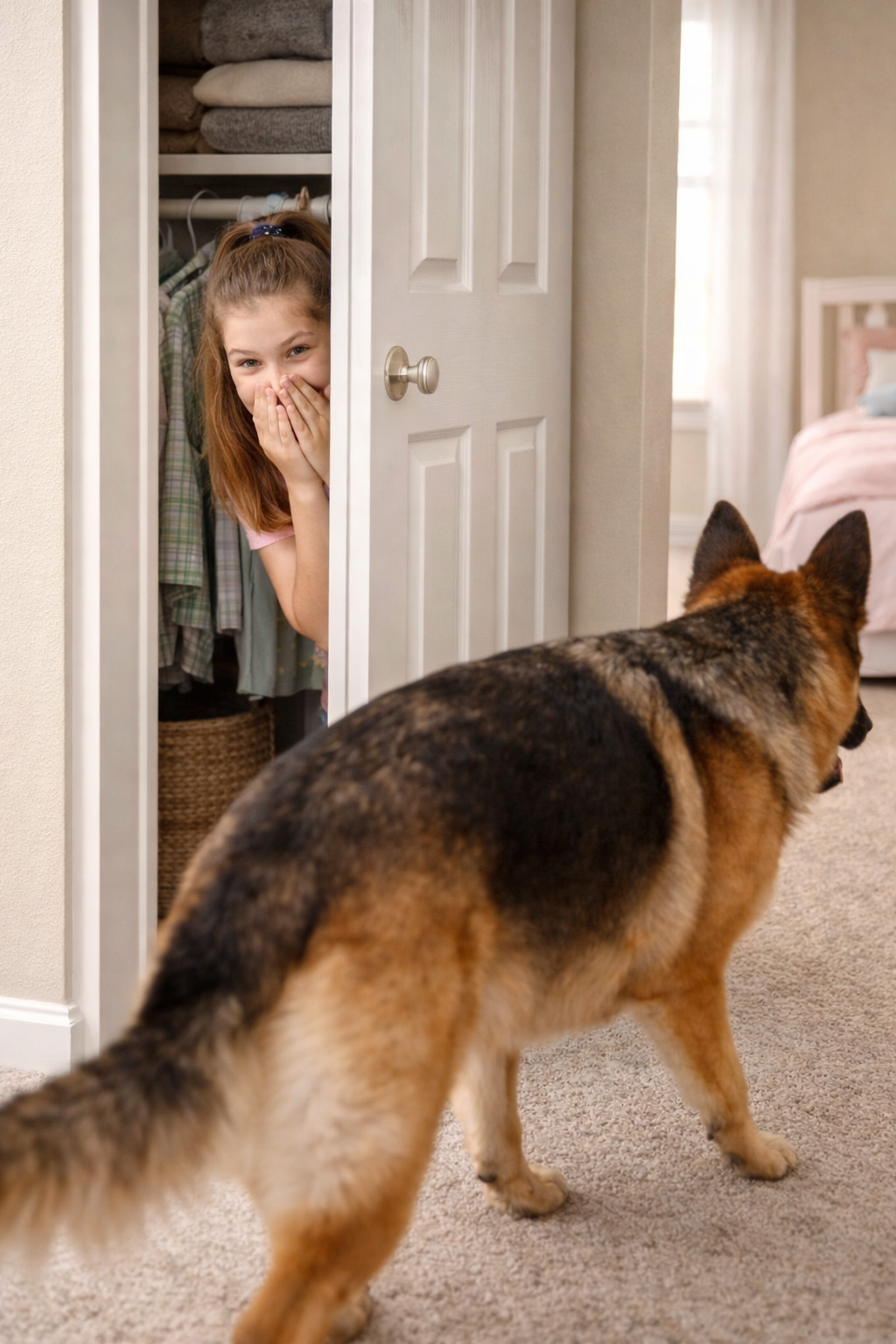
4. Hide-and-Seek
One of the most underrated enrichment games.
How to Play
Put your dog in a stay or have someone hold them.
Hide behind a door, in a closet, or around the corner.
Call your dog and reward them when they find you.
Variations
Hide a favorite toy instead.
Use multiple family members to turn it into a fun challenge.
Why it Works
This game builds recall, boosts confidence, and satisfies tracking instincts.
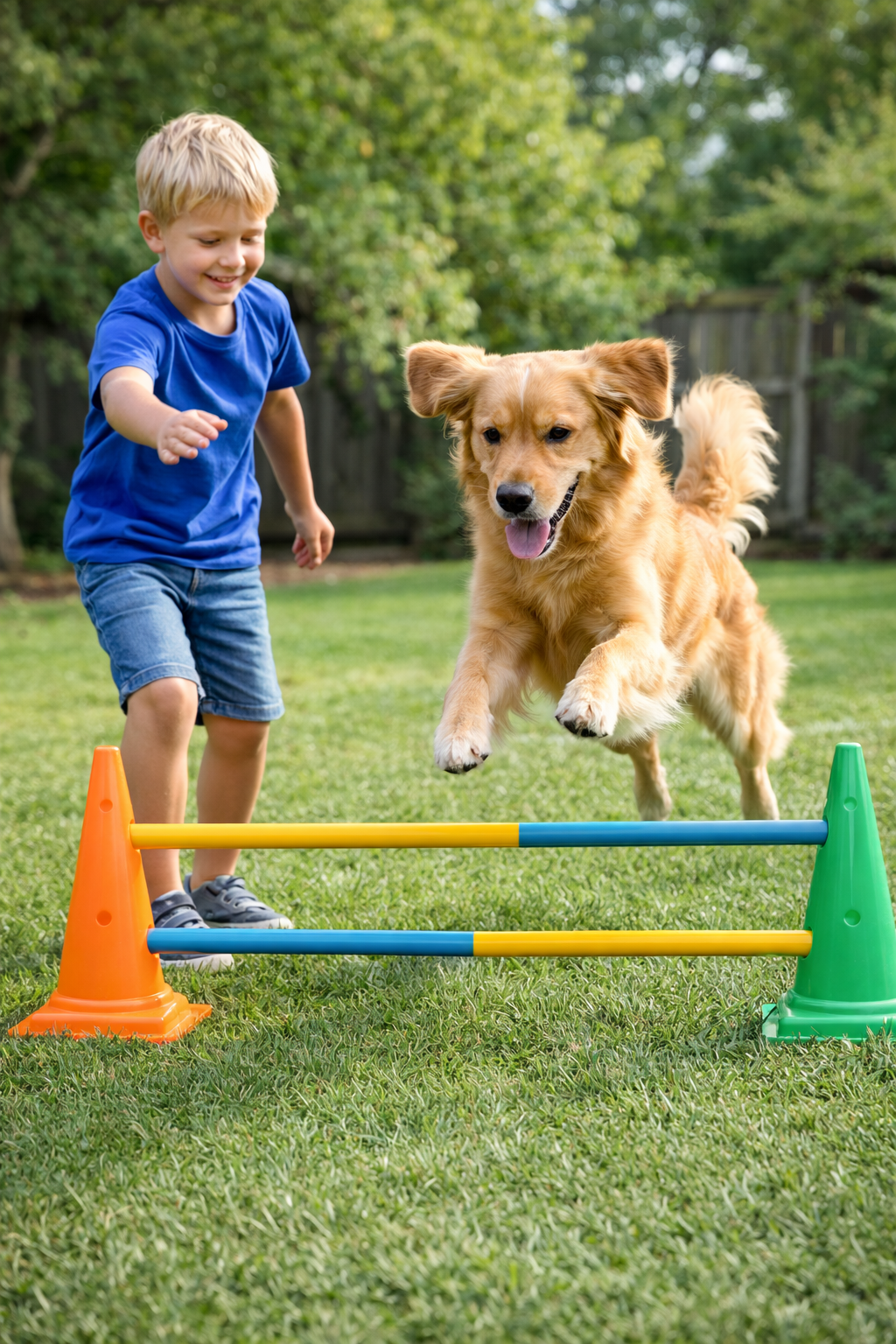
5. DIY Indoor Obstacle Course
Turn your home into a mini adventure.
Ideas to Include
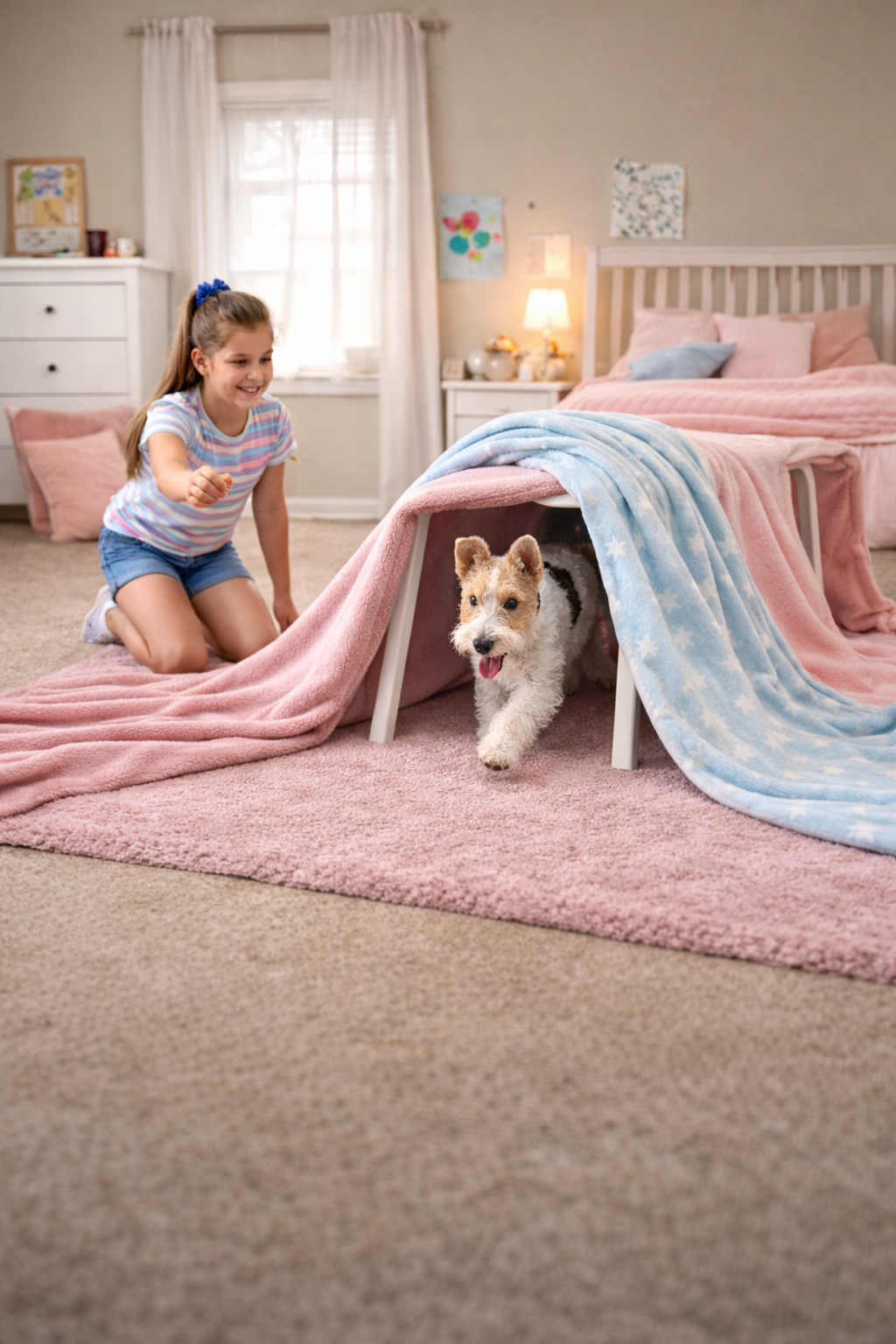
Tunnels (blankets draped over chairs)
Jump over broomsticks
Weave through pillows
Climb onto low, safe platforms
Walk across balance items like couch cushions
Why it Works
Spatial awareness and movement challenges stimulate a dog’s mental and physical coordination.
6. The Shell Game
A classic problem-solving exercise.
How It Works
Place a treat under one of three cups.
Shuffle them slowly at first.
Let your dog choose a cup.
Increase difficulty as your dog gets better.
Why it Works
This game teaches focus, memory, and scent tracking skills.
7. New Experiences & Field Trips
Mental stimulation isn’t only about games—it’s also about novel experiences.
Examples
A new walking trail
Visiting dog-friendly stores
Training in different environments
Exploring parks or neighborhoods
Why it Works
New sights, smells, surfaces, and sounds challenge your dog’s brain to adapt and process new information.
8. Chewing & Licking Enrichment
These activities have a calming, soothing effect on dogs.
Options
Bully sticks
Himalayan yak chews
Snuffle mats
Lick mats with peanut butter or yogurt
Long-lasting raw bones and antler (supervised)
Why it Works
Chewing and licking release endorphins that help dogs relax and feel content.
Building a Daily Mental Workout Plan
A balanced enrichment routine doesn’t need to be complicated.
A Simple Sample Schedule
Morning:
5-minute obedience warm-up + puzzle feeder for breakfast
Midday:
10-minute scent game (treat scatter or Find It)
Evening:
Hide-and-seek, shell game, or trick training session
Before Bed:
Lick mat or chew for calming wind-down
Small, consistent sessions deliver big results.
Signs Your Dog Needs More Mental Stimulation
Excessive barking
Chewing inappropriate items
Restlessness or pacing
Hyperactivity even after physical exercise
Attention-seeking behaviors
Difficulty settling
Destructive tendencies
If you notice these, increase mental exercise before adding more physical activity.
Final Thoughts
Mental stimulation is one of the easiest and most effective ways to improve your dog’s quality of life. A mentally enriched dog is calmer, happier, and easier to train. By adding these games into your daily routine, you’re not only preventing behavior issues—you’re building a stronger bond with your dog.
Dog Training in Tucson, AZ Dog Training in Marana, AZ Training Options
Walkers K9 Services — Building Better Dogs, One Lesson at a Time 🔹
Please support our mission by sharing our training articles with other dog owners.
Written by: George Walker
Walkers K9 Services | Tucson, AZ
📞 520-500-7202