Littermate Syndrome: What It Is and How to Prevent It
By George Walker, Walker’s K9 Services – Tucson, AZ
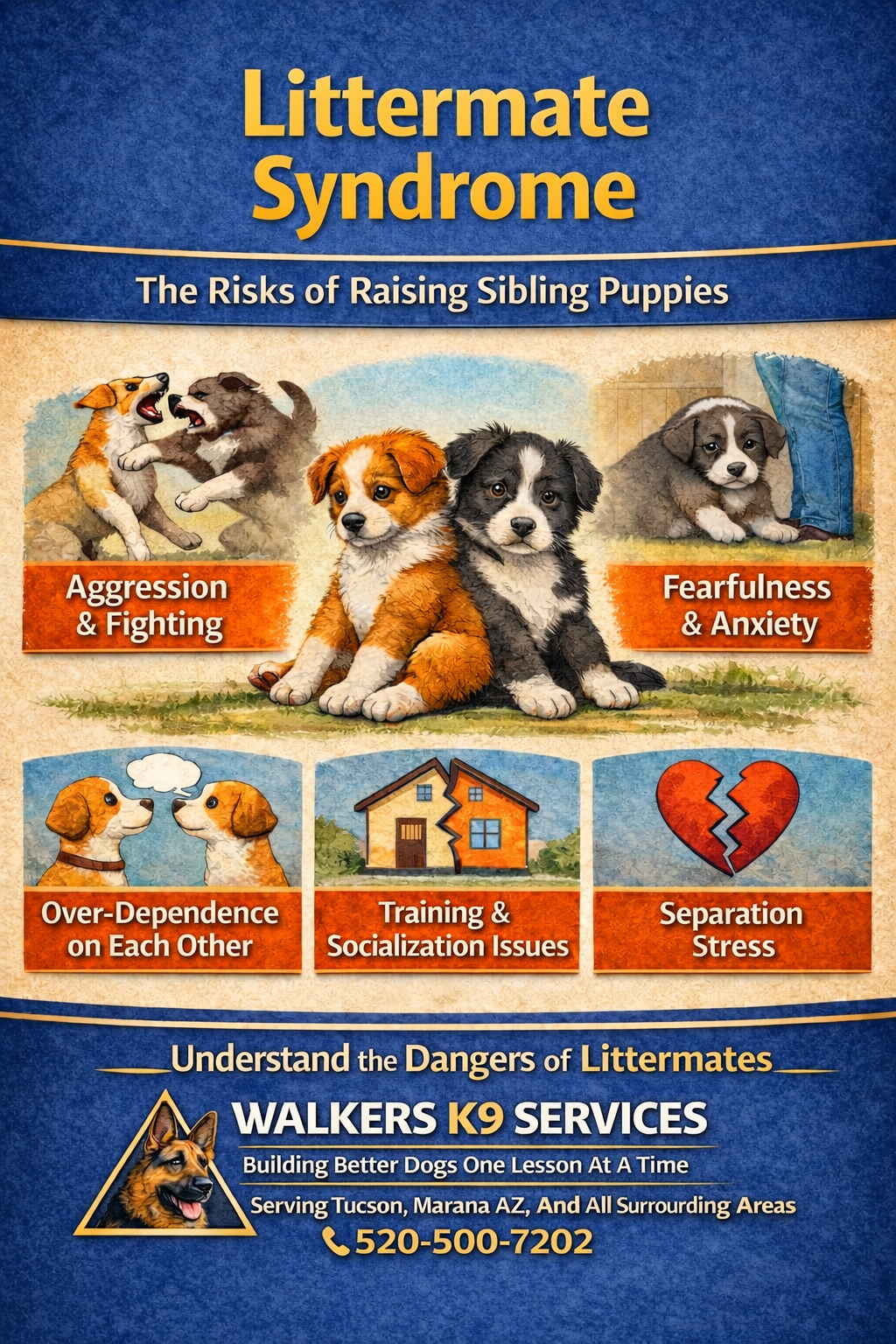
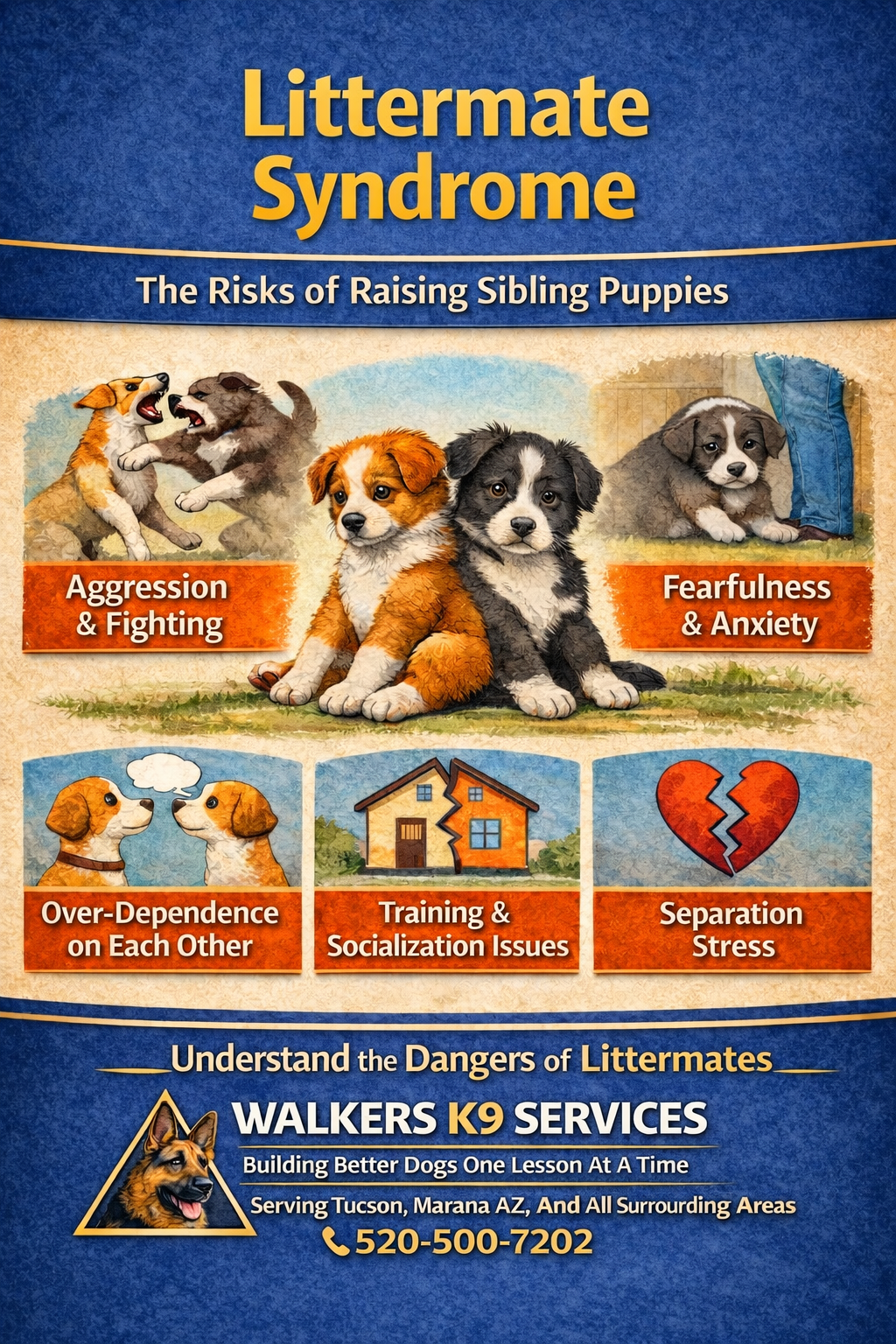
Bringing home two puppies from the same litter can feel like the perfect solution—built-in playmates, constant companionship, and double the joy. But for many dog owners, it quickly becomes double the trouble. Littermate Syndrome is a very real behavioral phenomenon that can lead to fear, anxiety, aggression, and major training hurdles when two same-age puppies grow up together in the same home.
This article explains what littermate syndrome is, why it happens, and how to prevent or manage it safely and effectively.
What Is Littermate Syndrome?
Littermate syndrome refers to a set of behavioral issues that develop when two puppies—usually
siblings, but sometimes same-aged puppies from different litters—form an unhealthy, overly
dependent bond with each other instead of bonding properly with their human family.
While it doesn’t occur in every case, it is common enough that reputable trainers and many
breeders strongly discourage adopting two puppies at once.
Common Signs of Littermate Syndrome
You may see one or more of the following:
1. Extreme Separation Anxiety
The puppies panic when separated, even briefly, and may cry, bark, or become destructive.
They rely heavily on each other for emotional stability.
2. Fear of New People, Places, and Dogs
Instead of confidence, the puppies look to each other for reassurance. This creates a false
sense of security that prevents healthy independence.
3. Poor Social Skills
Littermate pairs often struggle to interact properly with other dogs because they spend all their time together. This can create:
Reactivity
Bullying behavior
Avoidance or fear
4. Difficulty Training
The puppies distract each other constantly and may:
Ignore commands
Follow each other’s bad habits
Struggle to focus unless the sibling is present
Training two puppies together is not “twice the work”—it’s triple the work or sometimes even impossible to do.
5. Aggression Toward Each Other
As the dogs mature, their relationship can become competitive. Fights may escalate around:
Food
Attention
Toys
Space
This often begins around 6–18 months of age.
Why Littermate Syndrome Happens
Dogs learn independence, confidence, and emotional resilience by exploring the world and forming bonds with their human handlers. When they rely on each other instead, their development becomes stunted.
Key causes include:
Over-attachment between the puppies
Shared fear responses
Competing for resources
Lack of individual training time
Humans unintentionally reinforcing their dependency
How to Prevent Littermate Syndrome
If you already have two puppies or are committed to raising a pair, you must create independence early.
1. Separate Crates
Each puppy gets its own crate, ideally in different rooms at least part of the time. This builds healthy independence and prevents anxiety meltdowns later.
2. Individual Training Sessions
Every day, each puppy needs:
One-on-one training
Individual leash walks
Solo play time
Individual cuddle time with you
Training together should be minimal until both are solid individually.
3. Separate Socialization
Take them one at a time to new places so each puppy learns confidence individually, not by leaning on the sibling.
4. Controlled Together Time
They can play together, but it should be structured—not endless free play. Avoid letting the puppies “raise each other.”
Correcting Littermate Syndrome (If It’s Already Showing)
It’s not too late to fix it, but it requires consistency.
1. Implement Structured Separation
Start with short periods:
One puppy in the crate
One puppy out with you
Gradually build the time apart.
2. Strengthen Individual Obedience
Work on:
Sit
Down
Place
Recall
Leash manners
Independence grows through confidence built in training.
3. Reduce Over-Attachment
Stop allowing:
Sleeping together
Eating from the same bowls
Car rides without barriers
Constant side-by-side activity
4. Monitor for Escalating Aggression
Sibling fights can become dangerous. If fights begin or intensify, professional intervention is critical.
Is It Ever a Bad Idea to Raise Littermates?
Sometimes, yes.
Two puppies from the same litter require:
Double the time
Double the structure
Double the supervision
But with proper management, it can be done. The real danger is when owners treat them like a matched set instead of two individuals.
Final Thoughts
Littermate syndrome isn’t about bad dogs—it’s about dogs who weren’t given the chance to develop independently. With planning, structure, and individual attention, you can prevent or correct it and raise two confident, well-balanced dogs.
If you need help, a professional trainer can guide you through a customized plan to keep things safe and manageable.
Dog Training in Tucson, AZ Dog Training in Marana, AZ Training Options
Walkers K9 Services — Building Better Dogs, One Lesson at a Time
Please support our mission by sharing our training articles with other dog owners.
Written by: George Walker
Walkers K9 Services | Tucson, AZ
📞 520-500-7202