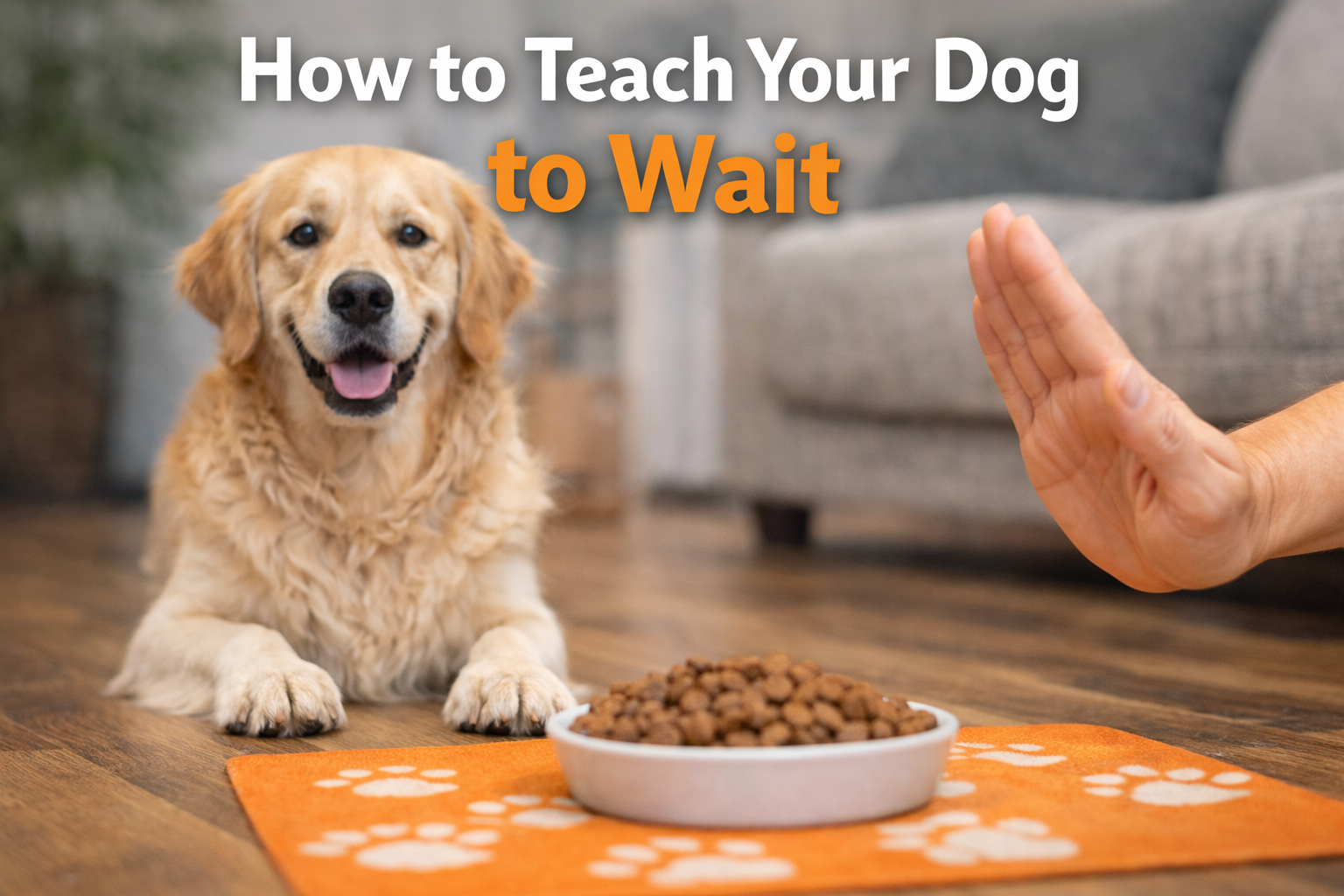
How to Teach Your Dog to Wait
By George Walker, Walker’s K9 Services – Tucson, AZ
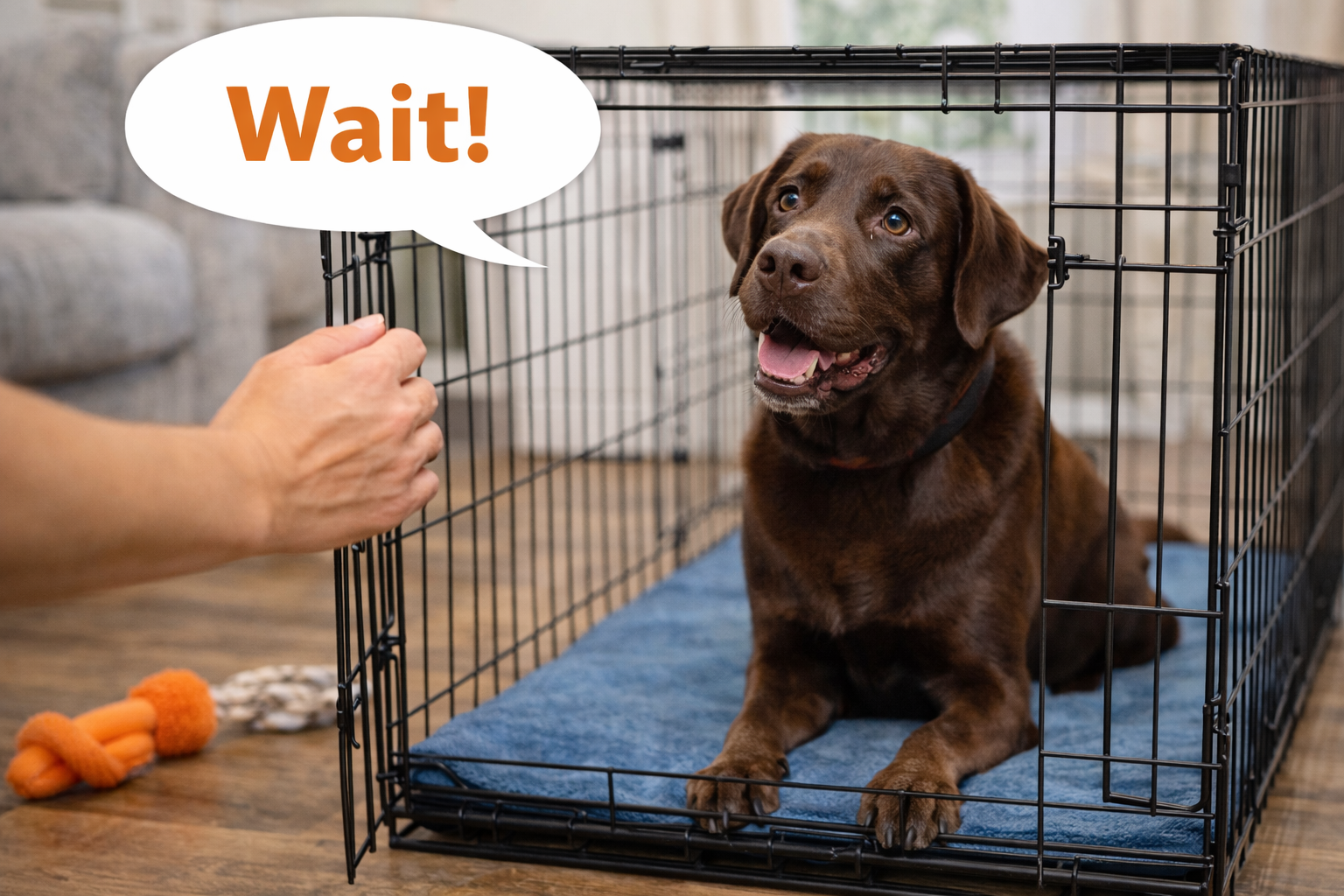
Teaching your dog the Wait command is one of the simplest ways to build impulse control, prevent dangerous behavior, and create a calmer, more patient dog. Unlike Stay, which means “don’t move until I release you,” Wait means “pause for a moment until I tell you what’s next.” It’s quick, practical, and extremely useful in everyday life—doorways, feeding time, loading into the car, or stepping out of the crate.
Here’s how to teach it effectively and clearly.
Why “Wait” Matters
Dogs tend to make decisions fast—often faster than we want. Rushing through doors, bolting out of cars, charging the food bowl, or getting overly excited can all lead to accidents or conflict. Wait teaches a dog to slow down and look to you for guidance.
It promotes:
Impulse control
Safety at thresholds
Better obedience
Calm, thoughtful behavior
Step-by-Step: Teaching “Wait” at a Doorway
1. Start at a Closed Door
Attach your dog’s leash for safety.
Stand in front of the door.
Your dog should be beside or slightly behind you—not crowding the door.
Put your hand out in a calm, flat “stop” position and say:
“Wait.”
You’re not using a harsh tone—just clear and firm.
2. Crack the Door Open
Slowly open the door just a few inches.
If your dog tries to push forward:
Close the door gently (not slamming), blocking the movement.
Repeat: “Wait.”
Stay patient. The dog is learning that the door only opens when they stay put.
3. Add Duration
Once the dog stays still with the door cracked:
Open it a little wider.
Pause for one full second.
Praise calmly: “Good wait.”
Increase the time gradually—2 seconds, 3 seconds, 5 seconds.
Your dog learns that their calmness is what earns progress.
4. Release Word
Your dog should never guess when they’re allowed to go through.
Pick a release word:
“Okay,”
“Free,”
“Let’s go.”
Tell your dog:
“Okay!”
Then move forward with them through the doorway.
This teaches the dog that waiting isn’t the end—it’s simply a pause until permission is given.
Teaching “Wait” at Feeding Time
Hold the food bowl at chest level.
Tell your dog: “Wait.”
Lower the bowl slowly.
If your dog lunges or moves forward, bring the bowl back up and reset.
When they remain still, place the bowl down.
Release them with your release word: “Okay.”
This dramatically reduces excitement, jumping, or bowl guarding over time.
Teaching “Wait” Getting Out of the Car
Clip your dog’s leash before opening the door.
Crack the car door open and say “Wait.”
If the dog tries to jump out, close the door halfway and reset.
When your dog pauses calmly, open fully, praise, and release with “Okay.”
This alone prevents countless accidents—especially in parking lots or busy areas.
Common Mistakes to Avoid
1. Repeating the Command
Saying “Wait… wait… WAIT!” only teaches your dog to ignore the first two.
Always use the command once.
2. Releasing Too Early
If your dog breaks position and gets rewarded anyway, they learn to cheat.
Reset and try again.
3. Mixing Up “Wait” and “Stay”
Keep them separate:
Wait = pause briefly until released
Stay = hold a position until you return
4. Getting Frustrated
Impulse control takes repetition.
Most dogs improve in just a few consistent sessions.
When to Use “Wait” Every Day
Before going outside
Before coming inside
Before meals
Before entering the car
Before exiting the car
Before crossing streets
Before being released at the dog park
When excitement is building and you need a quick pause
“Wait” becomes a powerful tool for calmer, safer interactions.
Final Thoughts
Teaching Wait develops discipline, builds respect, and helps your dog look to you for direction instead of making impulsive decisions. Start at low-distraction thresholds like a quiet doorway, then generalize it to busy situations. With patience, clarity, and consistency, your dog will learn that waiting pays off—and that listening to you always brings good things.
Dog Training in Tucson, AZ Dog Training in Marana, AZ Training Options
Walkers K9 Services — Building Better Dogs, One Lesson at a Time 🔹
Please support our mission by sharing our training articles with other dog owners.
Written by: George Walker
Walkers K9 Services | Tucson, AZ
📞 520-500-7202