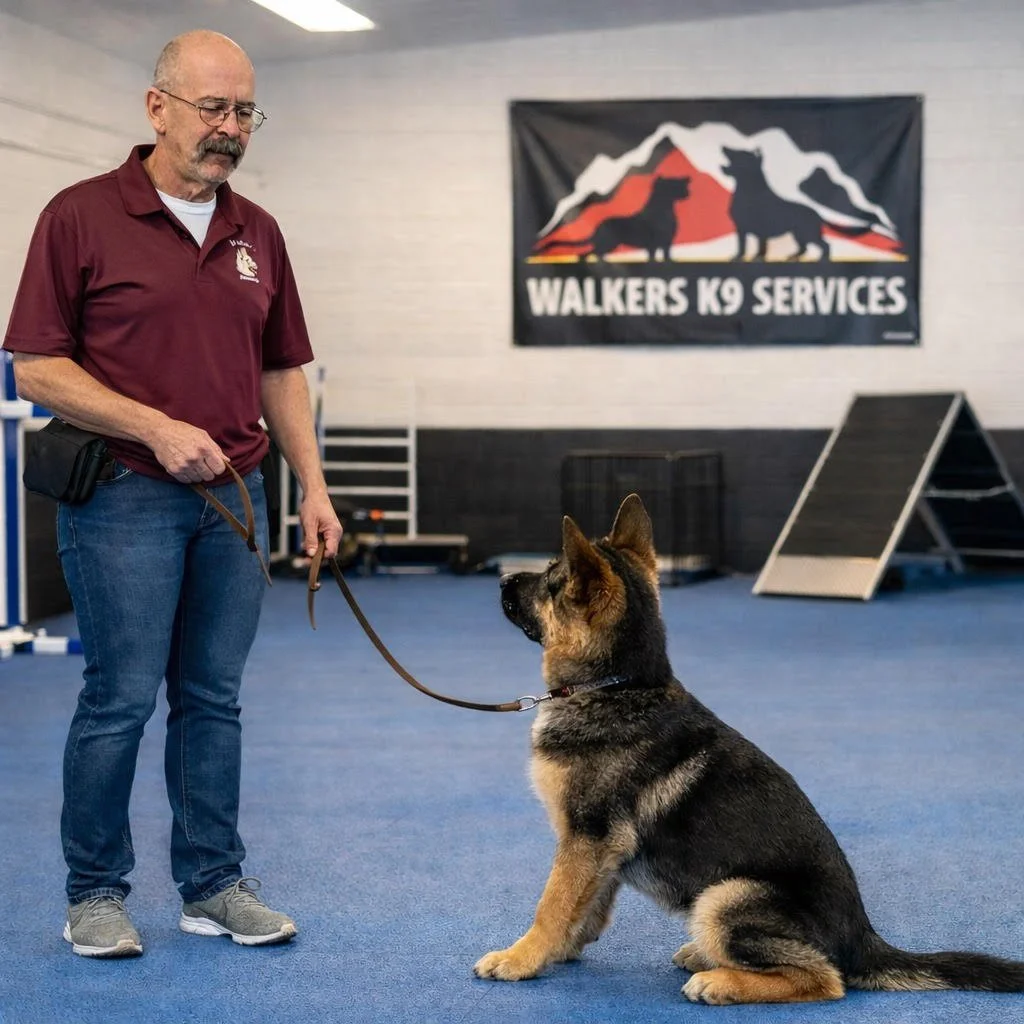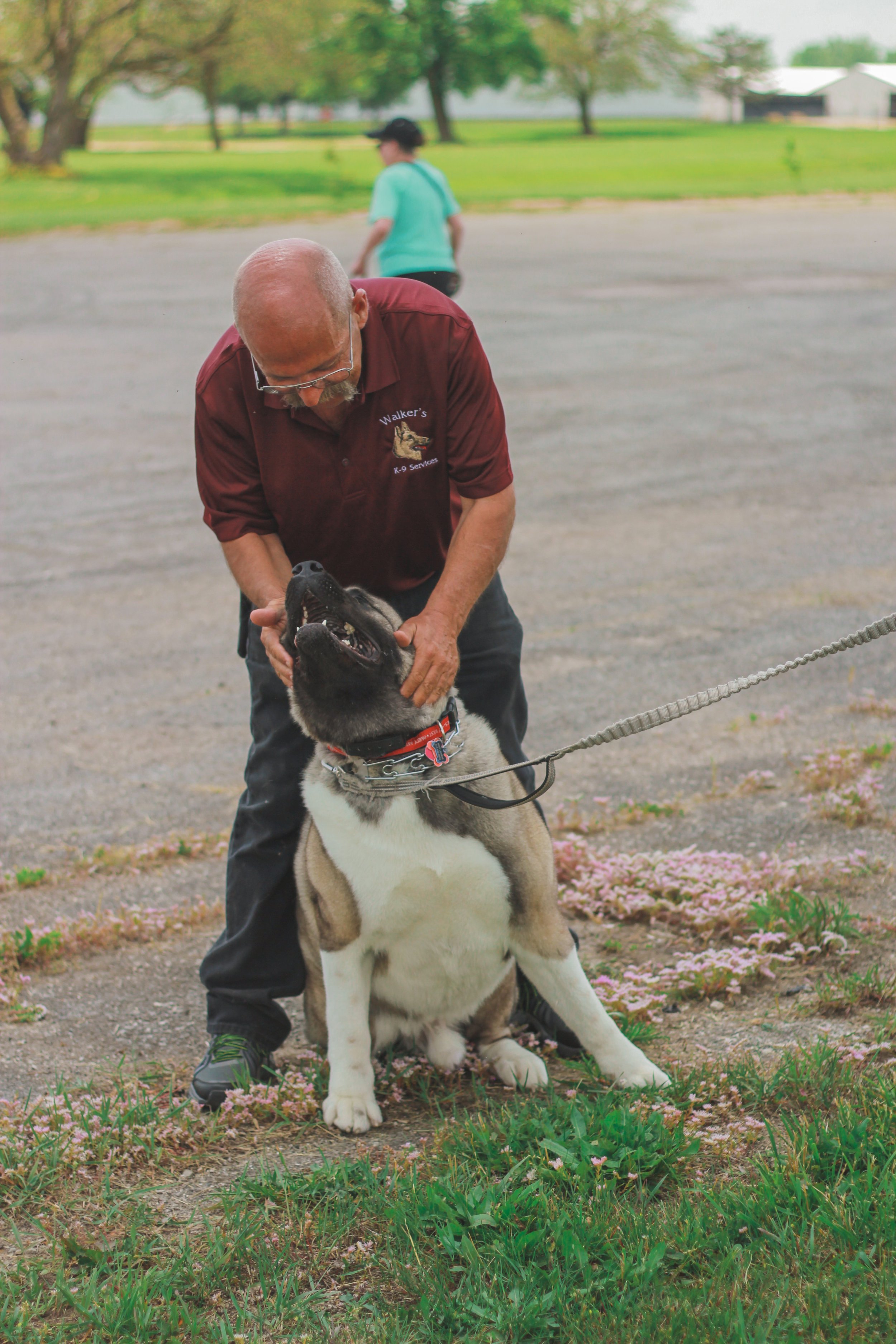
How to Teach Your Dog to Stay on a 6’ Leash,
Then Expand to a 100’ Leash
By George Walker, Walker’s K9 Services – Tucson, AZ
Teaching a reliable stay on leash—first at close range, then at long distances—is one of the most valuable skills you can give your dog. It builds impulse control, creates safety, and strengthens your communication and leadership. This progression starts simple with a 6-foot leash and gradually builds up to a solid stay on a 100-foot long line.
Why Teach a Stay on Leash First?
The leash acts as your safety net. In early training, your dog hasn’t yet learned to maintain a stay in the face of distractions, distance, and duration. The leash keeps things controlled while your dog learns the rules. As you progress, the leash becomes longer—not because you need to restrain your dog, but because it allows you to build reliability at greater distances without losing control.
Phase 1: Teaching the Foundation Stay on a 6’ Leash
1. Start With a Sit or Down
Choose one position to begin with. Most dogs find down-stay easier because it’s a more stable position.
Ask for the sit or down.
Once your dog does it, say “Stay.”
Use a flat hand signal (palm toward the dog like a stop sign).
2. Keep the Leash Loose
A tight leash creates pressure that can confuse the dog.
Your goal: Let the dog hold the position, not be held in place.
3. Take One Step Back
Step back just one step.
If your dog holds the stay, return calmly and reward.
If your dog breaks, simply step in, place them back in the position, and repeat.
Stay calm, neutral, and consistent—this builds confidence and understanding.
4. Slowly Increase Distance
Add distance in small increments:
One step
Two steps
Four steps
Six feet
Only increase distance when your dog succeeds consistently.
5. Add Duration
Once your dog can stay while you’re 6 feet away, begin increasing the length of time:
5 seconds
10 seconds
20 seconds
1 minute
5 minutes
Reward calmness, not excitement.
6. Introduce Mild Distractions
Examples include:
You gently shifting your weight
Dropping keys
Walking around your dog
Making small noises
Correct any break with a calm reset, then continue. Don’t add big distractions yet.
Phase 2: Transitioning to a 20–30 Foot Leash
A mid-length line prepares your dog for long-distance stays.
1. Begin Just Like the 6’ Leash
Do the same drills, but start at:
10 feet
15 feet
20 feet
If your dog breaks, walk back, reset, and reduce the distance until they succeed.
2. Add Moderate Distractions
Examples:
Another person walking by
A dog at a distance
You walking a circle around your dog
You turning your back
Every distraction is a test of impulse control. Keep corrections fair and calm.
Phase 3: Moving to the 100’ Leash (Long Line Work)
This is where the stay becomes real-life reliable.
1. Start Back at Short Distances
Just because the leash is 100 feet doesn’t mean you use the whole thing immediately.
Begin at 15–20 feet and build up from there.
2. Use a Clear Boundary Word
Continue using “Stay”, but reinforce it with:
Calm voice
Clear hand signal
Consistency is everything.
3. Add Real-World Distractions
Once your dog is successful at 40–60 feet, begin adding natural distractions such as:
Light joggers at a distance
Bikes passing far away
Other dogs playing at a far distance
You walking far, bending down, or turning your back
Your goal is to proof the behavior in a controlled environment before expecting reliability anywhere else.
4. Work Up to the Full 100 Feet
Increase distance in 10–15 foot increments.
A perfect stay means:
No creeping
No standing up
No whining
No breaking position
Reward heavily once your dog holds a long-distance stay under distraction.
Phase 4: Building Reliability in Different Environments
Once your dog holds a stay at 100 feet reliably in one location:
Change locations
Change surfaces
Change distractions
Change the weather or time of day
A trained stay is context-dependent—you must teach it everywhere.
Troubleshooting Common Problems
Dog Keeps Breaking the Stay
Decrease distance or duration and rebuild gradually.
Dog Whines or Fidgets
Reward only relaxation. Reset if they break position.
Dog Creeps Forward
Return immediately and calmly reposition them to their original spot. Creeping is breaking the stay—don’t reward it.
Dog Shuts Down
Take a break, make it easier, and build confidence again.
Final Goal: A Stay That Works Anywhere
By the time your dog succeeds reliably on a 100-foot long line, you’ll have a dog that understands:
Stay means don’t move until released
Your distance doesn’t change the command
Distractions are irrelevant to the job
Control and calmness matter
A long-distance stay is one of the foundation behaviors for:
Off-leash reliability
Fetch and recall work
Hiking
Service dog public access work
Safety around wildlife, roads, and people
With patience and consistency, your dog will have a rock-solid stay that makes every other skill easier.
Dog Training in Tucson, AZ Dog Training in Marana, AZ Training Options
Walkers K9 Services — Building Better Dogs, One Lesson at a Time
Please support our mission by sharing our training articles with other dog owners.
Written by: George Walker
Walkers K9 Services | Tucson, AZ
📞 520-500-7202