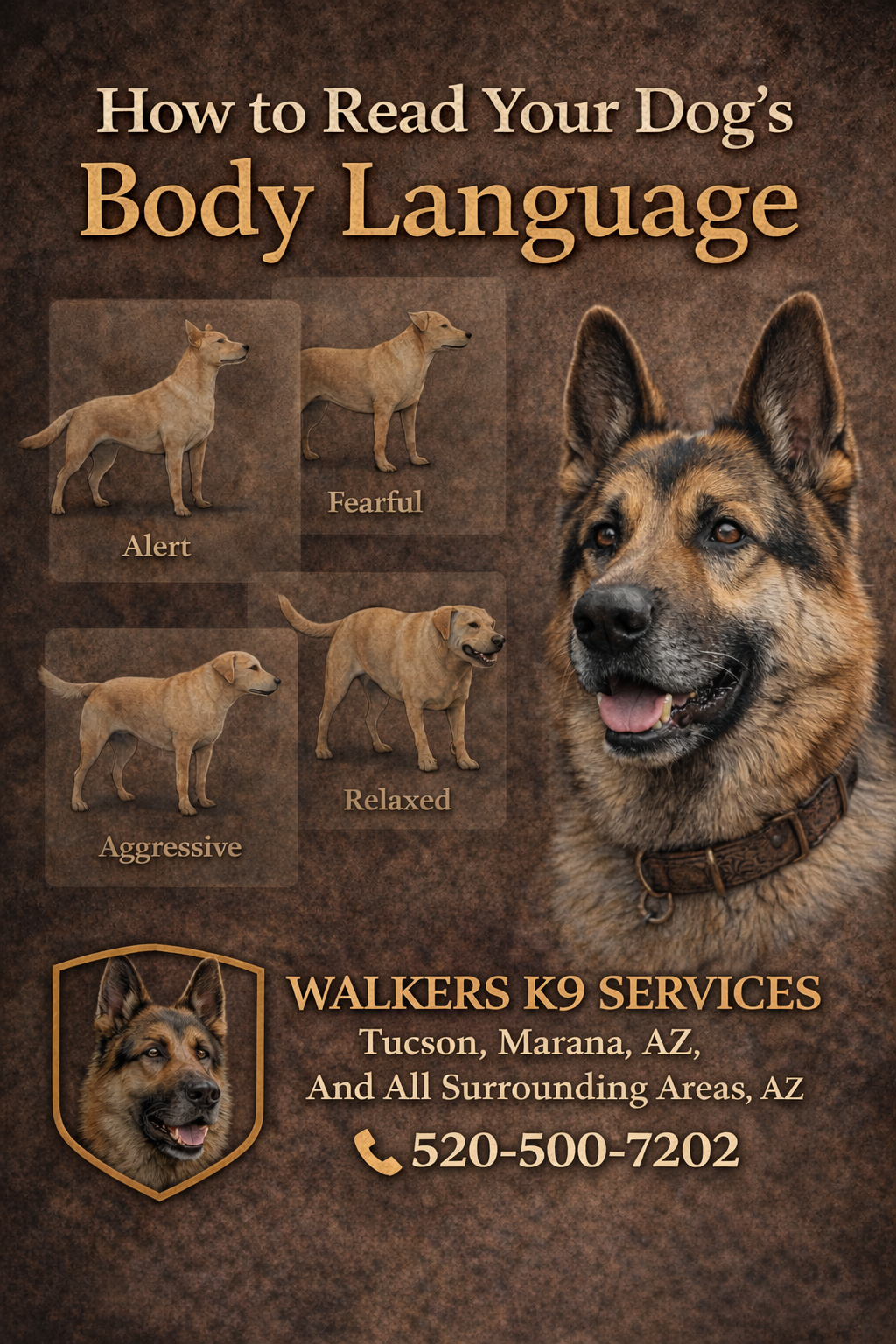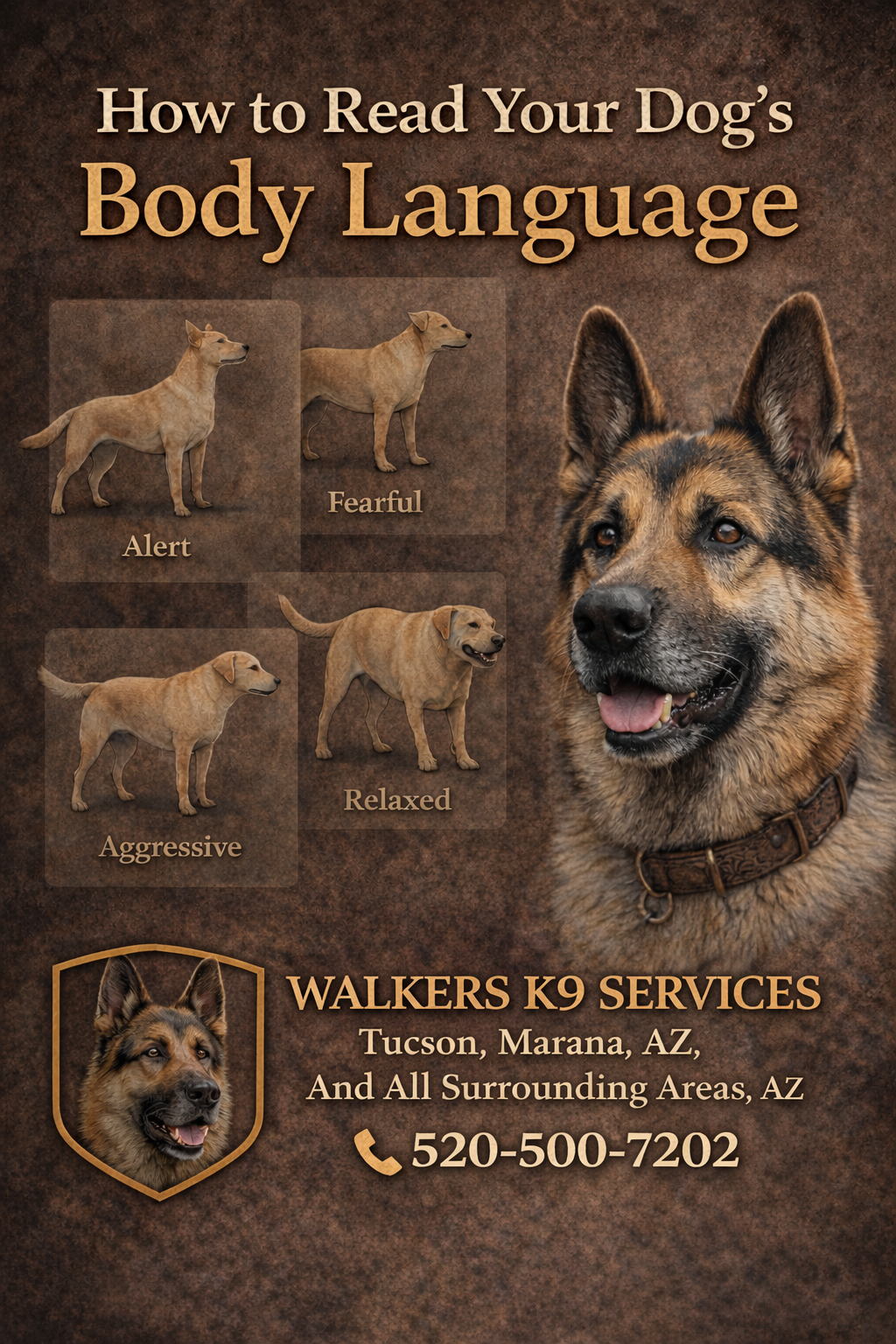
How to Read Your Dog’s Body Language
By George Walker, Walker’s K9 Services – Tucson, AZ
Understanding your dog’s body language is one of the most important skills you can develop as an owner. Dogs communicate constantly—through posture, movement, facial expressions, breathing, and even the way they hold their tail. When you learn to interpret these signals, you not only strengthen your bond, but you also prevent misunderstandings, avoid dangerous situations, and support your dog’s emotional well-being.
This guide breaks down the most common signs, what they mean, and how to respond the right way.
Why Body Language Matters
Dogs don’t speak English—but they’re talking all the time. When owners misinterpret a dog’s signals, issues like fear, reactivity, aggression, or overexcitement can build. When you do understand the signs, you can step in early, redirect behavior, and make your dog feel safe and understood.
Reading your dog’s body language is the foundation of good leadership, training, and trust.
Relaxed and Comfortable Body Language
A relaxed dog is calm, emotionally balanced, and not anticipating conflict.
Signs include:
Soft eyes, blinking naturally
Loose muscles
Tail low or gently wagging
Mouth slightly open, relaxed tongue
Even breathing
What this means:
Your dog feels safe. This is the ideal state for training, learning, and bonding.
How to respond:
Reward this calm energy. This is the dog you want to nurture and reinforce.
Happy and Playful Body Language
A playful dog invites interaction but should still remain balanced—not chaotic.
Signs include:
Play bow (front end down, rear up)
Loose, wiggly movements
Tail wagging broadly
Open, happy mouth
Bouncing or exaggerated motions
What this means:
Your dog wants to interact and is feeling upbeat and social.
How to respond:
Engage, but maintain boundaries. Avoid letting excitement escalate into overstimulation.
Alert or Curious Body Language
This is the “I’m paying attention” mode.
Signs include:
Ears perked forward
Tail up or straight out
Body leaning forward
Mouth closed
Focused eyes
What this means:
Your dog has noticed something and is processing it—could be neutral or could escalate.
How to respond:
Guide your dog with structure. Don’t allow fixation to turn into reactivity. Use obedience to bring their brain back to you.
Fearful or Anxious Body Language
A fearful dog may retreat, freeze, or move unpredictably. This is where many bites occur—not from aggression, but fear.
Signs include:
Tail tucked
Ears pinned back
Avoiding eye contact
Lowered body posture
Trembling or lip licking
Whale eye (showing the whites of the eye)
What this means:
Your dog feels unsafe or overwhelmed.
How to respond:
Stay calm. Do not coddle, but also don’t force them forward. Use confidence-building exercises and distance from triggers.
Stressed or Uncomfortable Body Language
These are early warning signs that owners often miss.
Signs include:
Excessive panting when it’s not hot
Yawning outside of being tired
Pacing
Sudden scratching or sniffing
“Shake off” behavior
What this means:
Your dog is trying to relieve internal tension.
How to respond:
Create space, slow things down, and use light structure until the dog settles.
Dominant or Challenging Body Language
Dominance isn’t aggression—it’s posturing. If unaddressed, it can escalate.
Signs include:
Standing tall and stiff
Tail held high
Direct, unblinking eye contact
Placing paws or head over another dog or person
Slow, calculated movements
What this means:
Your dog is asserting control or testing boundaries.
How to respond:
Calm, confident leadership. Enforce rules and obedience; do not match their intensity.
Aggressive Body Language
These are the “stop now” signals. Aggression usually comes from fear, resource guarding, or uncontrolled energy.
Signs include:
Growling or snarling
Showing teeth
Raised hackles
Hard stare
Stiff body
Tail high and rigid
What this means:
Your dog is warning before biting, or preparing to act.
How to respond:
Stay composed. Increase distance, avoid punishment in the moment, and address the underlying issue through structured training. Its often times necessary contact a trainer at this point.
The Key to Reading Your Dog: Look at the Whole Picture
Dogs rarely communicate with just one signal. Always assess:
Tail
Ear
Eyes
Posture
Mouth
Movement
One sign alone can be misleading, but together, they tell a clear story.
Reading Body Language Makes You a Better Leader
A dog that feels understood becomes calmer, more obedient, and more bonded to you. When you can read their signals early, you prevent bad behavior before it begins.
Mastering body language is a cornerstone of responsible ownership—and a major part of what separates a good dog handler from a great one.
Dog Training in Tucson, AZ Dog Training in Marana, AZ Training Options
Walkers K9 Services — Building Better Dogs, One Lesson at a Time
Please support our mission by sharing our training articles with other dog owners.
Written by: George Walker
Walkers K9 Services | Tucson, AZ
📞 520-500-7202