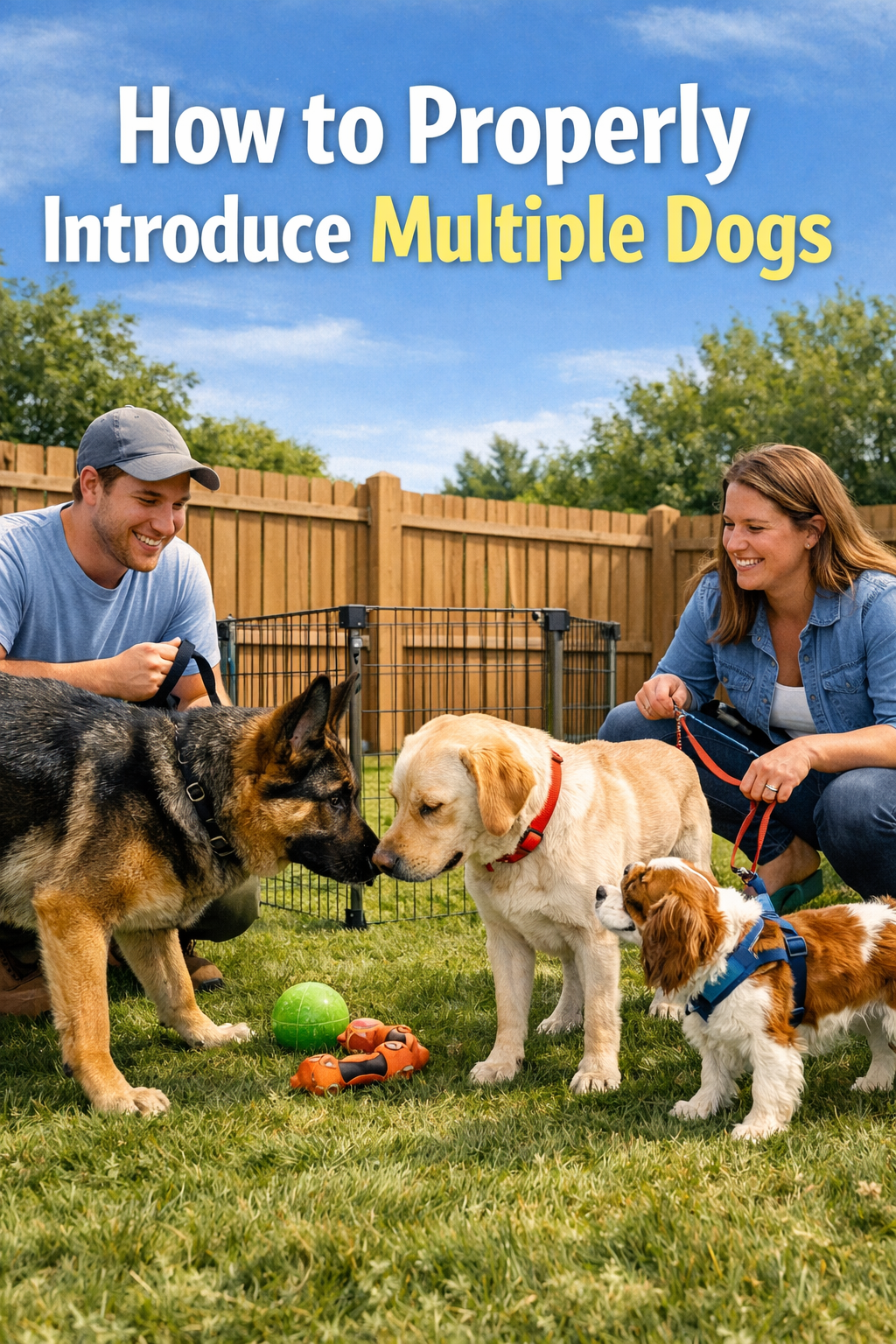
How to Properly Introduce Multiple Dogs
By George Walker, Walker’s K9 Services – Tucson, AZ
Introducing multiple dogs—whether you’re bringing a new dog into a home with a resident dog, merging households, or fostering—requires patience, structure, and understanding of canine communication. Done correctly, introductions build the foundation for peaceful coexistence. Rushed or uncontrolled introductions, however, often lead to tension, scuffles, or long-term relationship issues.
This guide walks you through the safest, most effective ways to introduce dogs in a calm, controlled, and confidence-building manner.
Why Proper Introductions Matter
Dogs rely heavily on body language, scent, and controlled proximity to understand one another. When humans skip steps, force dogs together, or allow chaotic environments, dogs may feel pressured, defensive, or overwhelmed.
Proper introductions help:
Reduce anxiety for both dogs
Prevent protective or territorial behaviors
Build trust and confidence
Establish safe interactions from the start
Step 1: Choose a Neutral Introduction Area
Dogs should meet on neutral ground, not inside the home where your existing dog may feel territorial. Ideal locations include:
A quiet sidewalk
A park (away from busy dog areas)
A front yard or driveway
Avoid tight spaces or crowded environments where either dog may feel trapped or overstimulated.
Step 2: Start With a Structured Parallel Walk
A parallel walk is one of the safest and most natural ways for dogs to get used to each other’s presence.
How to do it:
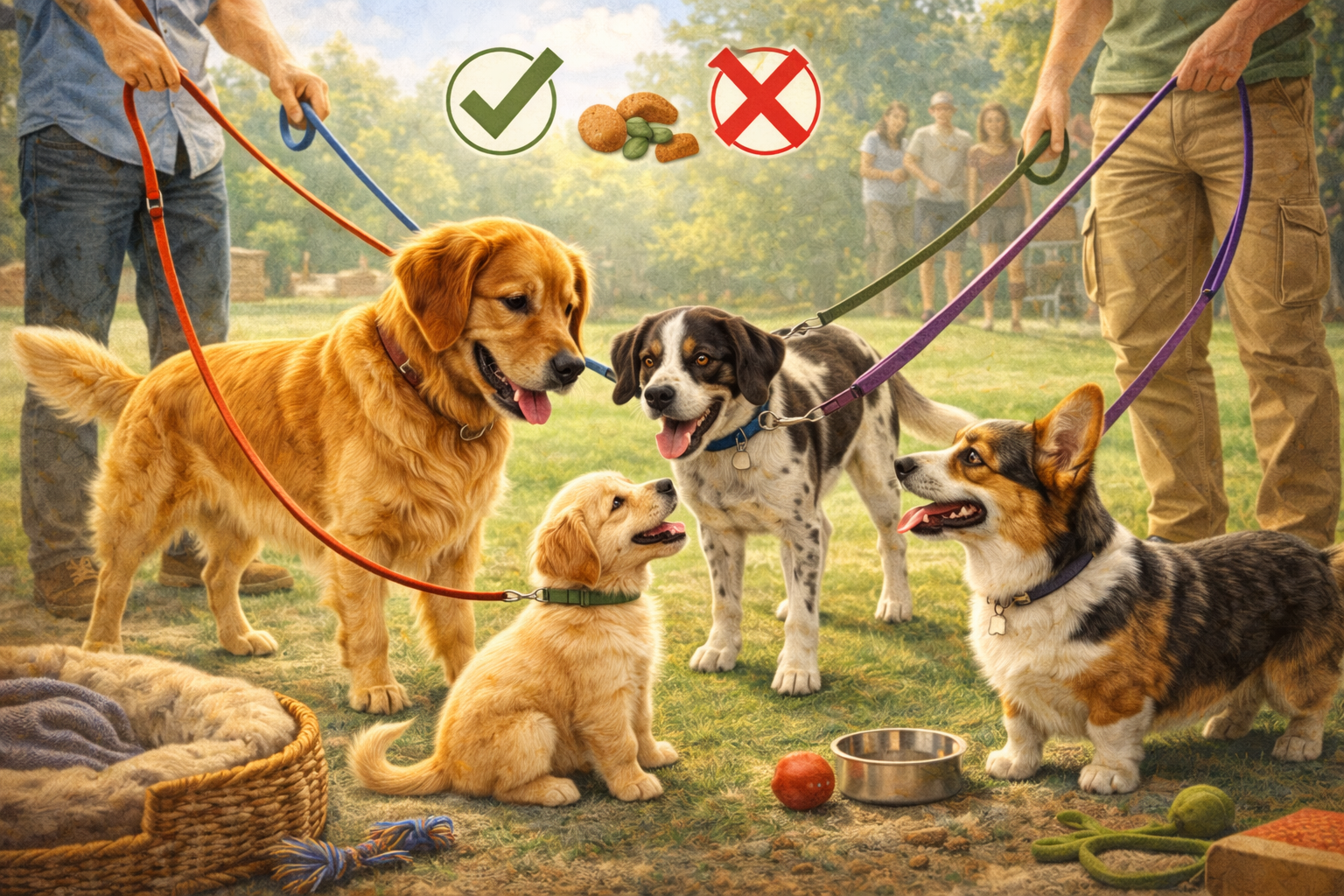
Place each dog on a leash with a calm, confident handler.
Walk side-by-side but begin with 10–20 feet of space.
Gradually decrease the distance as both dogs relax.
Keep the walk moving forward; movement reduces tension.
Allow natural sniffing of the environment, not each other yet.
Parallel walking helps the dogs get used to each other’s scent and presence without the pressure of direct engagement.
Step 3: Allow a Controlled Sniff (Optional and Brief)
After both dogs appear relaxed—soft body language, neutral tails, no fixated staring—you may allow a brief greeting.
Rules for initial sniffing:
Keep leashes loose; tension can create conflict.
Allow only 1–2 seconds of sniffing at first.
Call both dogs away cheerfully.
Repeat if both dogs remain relaxed.
Never force nose-to-nose greetings. Side or rear sniffing is more natural and less confrontational for dogs.
Step 4: Entering the Home
Once they’ve met and you’re confident in their behavior outside, move the introduction into the living space.
Tips for entering the home:
Let the new dog enter first to remove territorial expectations.
Keep both dogs on loose leashes at first.
Give the dogs space—no crowding in doorways or hallways.
Remove high-value items such as bones, toys, and food bowls during the first interactions.
Step 5: Supervised Time Indoors
Once inside, observe their behavior closely. The goal is calm coexistence, not instant friendship.
Do:
Use baby gates, crates, or separate rooms as needed.
Reward calm behavior with soft praise.
Allow them to exist without pressure to interact.
Don’t:
Allow dogs to crowd each other.
Force them to share beds, bowls, toys, or affection.
Leave them unsupervised early on.
Step 6: Reinforce Good Behavior
Dogs learn quickly with consistent reinforcement.
Reward:
Soft body language
Sniffing calmly
Turning away instead of escalating
Ignoring each other politely
Correct or interrupt:
Staring or hard eye contact
Stiff posture
Guarding behavior
Mounting or overwhelming play
Your calm leadership sets the tone.
Step 7: Monitor Feeding and High-Value Items
The top triggers for conflict between unfamiliar dogs are:
Food
Toys
Human attention
For the first several weeks:
Feed dogs separately
Remove or rotate toys
Do not pet one dog while the other crowds in
As trust builds, you can gradually relax these rules.
Step 8: Allow Time for Natural Social Development
Some dogs become instant friends; others take days or weeks to build trust.
It’s normal for dogs to:
Ignore each other
Set boundaries
Play on different energy levels
Take time adjusting
Consistency, structure, and supervision are the keys.
Common Mistakes to Avoid
Forcing dogs face-to-face
Letting them meet on tight leashes
Introducing inside the house immediately
Allowing resource guarding opportunities
Expecting instant harmony
Rushing off-leash interactions
When to Seek Professional Help
If either dog shows repeated signs of:
Aggression
Extreme fear
Resource guarding
Inability to calm
Escalating tension
A qualified trainer can help assess and guide the process safely.
Final Thoughts
Introducing multiple dogs isn’t about luck—it’s about structure, body language awareness, and patience. When done correctly, you give all dogs involved the best possible chance at a peaceful lifelong relationship.
Dog Training in Tucson, AZ Dog Training in Marana, AZ Training Options
Walkers K9 Services — Building Better Dogs, One Lesson at a Time 🔹
Please support our mission by sharing our training articles with other dog owners.
Written by: George Walker
Walkers K9 Services | Tucson, AZ
📞 520-500-7202