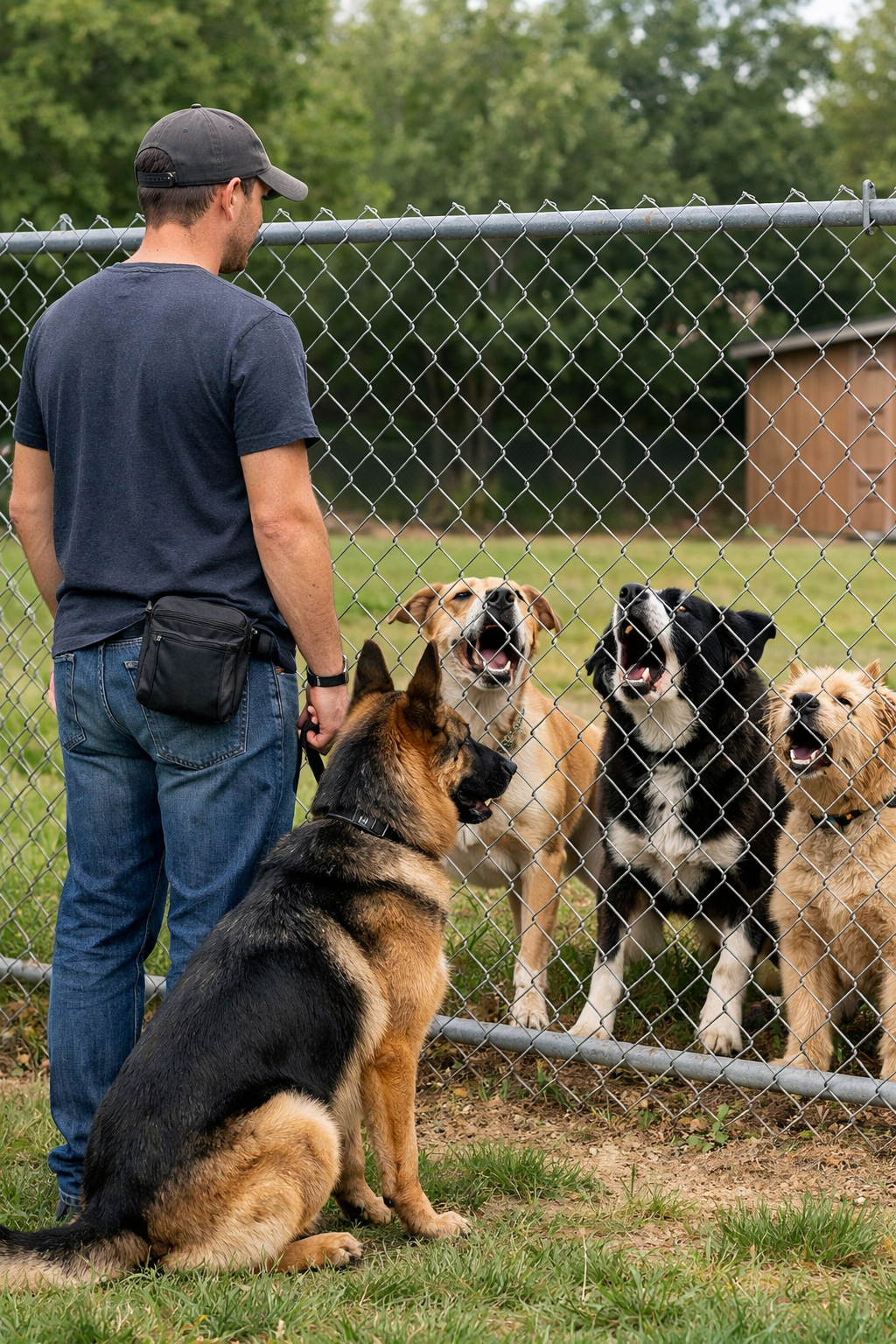
How I Work Through Reactivity With Dogs
Written By George Walker - Walkers K9 Services
Reactivity is one of the issues I get asked about the most. If your dog barks, lunges, growls, or gets overly excited when they see people, other dogs, bikes, or anything else, you’re not alone. It can be stressful, embarrassing, and sometimes even dangerous.
I want to walk you through exactly how I address reactivity using a balanced training approach—an approach built around structure, clarity, fair corrections, and plenty of praise for the right behavior. My goal is always the same: to help your dog learn how to stay calm, think clearly, and make better choices out in the real world.
1. It Starts With Daily Structure and Foundations
Before we ever work directly on your dog’s trigger, we focus on the basics.
I make sure your dog understands:
Leash guidance and pressure
Sit, down, place, and heel
Calm behavior inside and outside the home
Clear rules and boundaries
A dog who lives without structure is usually a dog who struggles outside. When your dog
understands the expectations, reactivity becomes much easier to resolve.
2. Teaching Neutrality Before Facing the Big Trigger
I never start by throwing a dog straight into the deep end. We begin in a low-distraction
environment so your dog can learn how to be calm and neutral.
This includes:
Practicing obedience
Rewarding calmness
Applying fair corrections only when the dog ignores known commands
Slowly increasing distractions over time
If a dog can’t handle small challenges, they won’t succeed with big ones. We build
confidence step by step.
3. Working Below Threshold: Setting Your Dog Up to Succeed
When we finally introduce your dog’s trigger, we do it at a distance where they can still think—not explode.
I watch your dog’s body language closely and work at the distance where they can:
Notice the trigger
Stay aware of me
Respond to commands
Remain calm enough to learn
As your dog makes good choices, we move in gradually. Slow, steady progress is key.
4. Using Fair Corrections to Interrupt Reactivity
Balanced training isn’t about punishing emotions—it’s about interrupting behaviors that your dog already knows are not allowed.
Once the obedience foundation is solid, I use tools such as:
Prong collars
Choke chains
Slip leads
E-collars (properly conditioned)
Corrections are used to break the dog out of an escalating state so they can return to a calm, thinking mindset. The moment they come back to me and settle down, they get praise. We always pair accountability with encouragement.
5. Rewarding the Right Choices
You’ll see me reward your dog often—especially when they choose calmness on their own.
I reinforce behaviors like:
Looking away from the trigger
Staying in heel
Checking in with me
Remaining quiet
Holding a command even under pressure
Your dog learns quickly that calm choices create good outcomes.
6. Proofing the Training in Real-Life Situations
Once your dog has the skills, we take the training into real environments. This may include:
Walking past dogs
Going to parks or trails
Working around bikes, joggers, or cars
I adjust distance and intensity as your dog improves. I want your dog to succeed, not become overwhelmed.
7. Coaching You So the Progress Sticks
Your dog can only maintain their new behavior if you know how to support it. I spend a lot of time teaching owners:
How to read early signs of reactivity
How to use the leash correctly
When to reward and when to correct
How to stay calm and confident
How to maintain structure at home
Reactivity improves fastest when the training carries over into daily life.
8. Consistency Is What Creates Long-Term Change
There is no magic wand for reactivity—but there is a clear, effective process.
Reactivity improves through:
Structure
Distance work
Controlled exposure
Fair corrections
Meaningful rewards
Repetitive success
Owner leadership
When we put all of this together, dogs learn that reacting isn’t necessary—and calmness becomes their new default.
Final Thoughts
I’ve helped many dogs overcome reactivity using this balanced, structured approach. It’s not about suppressing the dog—it’s about teaching them how to handle the world with confidence and clarity. With practice, patience, and consistency, you’ll see your dog transform into the calm, responsive companion you always hoped for.
If you’d like help working through your dog’s reactivity, or if you want a personalized training plan, I’m always here to help.
Dog Training in Tucson, AZ Dog Training in Marana, AZ Training Options
Walkers K9 Services — Building Better Dogs, One Lesson at a Time
Please support our mission by sharing our training articles with other dog owners.
Written by: George Walker
Walkers K9 Services | Tucson, AZ
📞 520-500-7202