Helping Fearful Dogs
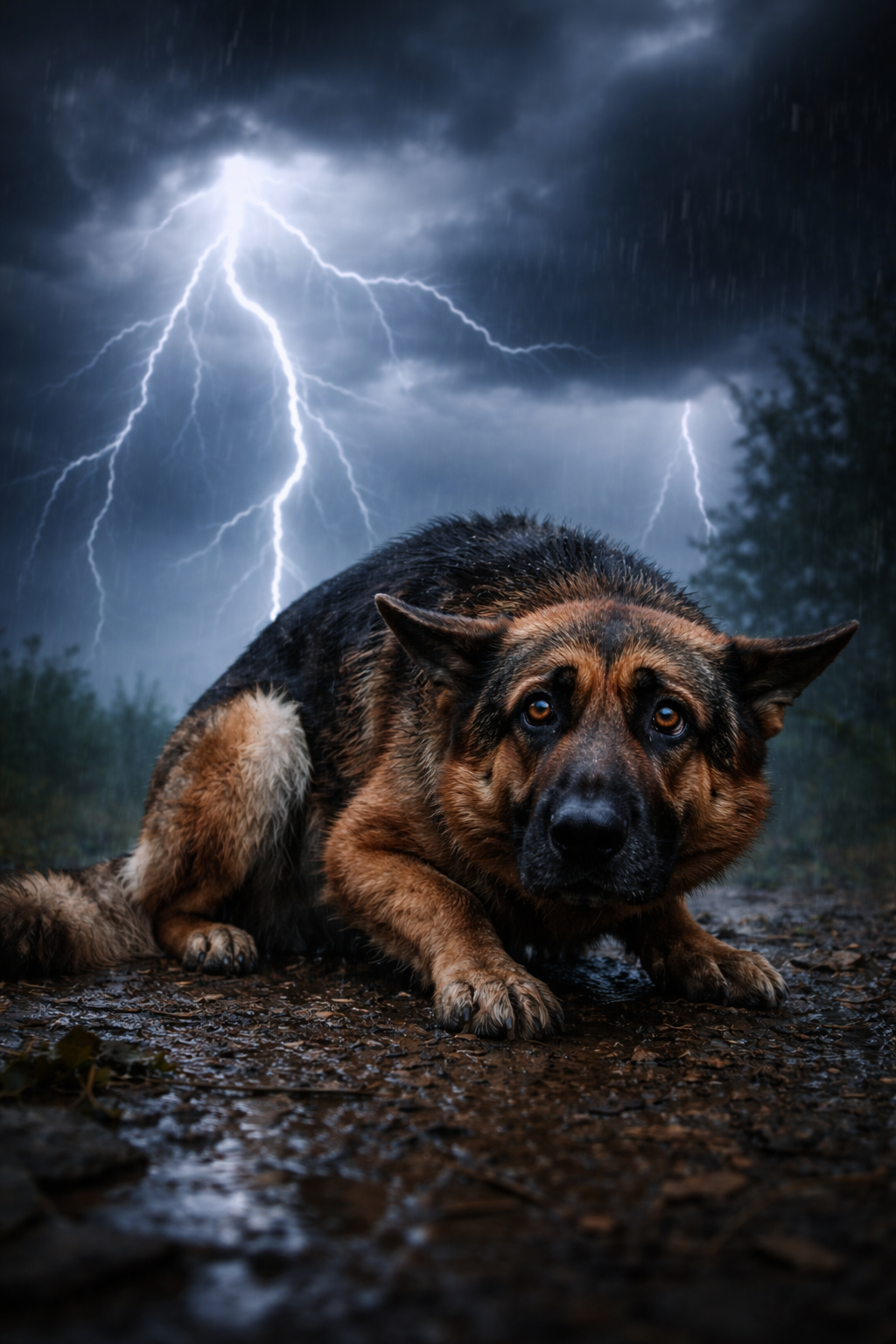
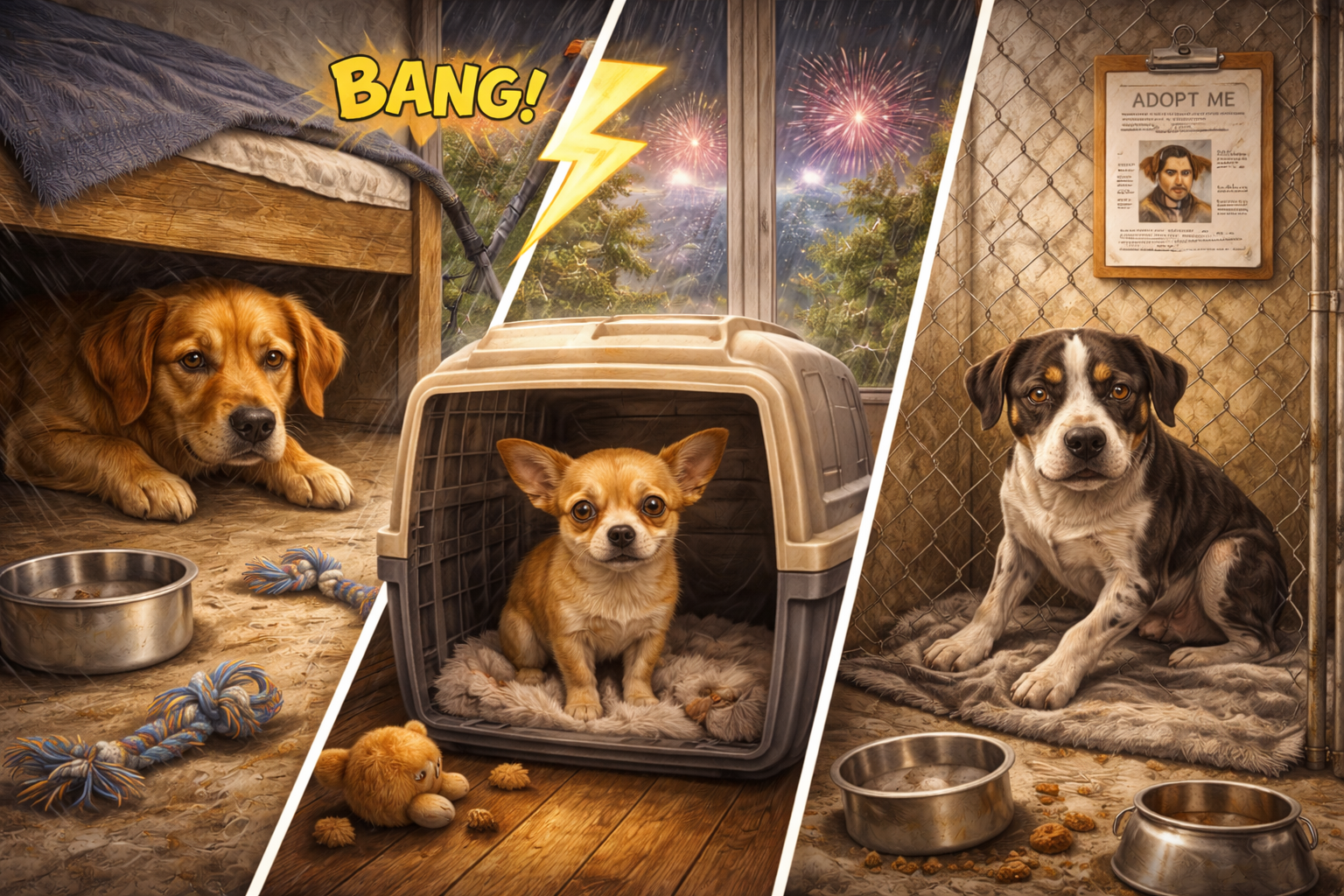
Fear in dogs is a lot more common than most people realize. It can show up as hiding, growling, trembling, barking, or flat-out avoiding anything that feels overwhelming. No matter how it looks on the surface, fear is still fear underneath — and if a dog never learns how to cope, those fear-based reactions can turn into long-term habits.
In training, the goal isn’t to coddle the fear and it isn’t to push the dog through it. Balanced training takes the middle path: clear communication, structure, and fair guidance paired with encouragement and reward.
Here’s how we build confidence that lasts
Here’s how we build confidence that lasts.
1. Start With Clear Structure
Fearful dogs thrive on predictability. When life feels random or chaotic, their anxiety naturally ramps up. Structure — scheduled feeding, consistent potty breaks, regular training sessions, and simple household rules — brings order to their world.
Why it matters:
A dog who knows what’s coming next can finally stop scanning for danger and start relaxing, learning, and exploring.
2. Teach Foundational Obedience
Most fearful dogs don’t have a clarity issue — they have a communication issue. Commands like sit, place, down, heel, and come give them something productive to focus on when emotions rise.
Balanced perspective:
We guide the dog into the behavior, reward the effort, and fairly correct refusals once the dog clearly understands. Clarity lowers stress, and lowered stress opens the door to confidence.
3. Use Desensitization With Guidance — Not Pampering
A lot of owners try to soothe fear with endless reassurance. Unfortunately, that often reinforces the emotion. The opposite extreme — forcing the dog through overwhelming situations — shuts them down.
The balanced middle ground:
Expose the dog to the trigger in controlled, manageable doses while providing direction.
Examples:
• A dog scared of stranger’s practices place while someone sits across the room ignoring them.
• A noise-sensitive dog works obedience near a sound played at a safe distance.
• A dog afraid of bikes practices heel while a bike passes slowly and calmly.
We build the dog up one step at a time — never too fast, never too slow.
4. Pair Rewards With Calm, Not Panic
Food, praise, and play are excellent motivators — but only when the dog is in a thinking state. Rewarding panic or anxious behavior teaches the wrong lesson.
Key point:
Reward confidence, never fear.
5. Tools for Communication, Not Control
Training tools aren’t there to intimidate a fearful dog — they provide clarity. A prong collar, slip lead, or e-collar simply helps guide the dog, interrupt spiraling behavior, and offer a clear alternative.
A fearful dog without direction is like a nervous child without an adult. Tools help us step into that calm, confident leadership role.
6. Exposure Without Extra Emotion From the Human
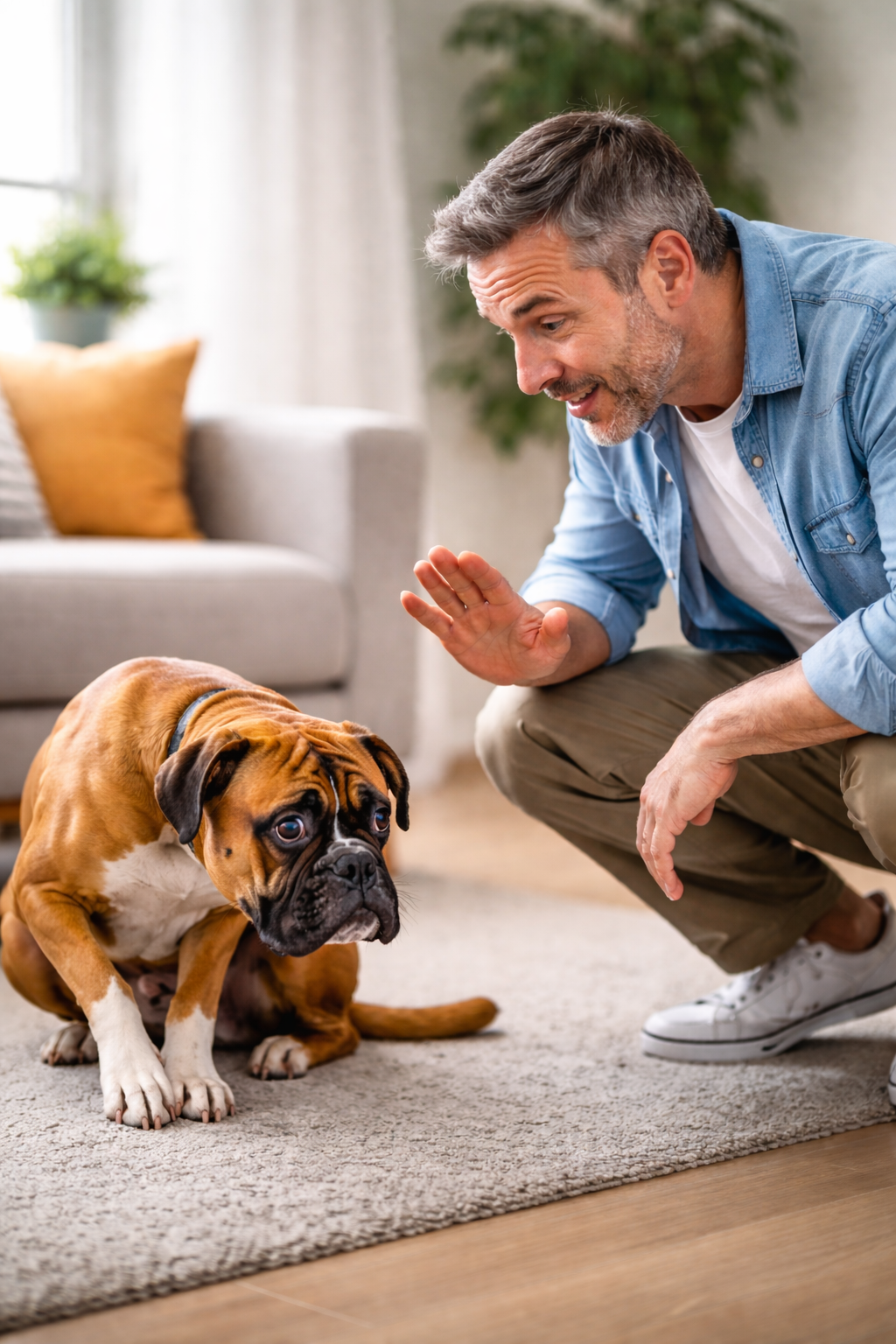
Dogs read body language better than words. If the handler is tense or overly sympathetic, the dog will match that energy
We model:
• Calm posture
• Neutral reactions
• Quiet confidence
When we act like everything is normal, the dog believes it too.
7. Encourage Exploration
Confidence grows through small wins. Once a fearful dog understands obedience and can stay in a working mindset, we start encouraging safe, guided exploration:
• Walking on new textures
• Entering new environments
• Meeting neutral, stable dogs
• Navigating obstacles
• Trying new activities (short hikes, swimming, agility basics)
Each win adds a brick to the dog’s confidence foundation.
8. Don’t Avoid the Problem — But Don’t Rush It
Avoidance keeps fear alive. Rushing causes shutdown. Balanced training respects the dog’s pace while steadily moving forward. Progress doesn’t have to be fast — it just has to be consistent.
If the dog is learning, trying, and staying engaged, you’re exactly where you should be.
9. The Human Must Stay Consistent
A fearful dog can absolutely improve — dramatically, even — but the work has to continue after the session ends. Daily structure, obedience practice, and exposure must become part of the dog’s lifestyle.
Leadership isn’t a one-time thing. It’s the environment the dog learns to trust.
Final Thoughts
Fearful dogs aren’t broken — they’re simply misunderstood. Balanced training doesn’t smother the fear or force the dog through it. Instead, we offer structure, guidance, and fair expectations. We show them that the world isn’t something to fear, because they aren’t navigating it alone.
Confidence isn’t something a dog is gifted — it’s something they build.
And with the right leadership, even the most anxious dogs can learn to feel safe, capable, and proud again.
Dog Training in Tucson, AZ Dog Training in Marana, AZ Training Options
Walkers K9 Services — Building Better Dogs, One Lesson at a Time
Please support our mission by sharing our training articles with other dog owners.
Written by: George Walker
Walkers K9 Services | Tucson, AZ
📞 520-500-7202