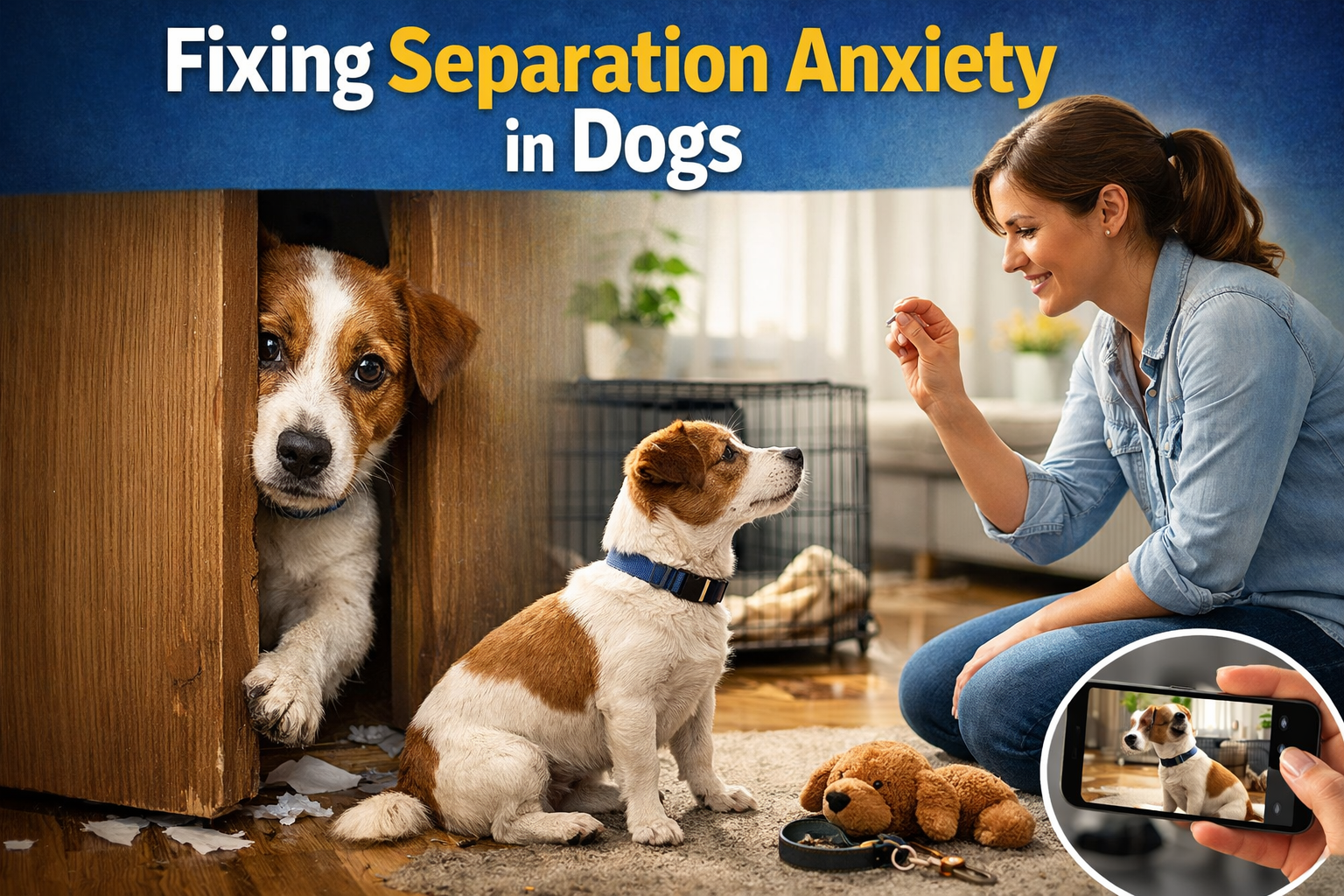
Fixing Separation Anxiety in Dogs
By Walkers K9 Services – Tucson, AZ
Separation anxiety is one of the most stressful behavior issues for both dogs and their owners. It’s heartbreaking to watch your dog panic the second you walk out the door—but the good news? With clear structure, training, and consistency, you can teach your dog to relax, decompress, and handle being alone confidently.
Below is the same step-by-step method I’ve used with hundreds of dogs over the years.
Understanding What Separation Anxiety Really Is
Most dogs with separation anxiety aren’t being “dramatic” or “stubborn”—they’re overwhelmed.
They’ve never learned how to be independent. Many have been unintentionally rewarded for
clingy, anxious behavior.
This process focuses on teaching the dog what to do and what not to do. We don’t just soothe
the anxiety—we build skills, expectations, and structure so the dog can handle real-world
situations calmly.
Step 1: Structure Reduces Stress
Dogs with anxiety need routine, not endless freedom. Free-roaming nervous dogs often
pace, whine, and escalate.
Start by adding structure:
Crate training (the crate becomes a calm, neutral space—not punishment)
Predictable daily schedules
Clear “off-limits” times when the dog must settle, even when you’re home
Less constant petting or reassurance during clingy moments
A dog can’t learn to be calm when they live in a constant state of overstimulation.
Step 2: Confidence-Building Obedience
An anxious dog needs a job. Training creates direction, clarity, and leadership—things nervous dogs naturally gravitate toward.
Commands like place, down-stay, crate, and heel help the dog learn to control their own energy. Reward calm behavior, and give clear feedback when the dog starts escalating. Once expectations are consistent, anxiety usually drops fast.
Step 3: Stop the Emotional Send-Offs
Most owners accidentally make the anxiety worse by:
Over-petting before leaving
Using a worried tone
Making a huge fuss when they come home
Instead:
Leave quietly
Return quietly
Wait for calm before giving affection
This single change can drastically reduce anxiety.
Step 4: Gradual Alone-Time Training
Teach the dog—slowly and systematically—that being alone is normal and safe.
Start with:
Short crate sessions while you’re home
Leaving the room for short increments
Increasing the duration only when the dog stays calm
Redirect or correct behaviors like nonstop crying, scratching, or frantic pacing inside the crate. Reinforcement isn’t meant to punish—it simply communicates what behavior is expected.
Calm behavior earns praise. Panic does not.
Step 5: Exercise Helps—But It’s Not the Whole Fix
Yes, exercise matters. But a tired untrained dog is still an anxious dog.
Aim for:
A structured walk (not a chaotic one)
Obedience sessions
Controlled play instead of wild indoor chaos
Exercise supports training—it doesn’t replace it.
Step 6: Useful Tools for Success
The right tools make the process smoother and clearer for the dog.
Depending on the situation, these can help:
Crates
Slip leads
Training collars (used correctly)
Calming chews or vet-approved supplements
White noise machines to block outside triggers
Tools don’t solve the problem alone—but they support a solid training plan.
Step 7: Consistency From the Owner Is Everything
Separation anxiety can be fixed, but only if the training is consistent.
A dog with anxiety needs:
Clear rules
Daily structure
A dependable routine
A leader who doesn’t reward panic
With clear guidance, most anxious dogs improve faster than people expect.
Final Thoughts
Separation anxiety is fixable in the vast majority of dogs. The key is structure, clarity, independence training, and consistent follow-through. When you give your dog stability and expectations, they learn that being alone isn’t something to panic about—it’s just part of their normal day.
If you need help building a personalized plan, Walkers K9 Services is here to support you and your dog every step of the way.
Dog Training in Tucson, AZ Dog Training in Marana, AZ Training Options
Please help us by sharing our training articles
Walkers K9 Services — Building Better Dogs, One Lesson at a Time 🔹
Please support our mission by sharing our training articles with other dog owners.
Written by: George Walker
Walkers K9 Services | Tucson, AZ
📞 520-500-7202