Feeding a Dog a Raw Diet or Partial Raw Diet:
What Owners Should Know
By George Walker, Walker’s K9 Services – Tucson, AZ
Raw feeding is one of the most debated topics in the dog world today. Some owners swear by it, others are unsure, and many are curious but overwhelmed by conflicting information. As with any feeding choice, understanding the why, the how, and the risks is critical before making changes to your dog’s diet.
This article breaks down what a raw or partial raw diet is, the potential benefits, the concerns, and how to approach it responsibly.
What Is a Raw Diet for Dogs?
A raw diet (often called BARF – Biologically Appropriate Raw Food) typically consists of:
Raw meat (muscle meat)
Raw edible bones
Organ meats (liver, kidney, heart)
Sometimes vegetables, fruits, and supplements
A partial raw diet mixes raw components with a high-quality commercial kibble or cooked food,
allowing owners to gain some benefits of raw feeding without fully committing.
Why Some Owners Choose Raw Feeding
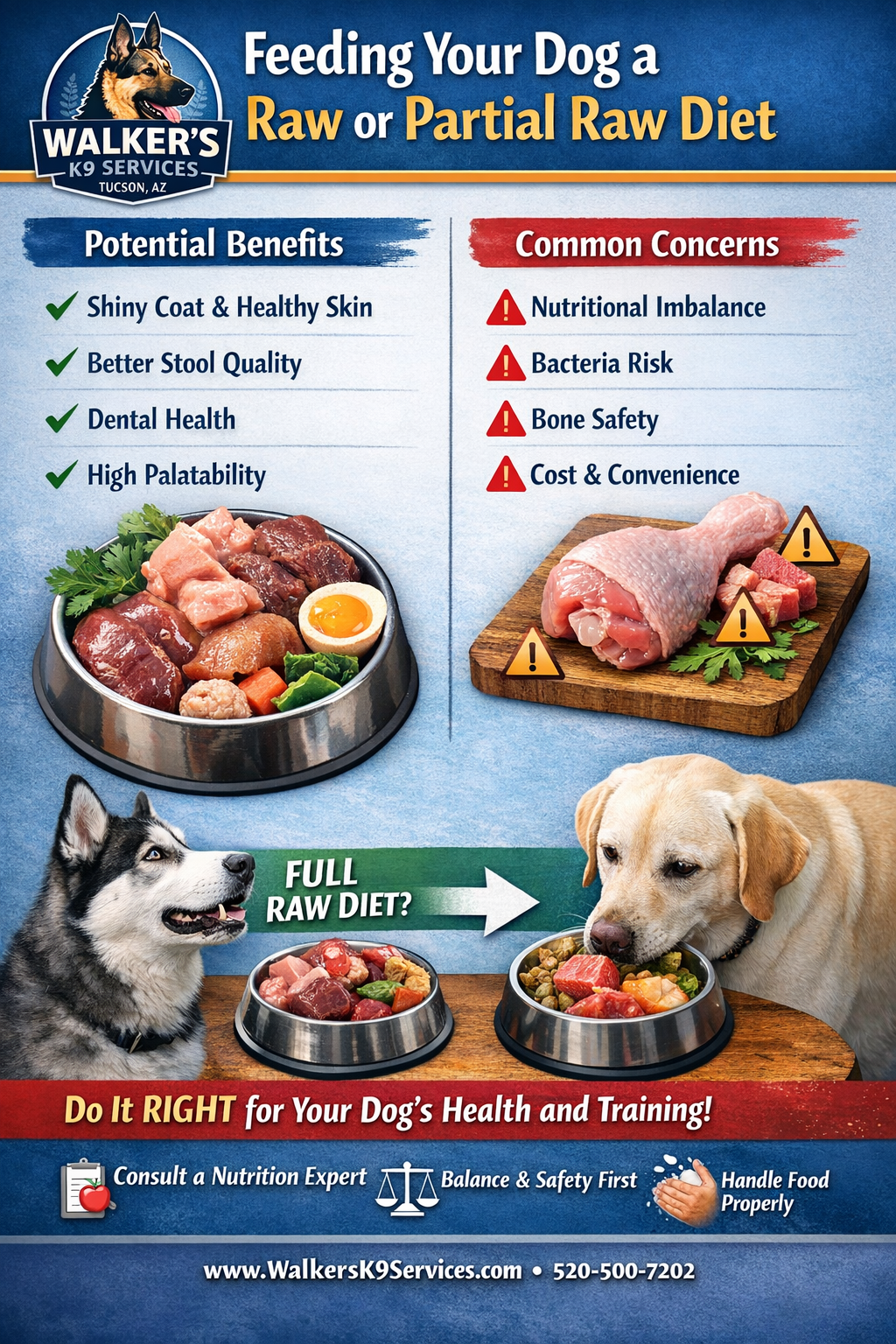
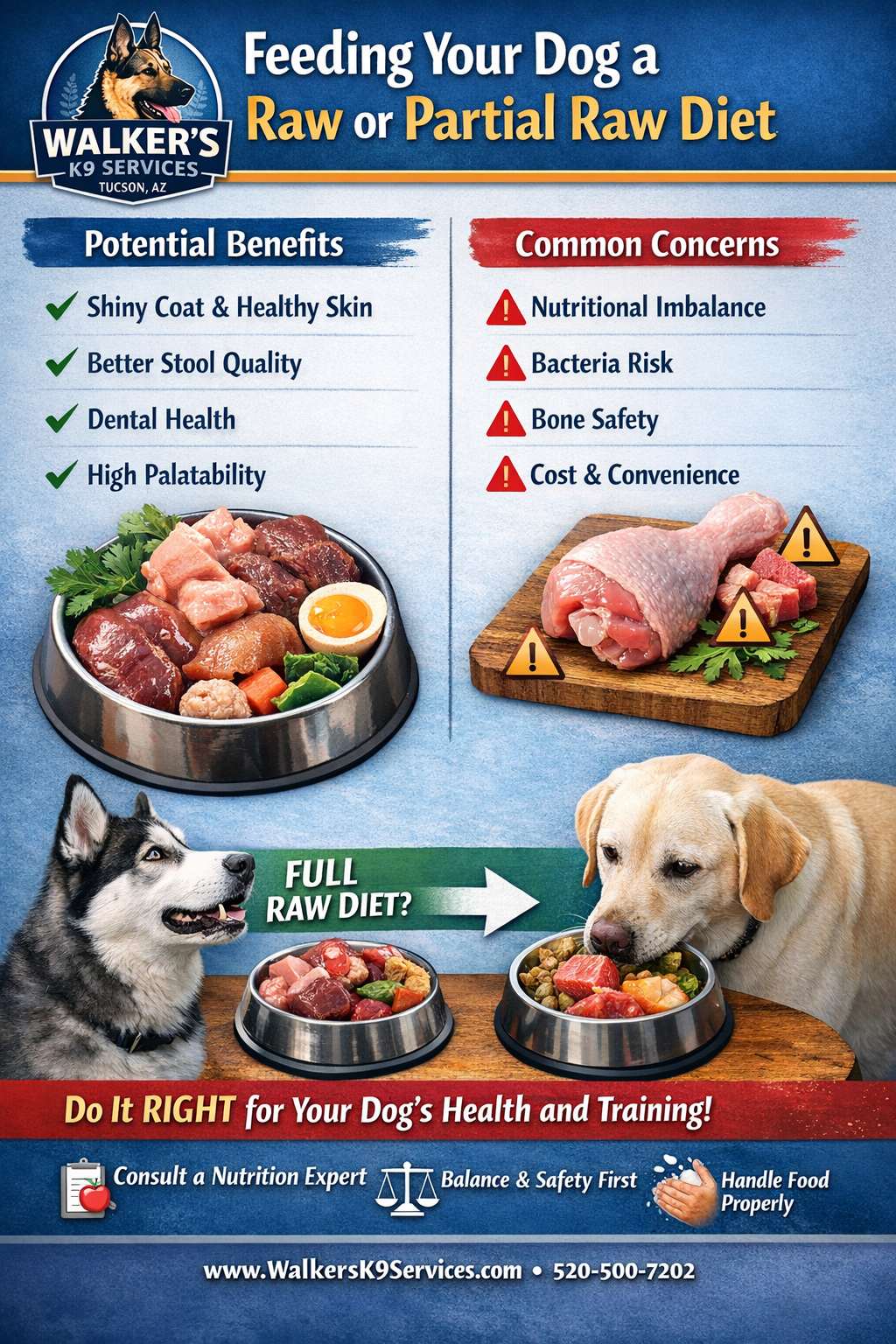
1. Improved Coat and Skin
Many owners report shinier coats, less dandruff, and reduced itching. Raw diets tend to be
higher in natural fats and oils that support skin health.
2. Better Stool Quality
Dogs on raw diets often produce smaller, firmer stools due to higher nutrient absorption and fewer fillers.
3. Dental Benefits
Raw meaty bones can help scrape plaque and tartar from teeth naturally (when fed safely and appropriately).
4. High Palatability
Most dogs love raw food. This can be helpful for picky eaters or dogs that have lost interest in kibble.
5. Ingredient Control
Raw feeding allows owners to know exactly what is going into their dog’s body, which can be useful for dogs with allergies or sensitivities.
Common Concerns With Raw Diets
1. Nutritional Imbalance
One of the biggest risks of raw feeding is improper balance. Dogs require specific ratios of calcium, phosphorus, vitamins, and trace minerals. Feeding only muscle meat, for example, can cause serious deficiencies.
2. Bacterial Risk
Raw meat can contain bacteria such as Salmonella or E. coli. Healthy dogs often tolerate this better than humans, but improper handling can pose a risk to people in the household.
3. Bone Safety
Not all bones are safe. Cooked bones are dangerous, and even raw bones must be size-appropriate and supervised to prevent choking or fractures.
4. Cost and Convenience
Raw diets are often more expensive and require freezer space, preparation time, and careful sourcing.
Is a Partial Raw Diet a Good Compromise?
For many owners, partial raw feeding is a practical middle ground.
Examples include:
Adding raw meat or raw eggs to a balanced kibble
Feeding raw meals a few times per week
Using freeze-dried or commercially prepared raw products alongside kibble
This approach can improve variety and palatability while reducing the risk of nutritional imbalance—if the base diet is already complete and balanced.
Training Considerations: Diet vs. Behavior
It’s important to be clear:
Diet alone does not fix behavior problems.
While improved nutrition can support:
Energy regulation
Focus
Overall health
Behavior issues like aggression, reactivity, anxiety, and disobedience still require structured training, leadership, and consistency. Feeding raw won’t replace proper training—but good nutrition can support a dog’s ability to learn and perform.
How to Feed Raw Responsibly
If you’re considering raw feeding:
Consult a veterinary nutritionist, not just online forums
Follow proven ratios (muscle meat, bone, organ)
Handle food safely (wash hands, sanitize surfaces)
Avoid guesswork
Monitor your dog’s weight, coat, stool, and energy
Adjust slowly to avoid digestive upset
Final Thoughts
Raw and partial raw diets can be beneficial when done correctly, but they are not magic and they are not risk-free. The best diet is one that:
Meets your dog’s nutritional needs
Fits your lifestyle
Is fed consistently and responsibly
Supports training, not replaces it
If you’re unsure, a high-quality commercial diet combined with thoughtful supplementation and proper training often delivers excellent results.
Dog Training in Tucson, AZ Dog Training in Marana, AZ Training Options
Walkers K9 Services — Building Better Dogs, One Lesson at a Time 🔹
Please support our mission by sharing our training articles with other dog owners.
Written by: George Walker
Walkers K9 Services | Tucson, AZ
📞 520-500-7202