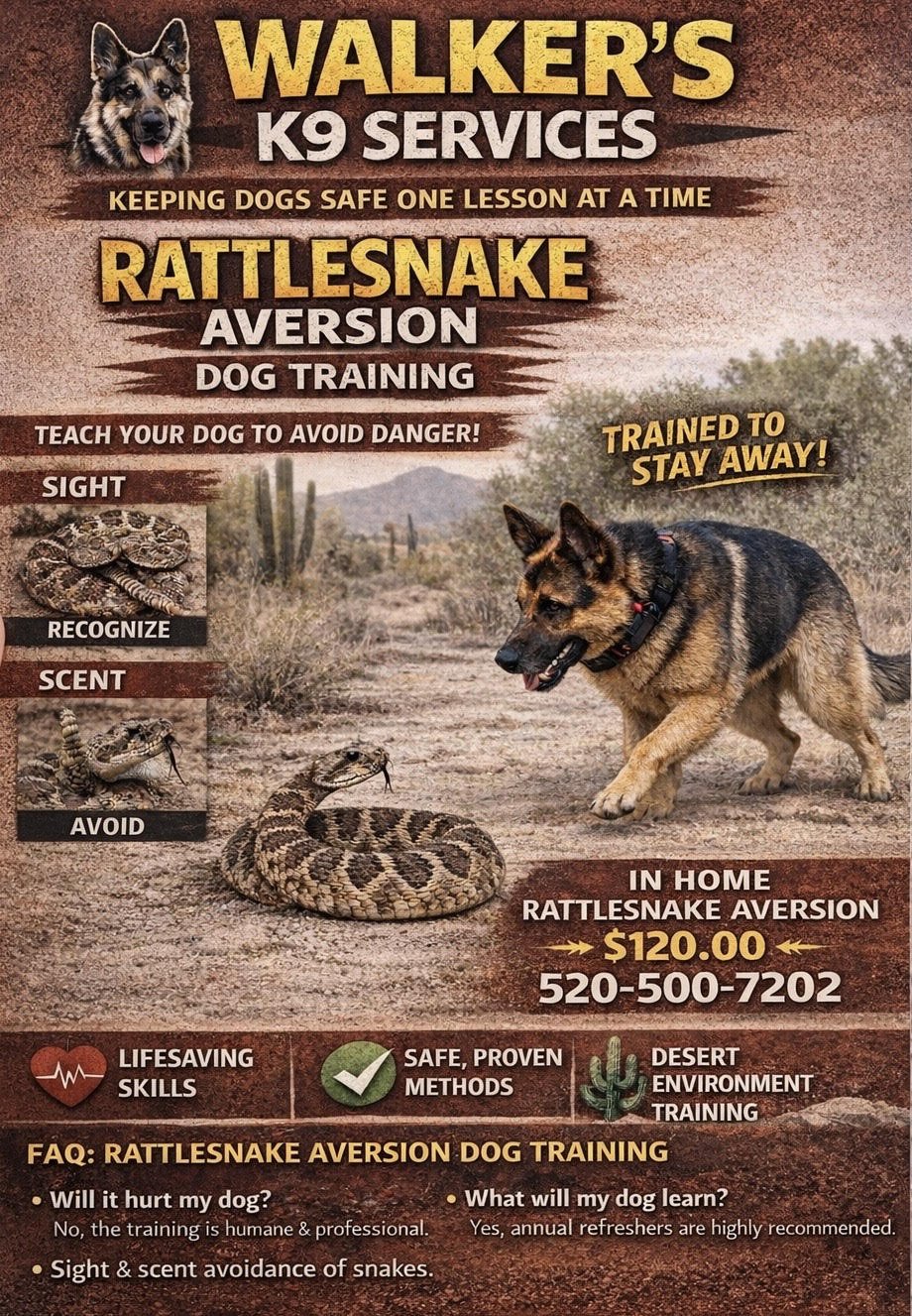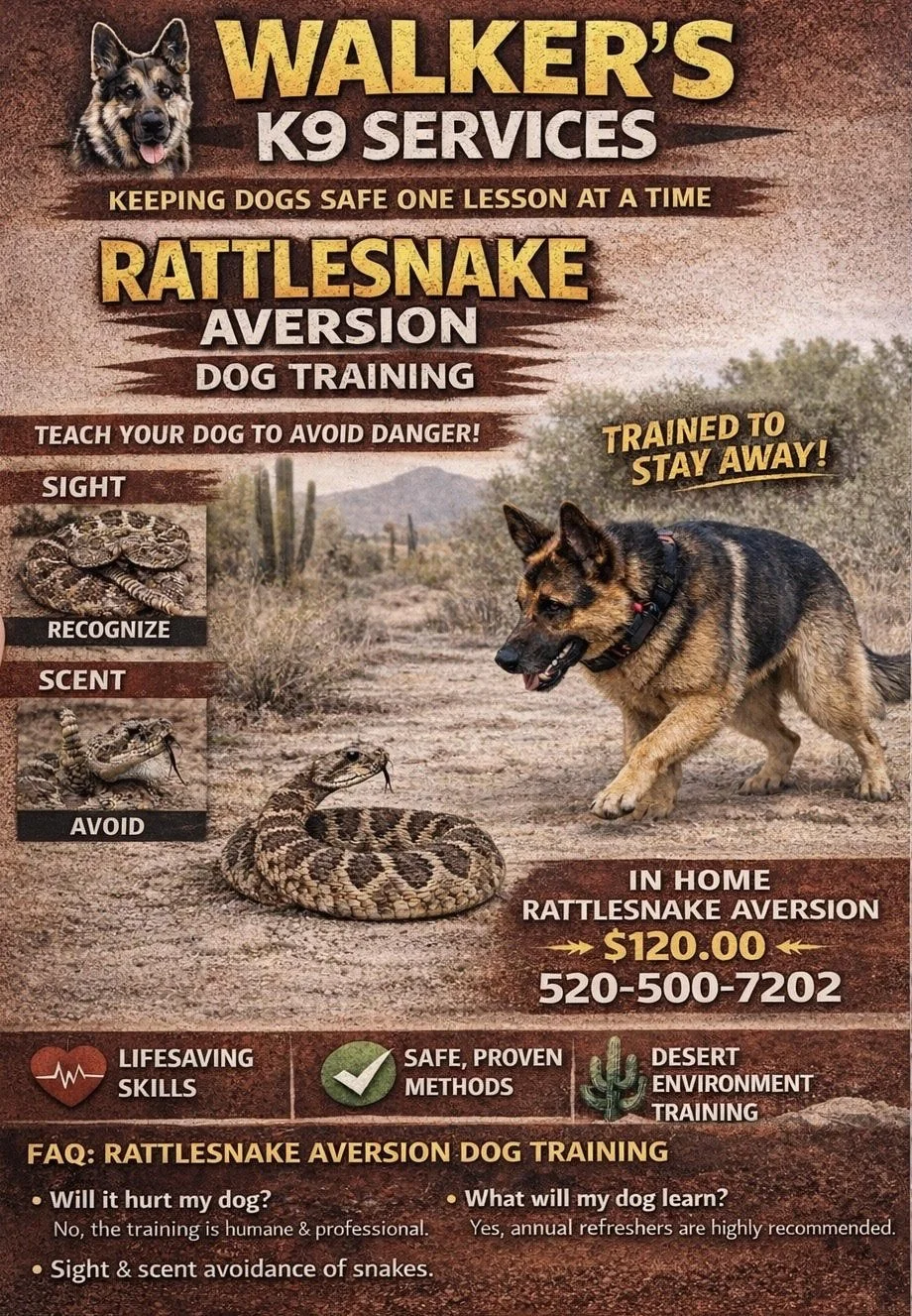
Don’t Kill Rattlesnakes Remove What Attracts Them Instead
And Why Rattlesnake Aversion Training Can Save Your Dog’s Life
Living in Tucson, Arizona, means sharing the Sonoran Desert with wildlife—including rattlesnakes. Encounters are becoming more common as homes expand into desert areas, washes, and foothills. When a rattlesnake shows up, fear often leads to the wrong response: killing the snake.
That approach doesn’t work—and it doesn’t keep dogs safe.
The real solution is twofold:
Remove what attracts rattlesnakes to your property
Train your dog to avoid rattlesnakes altogether
Together, these steps dramatically reduce risk without harming wildlife.
Why Killing Rattlesnakes Fails
Rattlesnakes don’t randomly wander into yards. They follow prey and shelter. If those
conditions remain, another snake will replace the one that was killed—sometimes
within weeks.
In the Sonoran Desert area:
Rattlesnakes help control pack rats and mice
Removing snakes often leads to rodent population spikes
More rodents eventually means more rattlesnakes
Most bites occur when dogs or people try to investigate, chase, or kill a snake
For dogs, instinct and curiosity make them especially vulnerable.
What Attracts Rattlesnakes to Tucson Yards
Rattlesnakes are drawn by three things:
Food. Shelter. Water.
Remove these, and encounters drop dramatically.
1. Rodents: The Biggest Risk for Dogs
Pack rats, mice, and ground squirrels are common around homes—and they are the
primary food source for rattlesnakes.
Common rodent attractants:
Dog food left outdoors
Bird feeders and spilled seed
Chicken or livestock feed
Fallen citrus from trees
Unsecured trash cans
Why this matters for dogs:
Dogs chasing rodents push their noses into bushes, walls, and rock piles—exactly
where rattlesnakes rest during the day.
Prevention steps:
Feed dogs indoors or remove bowls immediately
Clean up bird seed daily
Pick up fallen fruit promptly
Use sealed, rodent-proof trash cans
No rodents means far fewer snakes—and a safer yard for your dog.
2. Remove Snake Shelter Around Your Home
Rattlesnakes seek cool, shaded places to escape Arizona's extreme heat.
Common hiding spots:
Brush and debris piles
Firewood stacked on the ground
Decorative rock piles
Construction materials
Dense shrubs near walls and fences
Dog safety concern:
Many bites happen when a dog sticks its nose into a shaded hiding spot.
What to do:
Remove unused materials
Elevate firewood at least 12 inches
Trim bushes up from the ground
Maintain clear visibility along walls and fence lines
If a dog can fit its head in, a rattlesnake can hide there.
3. Landscape With Snake Prevention in Mind
Some desert landscaping unintentionally creates perfect rattlesnake habitat.
Higher-risk landscaping:
Thick ground cover
Dense shrubs touching the soil
Large rock beds near foundations
Safer landscaping choices:
Keep plants trimmed and open underneath
Use gravel instead of dense cover near the house
Create open buffer zones where dogs walk and play
Open spaces reduce surprise encounters—the most dangerous kind for dogs.
4. Eliminate Standing Water (Especially Overnight)
In the desert, water attracts rodents—and rodents attract snakes.
Common problem areas:
Dog water bowls left out overnight
Leaking hoses or irrigation lines
Bird baths
Prevention tips:
Bring dog bowls inside at night
Repair leaks quickly
Empty bird baths when not in use
5. Rattlesnake Fencing for Dog & Kids Yards
For homes near washes, open desert, or foothills, rattlesnake fencing is one of the most effective protections.
Proper fencing includes:
¼-inch mesh or smaller
Buried 4–6 inches underground
Angled outward at the base
No gaps at gates or corners
This keeps snakes out of dog play areas without harming wildlife.
6. Rattlesnake Aversion Training: The Missing Piece
Even with the best yard management, dogs in Tucson will eventually encounter rattlesnakes on walks, hikes, or neighborhood trails. This is where Rattlesnake Aversion Dog Training becomes critical.
Why aversion training matters:
Dogs don’t naturally fear rattlesnakes. Many are curious—and curiosity gets them bitten.
Proper aversion training teaches dogs to:
Recognize rattlesnakes by sight, and scent
Immediately disengage and move away
Avoid investigating or approaching snakes instinctively
This training doesn’t rely on chance or owner reaction time. It gives dogs a lifelong survival skill.
How Rattlesnake Aversion Training Protects Tucson Dogs
Rattlesnake aversion training is especially important for:
Dogs that hike or walk desert trails
Dogs living near washes or open land
Curious, prey-driven dogs
Off-leash dogs on rural properties
When paired with proper yard management, aversion training offers the highest level of protection available for dogs in rattlesnake country.
Rattlesnakes Aren’t the Enemy—Ignorance Is
Rattlesnakes don’t hunt dogs. They bite defensively when surprised or cornered. Dogs, unfortunately, are very good at doing exactly that.
The safest Tucson strategy:
Don’t kill snakes. Remove what attracts them—and train your dog to avoid them.
This approach:
Keeps dogs safer
Reduces future rattlesnake encounters
Protects native wildlife
Creates a more balanced desert environment
Final Thought for Arizona Dog Owners
If you live in rattlesnake country, prevention isn’t optional—it’s responsible ownership.
A snake-unfriendly yard combined with professional rattlesnake aversion training can mean the difference between a close call and a tragedy.
Dog Training in Tucson, AZ Dog Training in Marana, AZ Training Options
Walkers K9 Services — Keeping Dogs Safe, One Lesson at a Time
Please support our mission by sharing our training articles with other dog owners.
Written by: George Walker
Walkers K9 Services | Tucson, AZ
www.WalkersK9Services.org
📞 520-500-7202