Creating a Safe, Dog-Friendly Home Environment
By George Walker, Walker’s K9 Services – Tucson, AZ
A dog-friendly home isn’t just about comfort—it’s about safety, structure, and setting your dog up for success. Whether you’re bringing home a new puppy or refining the setup for an adult dog, the environment you create directly affects your dog’s behavior, confidence, and ability to relax. A well-structured home keeps your dog safe, prevents accidents, and reduces behavioral issues tied to anxiety or lack of boundaries.
Why Your Home Environment Matters
Your dog sees the world differently than you do. They explore with their noses and mouths, react to movement and sound, and rely heavily on structure to feel secure. An unprepared home can lead to chewing, escaping, house accidents, reactivity at windows, and unnecessary stress.
Creating a dog-friendly home means creating a predictable, safe, and enriching space where your dog can make good decisions—even when you’re not looking.
1. Start With a Solid Management Plan
Management prevents unwanted behaviors before they start. This includes:
Crate or Kennel Setup
Choose a crate large enough for your dog to stand and turn comfortably.
Place it in a calm area—not in the middle of chaos but not isolated either.
Use the crate for structure, naps, meals, and safe downtime.
Gates and Playpens
Ideal for puppies or dogs still learning boundaries.
Prevent access to stairs, kids’ rooms, kitchens, or high-risk areas.
Leash and Place Routines
A leash inside the house during the early stages of training keeps the dog from practicing bad habits.
A designated “place” spot teaches impulse control and calmness.
Good management equals fewer mistakes, fewer corrections, and faster learning.
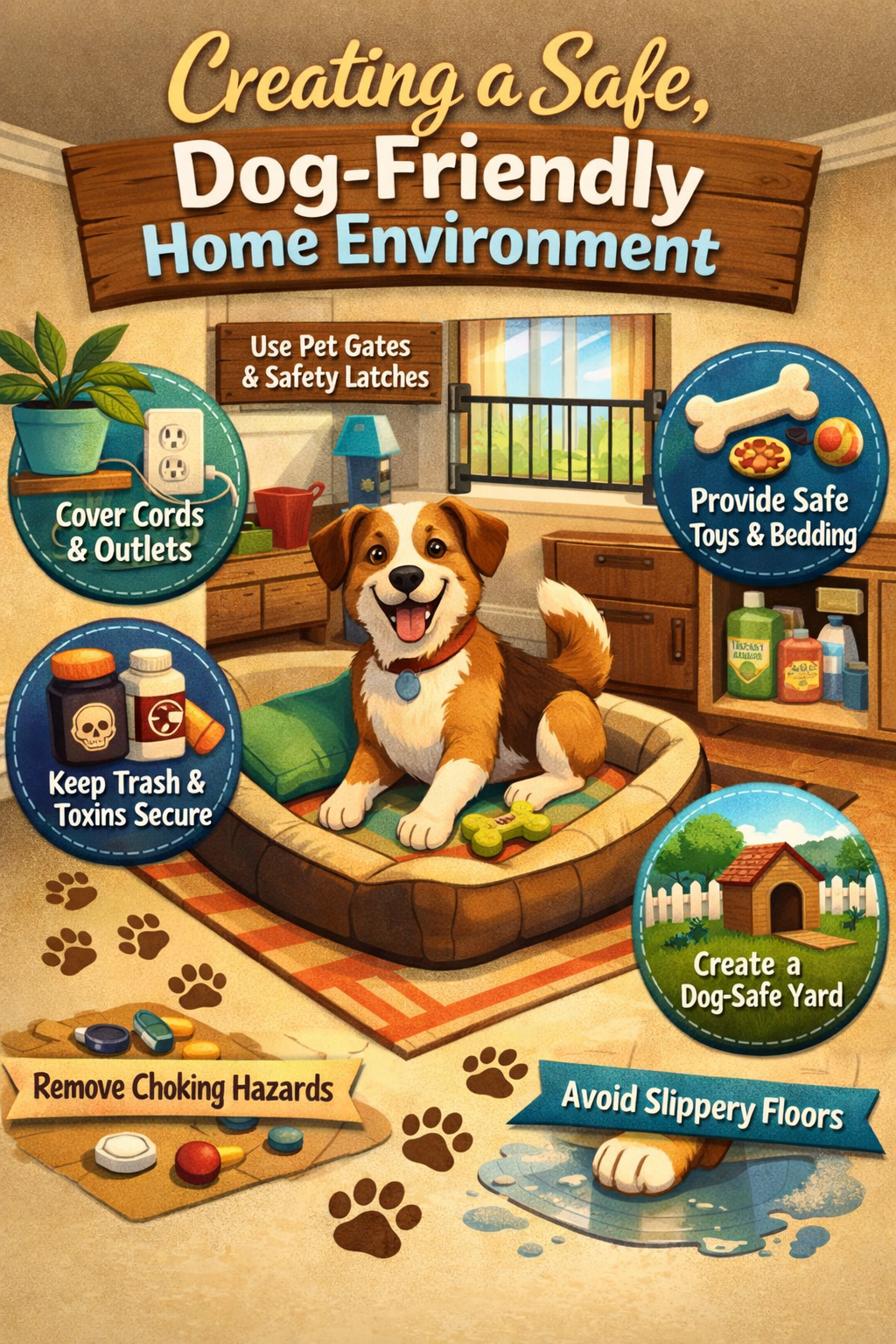
2. Remove Hazards and Set Up a Safe Space
Dogs are curious—especially puppies. Anything that looks interesting will be chewed, swallowed, or knocked over.
Common Household Hazards
Electrical wires
Toxic plants
Human food left on counters
Cleaning supplies
Medications
Small objects like batteries, socks, and children’s toys
Trash cans
Dog-Proofing Essentials
Use cord protectors or hide wires behind furniture.
Install child locks where needed.
Keep countertops clear.
Secure all trash cans with lids or place them in a cabinet.
Store chemicals high and out of reach.
If your dog can reach it, they can get into it. Prevention is everything.
3. Provide the Right Kind of Stimulation
A dog-friendly environment includes healthy outlets:
Mental Enrichment
Kibble-dispensing toys
Sniffing games
Training sessions
Simple problem-solving tasks
Physical Exercise
Walks with rules and structure
Controlled play
Tug sessions (with clear rules)
Fetch (only if it doesn’t create obsessive behavior)
Chew Opportunities
Offer appropriate chew items:
Bully sticks
Benebones
Kongs (stuffed and frozen)
Avoid: cooked bones, rawhide, or anything breakable or swallowable.
4. Control Access to Windows and Doors
Many dogs develop reactivity because they spend hours self-entertaining:
Barking at people passing
Watching animals outside
Guarding the front door
To prevent territorial habits:
Limit access to windows where your dog can patrol.
Use curtains or frosted film for “hot zones.”
Keep your dog on leash during guest greetings so you control the situation—not the dog.
5. Flooring and Furniture Considerations
Not every surface is safe for every dog.
Flooring
Slippery floors can cause injuries, especially in puppies and senior dogs.
Add area rugs or runners to prevent sliding.
Furniture
Decide in advance if your dog is allowed on furniture.
Be consistent—rules don’t change day to day.
If you allow it, teach “off” and “okay” as structured commands.
6. Outdoor Safety: Fencing, Shade, and Boundaries
A dog-friendly yard includes protection and structure.
Fence Security
Check for gaps, loose boards, or areas where digging is possible.
Make sure gate latches are secure and not easily pushed open.
Shade and Water
Always provide shade and fresh water—especially in Arizona heat.
Yard Hazards
Remove or fence off:
Toxic plants
Pool areas without a barrier
Sharp tools or equipment
Pesticide-treated areas
7. Establish Predictable Daily Routines
Dogs thrive on structure. A predictable day reduces anxiety and unwanted behaviors.
Include routines for:
Feeding
Walks
Training
Crate rest
Free time
Playtime
Bedtime
A structured home equals a calmer, better-behaved dog.
Final Thoughts
A dog-friendly home doesn’t require expensive gadgets or major renovations. It’s about clarity, boundaries, safety, and leadership. When your dog understands the rules and feels secure in their environment, they can relax—and that’s when the best behavior naturally shows up.
You’re not just creating a dog-friendly home.
You’re creating a better life for both you and your dog.
Dog Training in Tucson, AZ Dog Training in Marana, AZ Training Options
Walkers K9 Services — Building Better Dogs, One Lesson at a Time 🔹
Please support our mission by sharing our training articles with other dog owners.
Written by: George Walker
Walkers K9 Services | Tucson, AZ
📞 520-500-7202