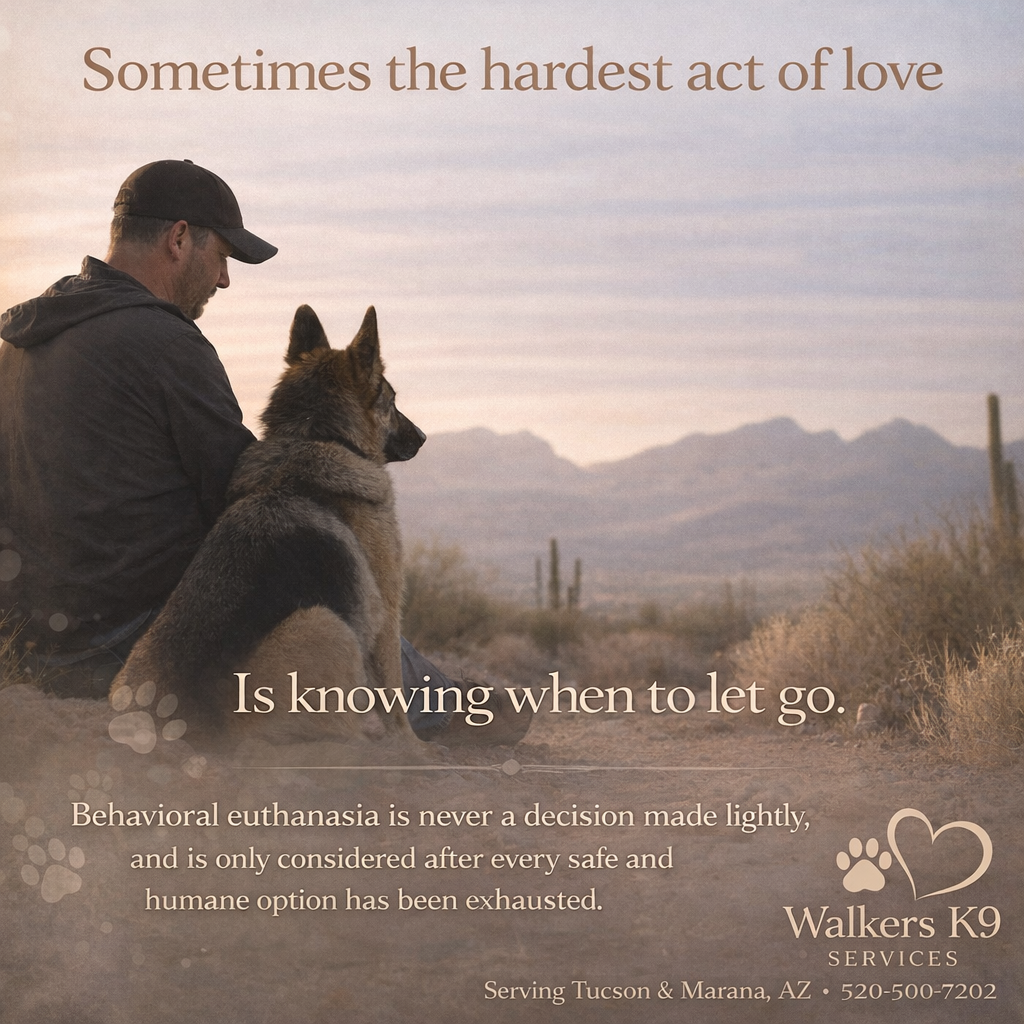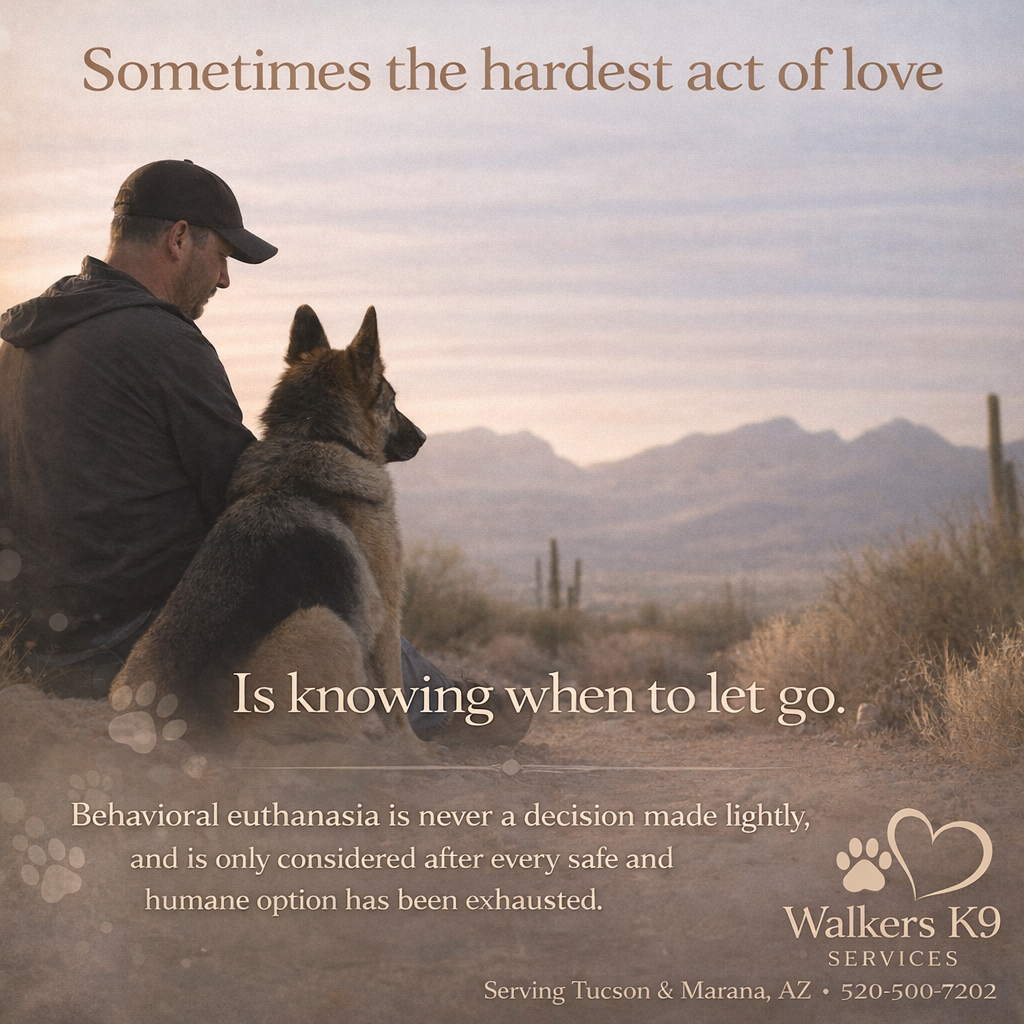
Behavioral Euthanasia: A Compassionate, Ethical Decision When All Other Options Have Been Exhausted
By George Walker, Walker’s K9 Services – Tucson, AZ
Behavioral euthanasia is one of the most emotionally charged and misunderstood topics in the dog world. It sparks strong reactions, difficult conversations, and deep moral questions—especially among dog lovers, trainers, and owners who are committed to doing right by the animals in their care.
As a professional dog trainer, I have always believed that rehabilitation should be the first and primary goal. Training, behavior modification, environmental management, and professional intervention should be thoroughly explored before any irreversible decision is considered. Many dogs with behavioral challenges can improve with the right structure, consistency, and support.
However, it is also important to acknowledge a difficult truth: not every behavioral case can be safely or humanely rehabilitated.
When Rehabilitation Is No Longer Ethical
There are situations where a dog’s behavior presents a level of risk that cannot be responsibly managed long-term. This is especially true in cases involving:
Severe, unprovoked aggression
Repeated, escalating bite histories
Genetic predispositions toward instability
Profound trauma that has fundamentally altered the dog’s ability to cope
In these cases, even the most experienced handlers may find that management strategies
only delay the inevitable while placing enormous strain on both the dog and the people
around them. Living behind barriers, muzzles, isolation, or constant hypervigilance is not
a life of peace or fulfillment for a dog.
At some point, continuing to push for rehabilitation can unintentionally prolong fear, anxiety,
and suffering.
Quality of Life Must Be the Central Consideration
Behavioral euthanasia is not about convenience, lack of effort, or giving up. It is about
honestly assessing a dog’s quality of life.
A dog that lives in a constant state of stress—unable to relax, trust, or exist safely in the world—is not thriving. Likewise, a dog that poses an unavoidable danger to people or
other animals creates a moral and legal responsibility that cannot be ignored.
True compassion means asking difficult questions:
Is this dog experiencing ongoing fear or distress?
Can this behavior be managed safely for the rest of the dog’s life?
Is the dog being placed in situations they cannot reasonably cope with?
Are we prioritizing emotion over reality?
When the answers point toward unavoidable risk and continued suffering, behavioral euthanasia may be the most humane option available.
A Decision Rooted in Responsibility, Not Failure
Behavioral euthanasia is never a decision made lightly. It is often preceded by months—or years—of effort, consultation, and heartbreak. When it is chosen responsibly, it reflects empathy, accountability, and an honest evaluation of what is truly fair to the dog.
This decision does not diminish the love, time, or dedication invested in that animal. In many cases, it is precisely because of that dedication that the decision is made.
Compassion Sometimes Means Letting Go
There is no comfort in this topic, and there shouldn’t be. These decisions are heavy because they matter. But compassion is not always about prolonging life at all costs—it is about preventing prolonged suffering when no safe or realistic alternatives remain.
Acknowledging behavioral euthanasia as a last-resort option is not about giving up on dogs. It is about recognizing the limits of rehabilitation and choosing honesty, responsibility, and humane care over false hope.
Sometimes, the kindest thing we can do is prevent a dog from spending their life overwhelmed, distressed, or trapped in a world they cannot navigate safely.
Frequently Asked Questions About Behavioral Euthanasia
Isn’t behavioral euthanasia just “giving up” on a dog?
No. Behavioral euthanasia is not a shortcut or a failure—it is a last-resort decision made after rehabilitation efforts have been fully explored. In many cases, extensive training, behavior modification, management plans, and professional consultations have already taken place. Choosing behavioral euthanasia does not erase the time, care, or love invested; it reflects a recognition that continued intervention may no longer be humane or safe.
Can’t every dog be rehabilitated with the right trainer or program?
This is a common misconception. While many dogs can improve significantly with skilled training and proper support, not every dog can be safely rehabilitated. Factors such as genetics, neurological instability, severe trauma, and repeated aggression can limit a dog’s ability to function safely in the world—regardless of training quality.
Isn’t management enough instead of euthanasia?
Management can be effective in some cases, but it often comes at a cost. A life spent behind gates, muzzles, isolation, or constant supervision may reduce risk, but it can also result in chronic stress, fear, and poor quality of life for the dog. Management is not ethical if it simply prolongs suffering or places others at continual risk.
What about rehoming or sanctuary placement?
Rehoming a dog with severe behavioral issues is rarely ethical or safe. Passing a dangerous dog to another home often transfers risk rather than resolves it. True sanctuaries with the resources to manage high-risk dogs are extremely limited, and many are already overwhelmed. Placement alone does not guarantee improved welfare or safety.
Is behavioral euthanasia only about protecting people?
No. Public safety is important, but the dog’s welfare is equally central. Dogs living in constant fear, hypervigilance, or distress are not experiencing a meaningful quality of life. Behavioral euthanasia, when responsibly chosen, can be an act of compassion that prevents ongoing psychological suffering.
Who should be involved in making this decision?
Behavioral euthanasia should never be decided impulsively or in isolation. Ideally, it involves collaboration between the owner, a qualified trainer or behavior professional, and a veterinarian. These decisions are best made through honest evaluation, documentation, and realistic expectations—not emotion alone.
How do you cope with the guilt or judgment from others?
This is one of the hardest parts. Many owners and professionals face harsh criticism from people who do not understand the full history of the dog or the risks involved. It’s important to remember that outsiders do not carry the responsibility you do. Making an ethical decision based on facts, safety, and compassion is not something to be ashamed of.
Can choosing behavioral euthanasia be an act of love?
Yes. Love is not always about preserving life at all costs. Sometimes, love means preventing further fear, suffering, and distress when no safe or humane alternatives remain. Choosing peace over prolonged turmoil can be the most compassionate gift we can give a dog.
Dog Training in Tucson, AZ Dog Training in Marana, AZ Training Options
Walkers K9 Services — Building Better Dogs, One Lesson at a Time 🔹
Please support our mission by sharing our training articles with other dog owners.
Written by: George Walker
Walkers K9 Services | Tucson & Marana, AZ
📞 520-500-7202