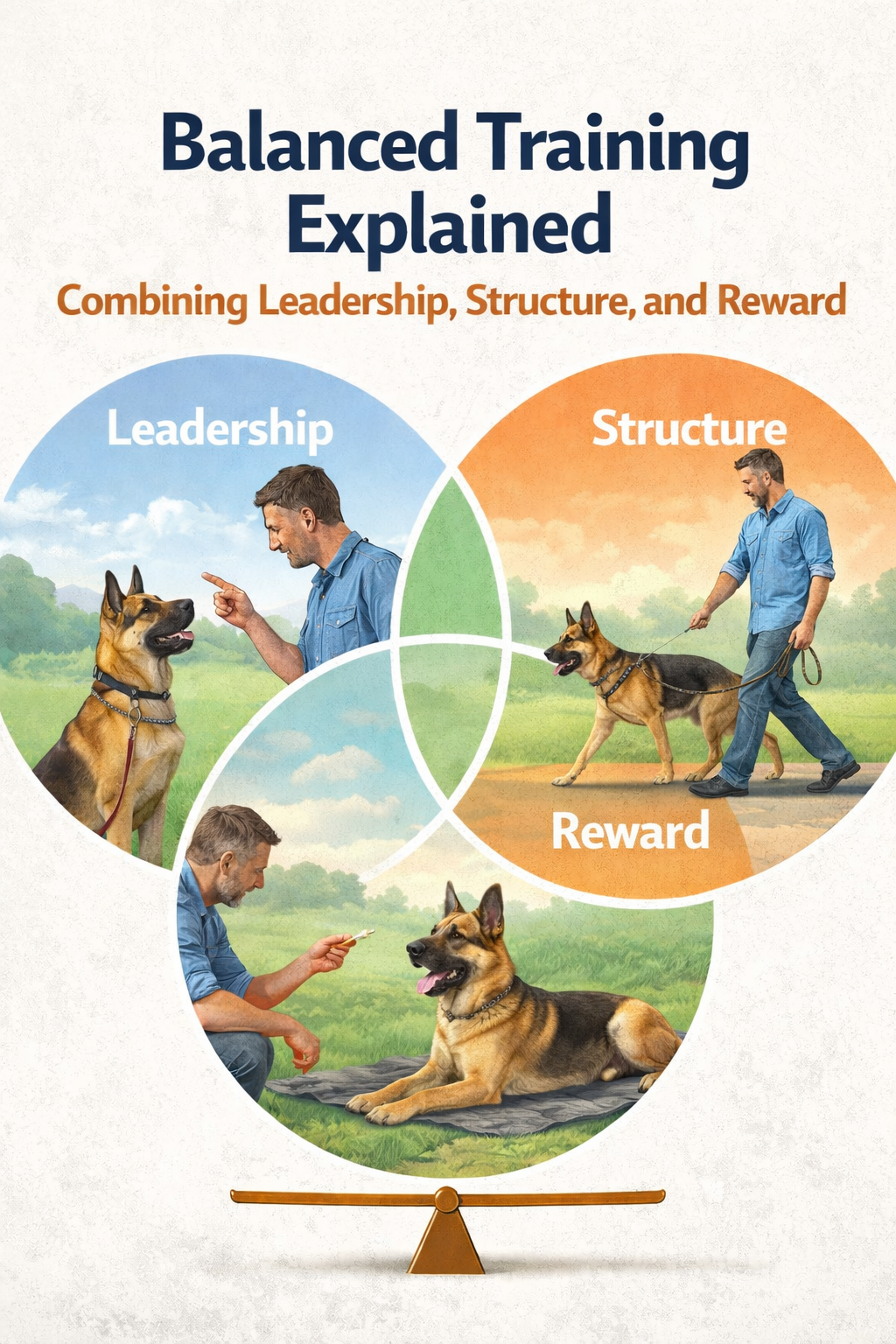
Balanced Training Explained:
Combining Leadership, Structure, and Reward
By George Walker, Walker’s K9 Services – Tucson, AZ
Balanced dog training is one of the most effective and fair approaches to raising a well-mannered, reliable, and confident dog. It blends the best of both worlds—clear leadership and structure, along with reward-based motivation—to create a system that makes sense to the dog and sets them up for long-term success.
Below is a clear, professional explanation of what balanced training really is, why it works, and how dog owners can apply it in their daily lives.
What Is Balanced Training?
Balanced training uses both rewards and consequences to teach dogs which
behaviors are desirable and which are not. It reinforces good choices and
fairly corrects dangerous, unwanted, or disobedient ones.
This approach mirrors how dogs naturally learn from each other:
Good choices lead to good outcomes.
Pushy or unsafe behaviors lead to boundaries.
Balanced training is not harsh, not punitive, and not about intimidation. It’s
about communication, clarity, and consistency—the three pillars of any
successful training program.
Pillar 1: Leadership
Dogs thrive under calm, confident, consistent leadership. This isn’t
dominance—it’s guidance.
Leadership looks like:
Controlling when affection is given instead of the dog demanding it
Setting rules around food, doors, furniture, and attention
Following through with commands every time
Using your tone, body language, and timing to communicate clearly
Great leaders don’t yell or get frustrated. They give direction, create boundaries, and follow through. This gives your dog security, because predictable leadership removes confusion and anxiety.
Pillar 2: Structure
Without structure, dogs make their own decisions—and those decisions may not be safe or appropriate in the human world.
Structure includes:
Short, focused training sessions
Meaningful leash guidance
Scheduled exercise and downtime
Clear rules in the home
Practice in different environments
Structure creates a predictable world your dog can succeed in. When a dog knows what is expected, problem behaviors naturally fade, and confidence grows.
Pillar 3: Reward
Rewards are a major part of balanced training. We want to pay the dog well for making good choices.
Rewards can include:
Food & treats
Praise
Play
Freedom
Environmental rewards (sniffing, moving forward, etc.)
Reward makes training enjoyable. It also strengthens your bond and helps your dog love working with you.
But reward alone doesn’t fix everything, especially dangerous or deeply rehearsed behaviors—that’s where corrections come in.
Where Corrections Fit In
A correction is not punishment. It is simply a clear signal that a behavior is not acceptable.
Fair corrections have three rules:
The dog understands the behavior
The correction fits the dog’s temperament
The correction is timed immediately with the behavior
Tools like slip leads, prong collars, and e-collars can be excellent when introduced properly and ethically. Balanced trainers don’t use corrections out of anger—they use them to keep dogs safe and to create reliability in the real world.
When combined with leadership, structure, and reward, corrections help a dog understand boundaries just as clearly as they understand praise.
Why Balanced Training Works
Balanced training creates dogs that are:
✔ Confident
✔ Reliable in all environments
✔ Able to handle stress and distraction
✔ Well-mannered around people and other animals
✔ Responsive even without treats
It mirrors natural learning, gives the dog clarity, and offers both encouragement and guidance. Dogs trained this way don’t just obey—they think, they make better choices, and they trust their handler.
Putting It All Together
A truly balanced training program includes:
Leadership that builds trust
Structure that builds consistency
Rewards that build motivation
Fair corrections that build reliability
This creates a dog who is not only obedient but also emotionally stable, engaged, and a joy to live with.
Balanced training isn’t about being harsh—it’s about being fair, honest, and effective. When done correctly, it brings out the very best in your dog.
Dog Training in Tucson, AZ Dog Training in Marana, AZ Training Options
Walkers K9 Services — Building Better Dogs, One Lesson at a Time
Please support our mission by sharing our training articles with other dog owners.
Written by: George Walker
Walkers K9 Services | Tucson, AZ
📞 520-500-7202