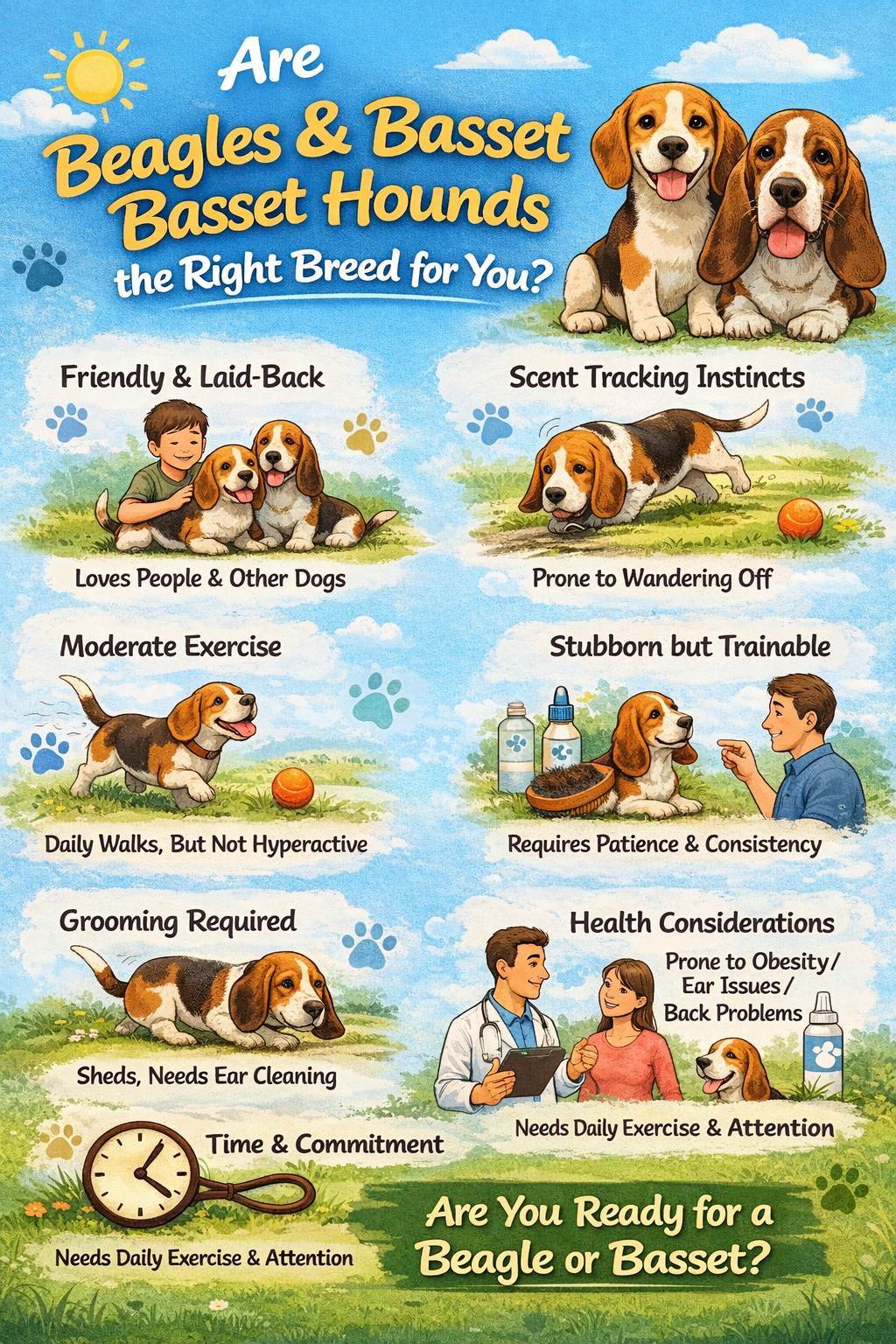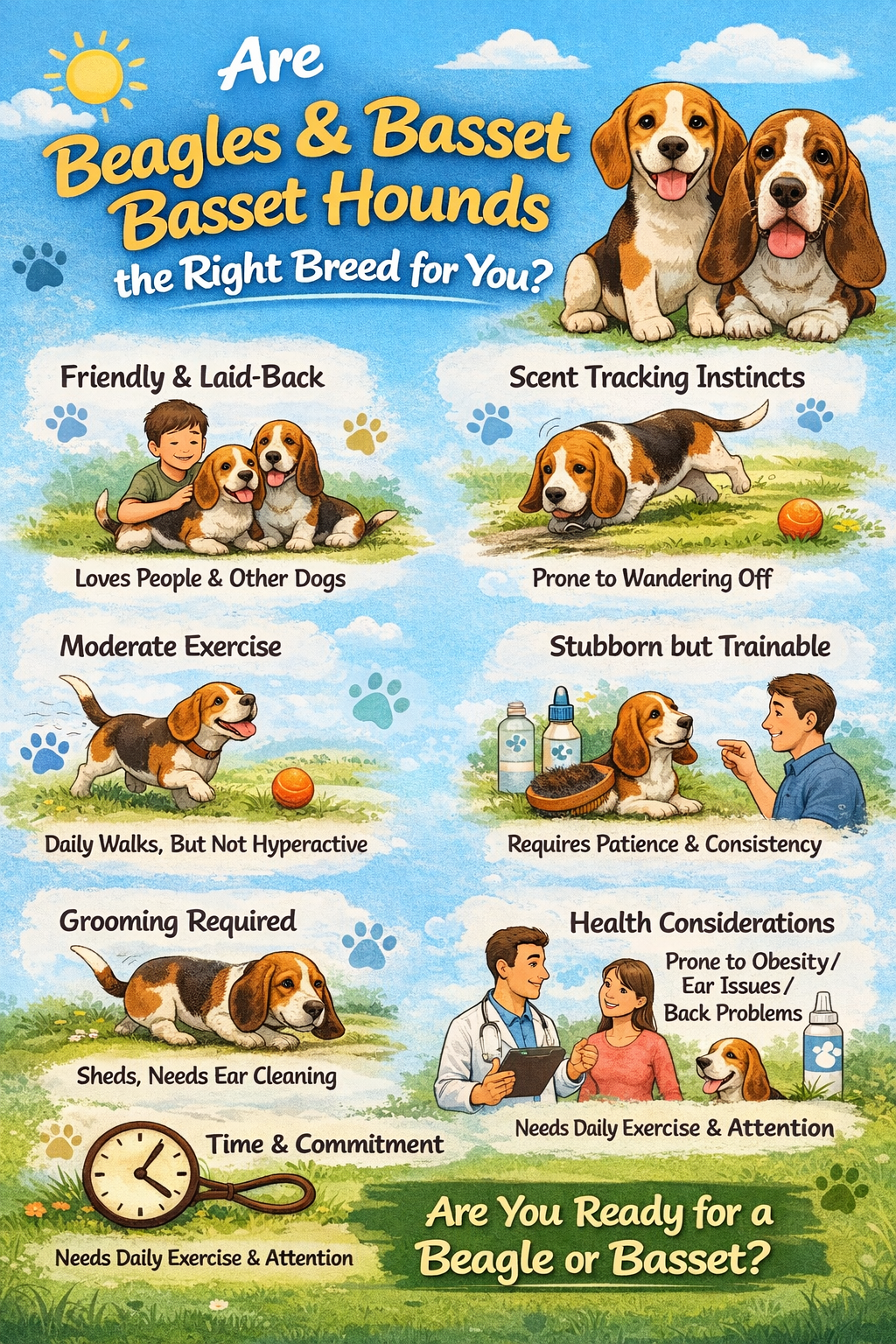
Are Beagles & Basset Hounds the Right Breed for You?
By George Walker, Walker’s K9 Services – Tucson, AZ
Beagles and Basset Hounds are two of America’s most beloved scent hounds. Both breeds are friendly, expressive, and built for following their noses—but they differ in key ways that can make one or the other a better fit for your lifestyle. This guide will help you decide whether either breed is right for your home, energy level, and training goals.
Overview of the Breeds
Beagles
Beagles are lively, medium-energy scent hounds known for their curiosity, playfulness,
and cheerful temperament. They are social dogs that love exploring, sniffing, and
interacting with people and other animals.
Typical traits:
Weight: 20–30 lbs.
Energy Level: Moderate to high
Temperament: Friendly, curious, energetic
Best for: Active families and owners who enjoy daily walks, outdoor adventures,
and mental stimulation
Basset Hounds
Basset Hounds are slower, heavier scent hounds with an incredible sense of smell.
They are affectionate, relaxed, and famously stubborn. They tend to be laid-back
companions who enjoy moderate exercise and plenty of lounging.
Typical traits:
Weight: 40–65 lbs.
Energy Level: Low to moderate
Temperament: Sweet, calm, stubborn
Best for: Homes that prefer a mellow companion and don’t mind a bit of drool, shedding, and humorously persistent behavior
Personality & Temperament
Beagle Temperament
Beagles are outgoing and joyful, with a mischievous streak. They thrive in homes where they receive:
Daily exercise
Sniff-based enrichment
Consistent training
Plenty of companionship
Beagles rarely enjoy being alone for long periods. They are pack dogs and will often vocalize (baying or howling) if bored or isolated.
Basset Hound Temperament
Bassets are affectionate and generally calm indoors. They love their people and enjoy being part of family life. They are more relaxed than Beagles, but they still require mental stimulation and regular walks.
Because they’re scent-driven, both breeds will follow their noses over any obedience cue. Reliability off-leash is rare without extensive training.
Exercise & Activity Needs
Beagles Need:
45–90 minutes of exercise per day
Long sniff walks
Playtime and mental work
Secure fencing—they are escape artists
Beagles thrive on activity. Without enough exercise, they can become destructive or overly vocal.
Basset Hounds Need:
30–60 minutes of exercise per day
Slower-paced walks
Shorter bursts of play
Careful monitoring of weight
While they look lazy, Bassets still require daily movement to stay healthy. Their long backs and heavy bodies make them prone to joint and spine issues if overweight.
Training Considerations
Beagle Training
Beagles are smart, but scent-driven and sometimes stubborn. They do best with:
Consistent rules
Positive reinforcement
High-value treats
Varied training environments
They can excel in nose work, tracking, agility, and obedience with the right structure.
Basset Hound Training
Training a Basset requires patience. They are not naturally eager to please and often work at their own pace. Keep sessions short and engaging, and avoid harsh corrections—they simply shut down.
Both breeds benefit greatly from early socialization and structured puppy training.
Grooming & Upkeep
Beagle Grooming
Low-maintenance short coat
Shedding is moderate
Occasional baths
Regular nail trimming and ear cleaning
Basset Hound Grooming
Heavy shedding
Drooling is common
More frequent ear cleaning (long ears trap moisture)
Occasional baths
Wrinkle cleaning around the face
Bassets require more overall grooming time than Beagles.
Health Considerations
Beagles:
Generally healthy
Risk of obesity
Ear infections
Allergies
Backing out of collars—use secure gear
Basset Hounds:
Prone to obesity
Hip/elbow issues
Back problems
Skin infections
Ear infections due to long ears
A responsible breeder or rescue can help reduce the risk of genetic health problems.
Who Should Choose a Beagle?
A Beagle may be right for you if you want a dog that is:
Energetic and fun-loving
Good with kids and other dogs
Up for adventures and sniffing games
Medium-sized and social
Beagles require time, exercise, and consistent training.
Who Should Choose a Basset Hound?
A Basset Hound may be right for you if you want a dog that is:
Calm and affectionate
Laid-back indoors
Social and friendly
Moderately active but not high-energy
They thrive with owners who appreciate a slower-paced, relaxed companion with a comical personality.
Final Thoughts
Both Beagles and Basset Hounds are wonderful scent hounds that bring joy, charm, and humor into the home. The best breed for you depends on your lifestyle:
Choose a Beagle if you want an active, curious, playful dog.
Choose a Basset Hound if you want a mellow, affectionate companion who enjoys leisurely walks and lots of couch time.
Either way, patience, consistent training, and proper care will bring out the best in these lovable hounds.
Dog Training in Tucson, AZ Dog Training in Marana, AZ Training Options
Walkers K9 Services — Building Better Dogs, One Lesson at a Time
Please support our mission by sharing our training articles with other dog owners.
Written by: George Walker
Walkers K9 Services | Tucson, AZ
📞 520-500-7202