Advanced Recall: How to Make Your Dog Reliable Off-Leash in Public
By George Walker, Walker’s K9 Services – Tucson, AZ
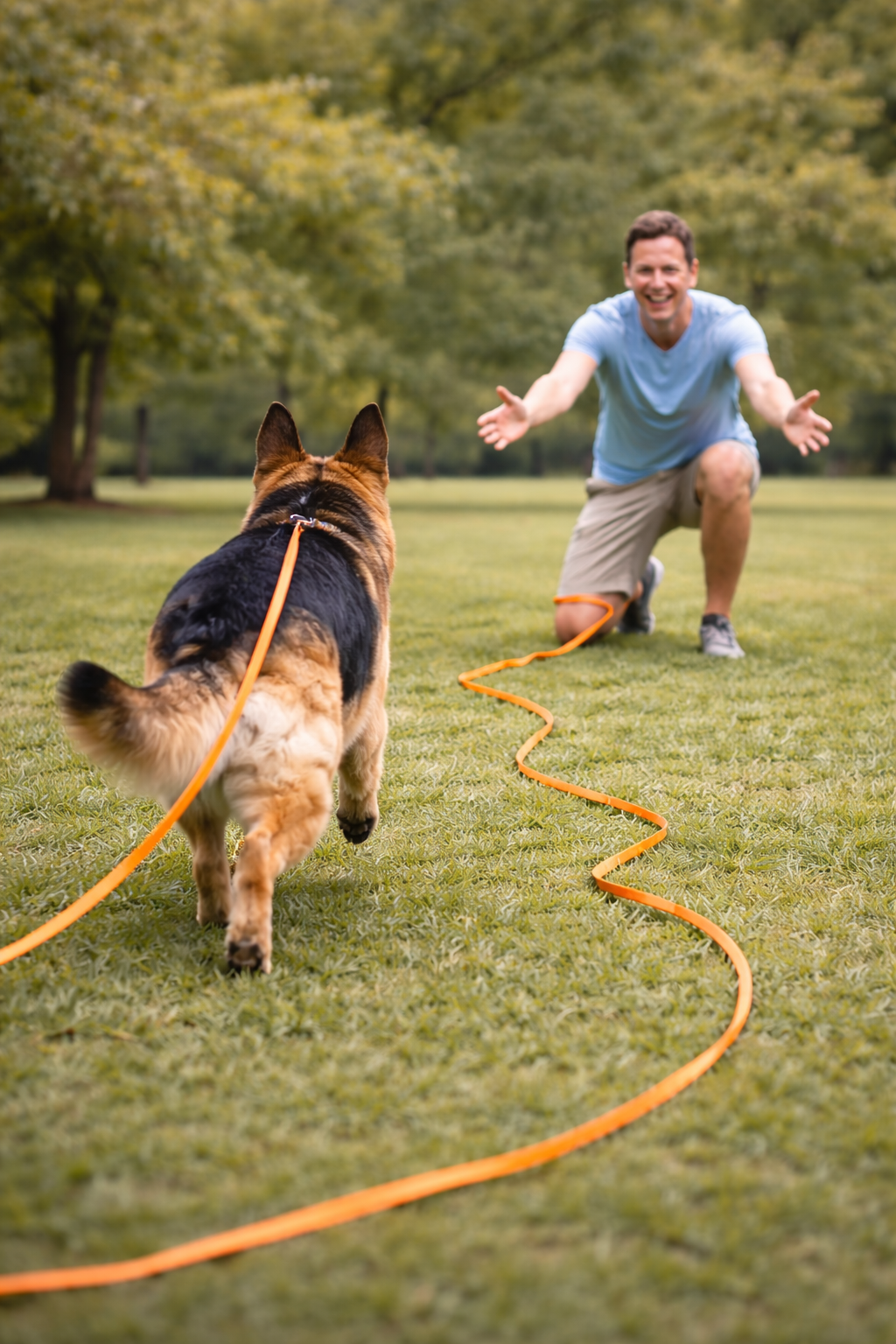
A truly reliable recall is the gold standard of dog training. When your dog can come to you instantly—no matter the distractions, distance, or environment—you unlock a level of freedom and safety that few owners ever experience. But an off-leash recall in public isn’t something that “just happens.” It’s built through layered training, structure, and consistency.
Below is your guide to developing an advanced, real-world recall that holds up anywhere—even around other dogs, wildlife, bicycles, joggers, and everyday chaos.
Why Advanced Recall Matters
A high-level recall does more than bring your dog back—it prevents accidents, stops bad decisions before they escalate, and creates trust between handler and dog. With a dependable recall, you can:
Allow off-leash hikes safely
Navigate busy parks and trails
Interrupt chasing behaviors
Keep your dog focused despite distractions
Give your dog more freedom without losing control
This level of obedience requires more than treats and a long line. It requires proofing, accountability, and real-world practice.
Foundation First: Before You Ever Go Off-Leash
Advanced recall starts at home, then moves outward in layers.
1. Teach the Command on a 6–15’ Leash
Your dog must understand “Come” clearly and consistently before distance or distractions are added. Use:
High-value treats
Verbal praise
A long leash to prevent failures
Your dog must learn that “Come” always leads to something good.
2. Add Mild Distractions
Even in the early stages, start incorporating:
A friend walking around
Toys lying nearby
Mild sounds or movement
Reward generously for beating the distractions.
3. Correct Non-Compliance (using a balanced method)
Once your dog fully understands the command, you can begin adding accountability using:
Leash pressure
A properly conditioned e-collar
Spatial pressure
This ensures the dog realizes “Come” is not optional.
Step-by-Step: Building an Advanced Public Recall
Once your foundation is strong, you’re ready to build reliability in real environments.
Step 1: Long-Line Work in Public Spaces
Start at:
Quiet parks
Empty fields
Schoolyards after hours
Use a 30–50’ long line. Let the dog wander, then call them. If the dog hesitates or looks at distractions, you have the leash to reinforce the command.
This is where your dog learns to choose you over the environment.
Step 2: Add Real Distractions
Slowly introduce:
Dogs at a distance
Bikes
Joggers
Birds and squirrels
People walking by
Reward fast, enthusiastic responses. Correct slow or distracted responses if your dog is fully trained and understands the command.
Step 3: Layer in the E-Collar (if your dog is e-collar trained)
When used correctly, the e-collar becomes:
A long-distance communication tool
A way to reinforce “Come” instantly
A backup for emergency recall
Key:
The dog must be properly conditioned to the e-collar first. Never slap an e-collar on a dog that hasn’t learned what the stim means or how to turn it off. Once trained, use a low-level sensation as a cue, paired with the verbal “Come.”
Over time, your dog will come back to you automatically at the sensation.
Step 4: Proofing Under Real Stress
This is where most owners stop—but this is what makes recall advanced.
Your dog must practice recall when:
Another dog is running
A soccer game is going on
Kids are yelling
Wildlife appears
People offer your dog attention
Food scraps are nearby
These are the situations where a reliable recall prevents disaster.
Step 5: Partial Off-Leash Freedom With Safety
Before going fully off-leash in public:
Use a drag line (10–20 feet with no handle).
Let it trail behind the dog for emergency control.
Practice recall during walks, not just training sessions.
When your dog proves reliability with the drag line, you’re close to true off-leash trust.
Going Fully Off-Leash in Public
Before you unclip the leash, your dog should consistently:
Come to you the first time you call
Ignore other dogs and people
Turn off chasing behavior instantly
Look to you for guidance in stimulating environments
Respond to the e-collar cue (if trained to it)
Off-leash freedom isn’t a reward—it’s earned behavior.
Maintaining a World-Class Recall
A great recall is never “finished.” Keep it strong by:
Practicing at least a few times per outing
Randomly calling your dog, then releasing them again
Not always ending fun when they come
Making coming to you valuable and worthwhile
Maintaining e-collar training if that’s part of your program
Consistency keeps the behavior sharp for life.
Common Mistakes That Destroy Recall
Avoid these pitfalls:
Only calling your dog when playtime ends
Repeating the command (one time only!)
Chasing your dog
Using the recall for punishment
Practicing only in low-distraction environments
Letting the dog ignore you sometimes
Skipping e-collar conditioning but still using the e-collar
Your dog should never be confused about what “Come” means or what happens after they obey or the consequences of not obeying.
Final Thoughts
A reliable off-leash recall in public isn’t magic—it’s a layered system of training, practice, and accountability. When done right, you’ll enjoy a level of freedom and connection with your dog that most owners never achieve.
Train it patiently, reinforce it consistently, and proof it thoroughly. Your dog’s safety depends on it—and their freedom is the reward.
Dog Training in Tucson, AZ Dog Training in Marana, AZ Training Options
Walkers K9 Services — Building Better Dogs, One Lesson at a Time
Please support our mission by sharing our training articles with other dog owners.
Written by: George Walker
Walkers K9 Services | Tucson, AZ
📞 520-500-7202